Peace of mind: New report explores neurotechnology and human rights
Read how neurotechnology affects rights to privacy, freedom of thought and expression in this new human rights report exploring emerging technology risks.

Summary
This groundbreaking report by the Commission explores how we can embrace the benefits of neurotechnology while making sure human dignity stays front and centre.
Peace of mind: New report explores neurotechnology and human rights
- PDF download 8.0 MB
Overview
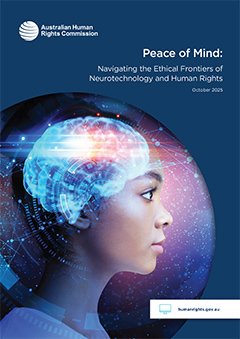
This groundbreaking report by the Australian Human Rights Commission explores how we can embrace the benefits of neurotechnology while making sure human dignity stays front and centre.
Titled Peace of Mind: Navigating the Ethical Frontiers of Neurotechnology and Human Rights, this is the first human rights report of its kind produced by a National Human Rights Institution
The report considers the ways that neurotechnology could impact rights such as freedom of expression, the right to privacy and freedom of thought.
It also explores the potential impacts in different areas of our lives, and the ways that different groups within our community – including children and people with disability – might experience these impacts differently.
Background
In 2023, the Commission became one of the first NHRIs to focus specifically on this area as it began a 2 year project on neurotechnology and human rights.
Since beginning its inquiry, the Commission published Protecting Cognition: Background Paper on Neurotechnology and Human Rights (Background Paper) in March 2024.
Later in mid-2024 the Commission partnered with the University of Melbourne Law School to host the Neurotechnology and Human Rights: Opportunities, Challenges and the Pathway Forward Symposium. Throughout the last 2 years the Commission has heard from over 100 people through roundtables, consultations, interviews and feedback sessions.
Key findings and recommendations
- Human rights by design: The Commission calls for human rights protections to be embedded at every stage of neurotechnology development, echoing the ‘safety by design’ approach.
- Privacy and consent: The report urges urgent reform of Australia’s privacy laws to explicitly protect neural data. It calls for plain-English privacy policies and meaningful, informed consent for all users.
- Freedom of thought and expression: Neurotechnology must not be used to coerce, manipulate, or punish individuals for their thoughts. The Commission recommends prohibiting neuromarketing for political and consumer purposes, especially targeting children.
- Workplace and consumer protections: The Commission recommends a ban on workplace neurotechnology other than for addressing the most serious work health and safety risks in high-risk industries. We also recommend the creation of a specialist neurotechnology safety agency to protect consumers and establish effective safety standards to oversee consumer products.
- Impacted groups: The best interests of children, people with disability and older people must be central to all neurotechnology policy and practice. The Commission calls for child rights impact assessments and stronger safeguards against discrimination and coercion.
- Criminal justice and military use: The report recommends a moratorium on the use of neurotechnology in criminal justice until an inquiry is conducted by the Australian Law Reform Commission. It also calls for regular legal reviews of military applications to ensure compliance with international law.
Download the report and the background paper
Download the report
The report considers the ways that neurotechnology could impact rights such as freedom of expression, the right to privacy and freedom of thought.
Download the background paper
Protecting Cognition: Background Paper on Human Rights and Neurotechnology
