World-first guidelines launched to drive disability inclusion in golf
Golf Australia and the Commission have launched world-first guidelines to help clubs make golf more accessible and inclusive for people with disability.
Summary
- Golf Australia and the Australian Human Rights Commission have launched the first global guidelines to help golf clubs become more accessible and inclusive for people with disability.
- The Guidelines provide advice on accessibility, reasonable adjustments, Disability Action Plans, and inclusive participation for players, members, volunteers, staff and spectators.
- Building on golf's strong participation rates among people with disability, the Guidelines help clubs meet their obligations and create more welcoming environments for everyone.
Golf Australia and the Australian Human Rights Commission have launched Guidelines for the inclusion of people with disability in golf, a world-first resource that sets a new global benchmark for how golf clubs and facilities can create more accessible and welcoming environments for people with disability.
According to the latest Ausplay data, golf is the most frequently played organised sport for people with disability in Australia, a powerful reminder that the game is already playing a significant role in supporting inclusion, connection and community participation. The new 54-page publication provides a practical framework to help clubs build on that foundation and ensure people with disability can access, participate in and enjoy golf on an equal basis, whether as players, members, volunteers, staff or spectators.
The Guidelines, issued under the Disability Discrimination Act 1992 and supported by international governing body, The R&A, are the first of their kind for people with disability in golf anywhere in the world. They were launched today at Sandhurst Club in Melbourne's southeast on the opening day of the Australian All Abilities Open (AAAO), the first elite-level international golf championship played under the new International Golf Federation classification rules developed in line with the International Paralympic Committee 2025 Classification Code.
Developed in consultation with a broad range of stakeholders, including people with disability, national and state sporting organisations, disability sport organisations, golf course architects, government departments, the Golf Managers Association and golf clubs, the Guidelines combine human rights principles, legal obligations and practical inclusion measures.
They cover leadership and culture, accessibility of facilities and courses, reasonable adjustments, Disability Action Plans, website and booking system accessibility, and participation considerations including pace of play and the use of mobility devices and golf carts.
The release follows the Guidelines for the promotion of equal opportunity for women and girls in golf, published jointly by Golf Australia and the Commission in 2019, making this the second set of guidelines developed through the partnership to help golf clubs meet their legal obligations and build more inclusive environments. Together, the two sets of guidelines provide clubs with a comprehensive framework for ensuring equal opportunity across gender and disability.
Disability Discrimination Commissioner Rosemary Kayess said: 'Every person has the right to engage in community life, including in sport. Under the Disability Discrimination Act, providers of goods, services and facilities – including golf clubs – are required to provide reasonable adjustments so that people with disability can take part on an equal basis with others.
'Fulfilling the right to be included cannot rely on legal duties alone. True inclusion is built when clubs design their environments, policies and practices for the full diversity of the community, not as a special accommodation, but as an ordinary expectation.
'These new guidelines will support golf clubs embed inclusion in practical and achievable ways, setting out the steps clubs can take to make their environments accessible, remove discrimination, and promote a culture where people with disability feel welcome.'
Golf Australia Chief Executive Officer James Sutherland said: 'These are the first guidelines of their kind for people with disability in golf anywhere in the world, and we are proud that Australia is leading the way.
'Golf is woven into the fabric of Australian life. More Australians play golf than any other sport and more participate in golf regularly than any other, a powerful reminder that golf is truly a sport for all.
'That reach brings with it an important responsibility. Every golf club and venue across Australia has the opportunity to extend the same welcome and sense of belonging to everyone in their community, including the almost one in five Australians living with disability.
'At its best, golf is uniquely placed to bring people together. The handicap system allows players of different abilities to compete and connect. The pace of the game encourages conversation and social connection. And the shared experience creates a sense of belonging that extends well beyond the final putt.
'Golf is already the most played sport by adults in Australia. The opportunity now is to ensure it is also the most welcoming, accessible and inclusive.'
Mark Darbon, Chief Executive of international governing body The R&A, said:
'This extremely useful reference guide provides clear and practical guidance on situations that can arise within clubs and facilities. Golf, as with all sports, has a duty to ensure that it is fully inclusive for people with a disability. Clubs and facilities play an important role in their communities by supporting a healthy lifestyle and providing a welcoming environment for all, both to play the sport and socialise with friends and family.
'I commend Golf Australia and the Australian Human Rights Commission on developing guidelines that could be adopted as a similar resource in other countries.'
Dean Jamieson, Chief Executive Officer of Sandhurst Club, said:
'At Sandhurst, inclusion isn't one program, it's a philosophy that runs through our entire club. Our community focus means everyone, regardless of ability, is welcome at Sandhurst, whether they're here to play golf, enjoy our food and beverage offering, or simply be part of the community.
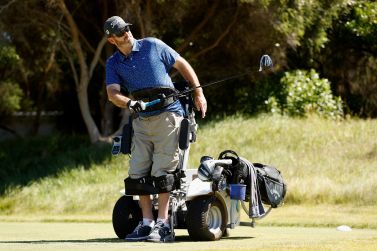
'We provide a Paragolfer standing chair on site and access to indoor accessible coaching spaces. Over the past 12 months, our PGA academy has delivered more than 1,000 hours of coaching to people with disability through various programs, private tuition and support of Special Olympics Victoria.'
Paul Vardy, CEO of the Golf Managers Association (GMA), said:
'Club managers and their teams are on the front line of the golf experience. They set the tone for how people are welcomed, supported and included.
'The GMA is proud to endorse these Guidelines as a valuable resource, providing clear, practical guidance that helps managers navigate their legal obligations while building environments where people with disability can thrive.'
-ENDS-
About the Guidelines
The Guidelines for the inclusion of people with disability in golf are issued by the Australian Human Rights Commission under section 67(1)(k) of the Disability Discrimination Act 1992 (Cth). They are the first guidelines of their kind for people with disability in golf globally, and the second set of guidelines developed through the partnership between Golf Australia and the Commission, following the Guidelines for the promotion of equal opportunity for women and girls in golf published in 2019.
While not legally binding, the Commission considers that implementing the Guidelines will minimise the likelihood of a successful discrimination claim being made.
The full Guidelines are available at humanrights.gov.au and golf.com.au.
About Golf Australia
Golf Australia is the national governing body for golf, responsible for growing and supporting the game with its members and the broader industry to enable more Australians to play more golf.
About Australian Human Rights Commission
The Australian Human Rights Commission promote and protect human rights for all people in Australia and help to resolve complaints about discrimination.
ENDS | Media contact: media@humanrights.gov.au or 0457 281 897