First Peoples’ Rights, the Referendum Divide, and the Changing Indigenous Political Landscape
3 years on from the failure of the Voice Referendum, Australia is at a crossroads for the recognition of the rights of our First Peoples.

Opinion piece summary
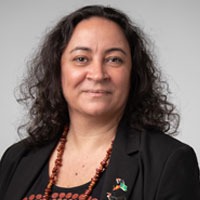
This opinion piece by Aboriginal and Torres Strait Islander Social Justice Commissioner Katie Kiss is about the recognition of the rights of our First Peoples, 3 years on from the Voice Referendum.
- Author: Katie Kiss, Aboriginal and Torres Strait Islander Social Justice Commissioner
- Publish date: 14 October 2026
The contrast between the 1967 referendum and the 2023 Voice referendum reveals a profound shift in the political and social environment surrounding Aboriginal and Torres Strait Islander peoples’ rights in Australia. Where 1967 became a landmark expression of public support for greater Commonwealth responsibility and the removal of discriminatory constitutional provisions, 2023 exposed the limits of contemporary Australian willingness to recognise First Peoples through a constitutionally enshrined mechanism for participation.
The difference is not simply that one referendum succeeded and the other failed. It is that 1967 created a powerful narrative of national inclusion, while 2023 exposed a contested national commitment to Indigenous recognition, equality and self-determination.
The defeat of the Voice did not, in itself, establish that Australians rejected First Peoples or their rights. Nor does it mean that every No voter opposed Indigenous equality. However, the campaign and its aftermath revealed and intensified political divisions, provided greater visibility to anti-Indigenous-rights arguments, and raised serious questions about whether Australia is willing to translate its international human rights commitments into meaningful domestic institutional change.
As we reflect on this outcome 3 years post referendum, this comparison is important because it shifts the focus beyond referendum outcomes to the deeper question: is Australia progressing towards the recognition of First Peoples as rights holders, or retreating towards a model in which Indigenous rights remain conditional on majority approval, and controlled by a government with contested authority over the lives of First Peoples[i]?
I maintain that the lack of public support for one reform proposal in 2023 does not release governments or the Australian public from the continuing obligation to pursue justice, equality and self-determination for First Peoples. I also maintain that through the recognition of the special status of First Peoples in the identity of our nation, we can heal and unite our country around a shared understanding of our past and vision for our future.
1. The historical contrast: 1967 and 2023
When enacted in 1901, the Australian Constitution contained section 127, which specifically excluded Aboriginal people from being counted in Commonwealth population reckoning. It read ‘aboriginal natives shall not be counted’. Section 51(xxvi) also provided that the Commonwealth Parliament could not make laws with respect to First Peoples, reserving that jurisdiction for the States. It read ‘the people of any race, other than the aboriginal race in any State, for whom it is deemed necessary to make special laws’.[i]
1967 - 90.77% Yes - a mandate for change
An opportunity to remove discriminatory references in the Constitution, then Prime Minister Harold Holt, with bipartisan support from Leader of the Opposition Gough Whitlam, introduced the 1967 referendum. The question posed concerning First Peoples read:
Do you approve the proposed law for the alteration of the Constitution entitled “An Act to alter the Constitution so as to omit certain words relating to the People of the Aboriginal Race in any State and so that Aboriginals are to be counted in reckoning the Population”?
Delivering the most successful referendum carried in the history of Australia, the 1967 referendum removed section 127 and amended section 51(xxvi) enabling the Commonwealth Parliament to make laws concerning ‘Aboriginal’[ii] people and including Aboriginal and Torres Strait Islander people in the national census count.[iii]
The result carried in every state. It reflected decades of First Peoples’ activism and broad public support for ending discriminatory constitutional arrangements.
2023 - 60.06% No - a mandate withheld
More than half a century on and again with more than two decades of focused advocacy and engagement across the political divide, the proposal to recognise Aboriginal and Torres Strait Islander peoples through a constitutionally enshrined Voice to Parliament was rejected nationally and in all six states. The question posed read:
A Proposed Law: to alter the Constitution to recognise the First Peoples of Australia by establishing an Aboriginal and Torres Strait Islander Voice.
Do you approve this proposed alteration?
The constitutional amendment if supported, would have resulted in the insertion of ‘Chapter IX Recognition of Aboriginal and Torres Strait Islander Peoples’, and section ‘129 Aboriginal and Torres Strait Islander Voice’.
While more than 6 million Australians and an estimated 80% of Aboriginal and Torres Strait Islander people voted in favour of the referendum, the national vote returned a 60.06% No vote, with Queensland recording 68.21% of the No vote. The Australian Capital Territory was the only jurisdiction to return a positive outcome with 61.29% of Territorians voting Yes.[iv]
The result denied the proposed institution constitutional protection and exposed the difficulty of securing majority support for a specific mechanism to support First Peoples’ social and political participation.
Importantly, it is critical to understand that the vote rejected the proposed constitutional amendment, not every form of Indigenous recognition, consultation, self-determination or treaty.
What changed between the two referendums?
In both instances, Aboriginal and Torres Strait Islander peoples, with the support of allies embarked on a decade of advocacy and support building for change.
In 1967, the campaign was widely framed around inclusion, equality and the Commonwealth’s capacity to address injustice. However, with the 67 Referendum most notably known for the changes relevant to First Peoples, it is not widely known that in 1967 two key questions were posed. One (question 2 on the vote card) centred on the Indigenous affairs elements outlined above, while the other (question 1, referred to as the ‘nexus’ question) concerned the makeup of the Parliament. Specifically, that the size of the House of Representatives be twice the size of the Senate.
Of critical significance to the outcome, there was no official ‘No’ campaign run on the Aboriginal affairs elements of the referendum. Progressing entirely uncontested, and with full bipartisan support across all major political parties at the time, the referendum delivered a 90.77% Yes vote on this question. A successful No campaign for the nexus question, centred on ‘no more politicians’, saw it defeated returning a 60% no vote. Importantly, given the distinct difference between the questions, they were voted on as two separate questions and provided two separate results.
In 2023, there were both Yes and No arguments put forward in the leadup to the referendum.
The ‘Yes’ campaign highlighted ‘recognition’, ‘listening’ and ‘better results’ for First Peoples as the three key outcomes.[v] It focused on unity and completing the national identity through formal recognition of Aboriginal and Torres Strait Islander peoples in the Constitution, and enabling the participation of First Peoples in decisions that affect them through the establishment of a constitutionally enshrined First Peoples-led Voice mechanism.
The ‘No’ campaign cast the constitutional proposal as ‘legally risky with unknown consequences’. It argued that the outcome ‘[would not] help Indigenous Australians, that it would be ‘divisive and permanent’, and so ‘if you don’t know, vote no’.[vi]
Unlike the 1967 referendum, the distinct elements of recognition, and establishing a constitutionally enshrined First Peoples Voice to Parliament, were cast as one question for the purposes of the vote, leaving no option for separate consideration of the two.
Despite the question posed in the 1967 referendum specifically referring to ‘People of the Aboriginal Race’ and including First Peoples more definitively in the makeup of the Australian state[vii], the 2023 debate was more intensely contested around race, constitutional change, national identity, political trust, Indigenous authority and competing understandings of equality.
There is also a critical distinction between the constitutional questions. In 1967, Australians supported removing discriminatory provisions and extending Commonwealth legislative capacity. In 2023, voters were asked to approve a particular institutional mechanism. The results therefore cannot be treated as a direct, like-for-like measure of Australians’ attitudes towards Indigenous people.
Nevertheless, the contrast is stark: the overwhelming consensus of 1967 had given way, by 2023, to a political environment in which even a proposed advisory institution became the focus of national division.
A critical factor in successful referenda in Australia, is securing bipartisan support. As outlined above the 1967 referendum enjoyed the full and uncontested support of all three political parties, and the leadership of the day.
In the years leading up to the 2023 referendum, both major parties in government sought to progress constitutional recognition of First Peoples:
- 1999 – then Liberal Prime Minister John Howard introduced the 1999 referendum to recognise First Peoples in the preamble of the Constitution, which marred by a lack of consultation with First Peoples or the broader Australian public, also failed to secure a positive outcome[viii]
- 2010 – the establishment of the Expert Panel on Constitutional Recognition of Indigenous Australians by then Labor Prime Minister Julia Gillard that provided solid recommendations on the path forward
- 2015 – the establishment of the Referendum Council initiated by then Liberal Prime Minister Tony Abott and progressed under the leadership of PM Malcolm Turnbull with the full support of the the Leader of the Opposition, the Hon Bill Shorten MP, promoted public engagement through national consultations and community engagement about constitutional recognition
- 2016 – building on the suggested options of the Referendum Council, meetings were held across Australia in the form of Regional Dialogues that culminated in the 2017 First Nations National Constitutional Convention where 250 Dialogue Delegates gathered to form a consensus on the preferred option, expressed in the 2017 Uluru Statement from the Heart
- 2019 – 2021 – in response to the Uluru Statement from the Heart, then Liberal Prime Minister Scott Morrison rolled out a co-design process on what a Voice might look like and how it might function
- 2022 – newly elected Labor Prime Minister Anthony Albanese committed to the Uluru Statement from the Heart in full and to holding a referendum to constitutionally enshrine an Indigenous Voice to Parliament
- 2023 – Prime Minister Anthony Albanese led the Voice Referendum.
Despite the decades of investment in redressing such an important piece of the Australian national identity, in 2023, while both parties appeared to support ‘symbolic’ recognition of First Peoples in the Constitution, the maintenance of bipartisanship fell away with then Opposition Leader Peter Dutton rejecting the proposed Voice Mechanism.
The Opposition Leader did however, propose an alternative approach: a framework of local and regional voices set up by parliamentary legislation.[ix] In the wake of the failed referendum, this is one option that requires serious consideration moving forward.
[i] The Commonwealth of Australia Constitution Act the Constitution).
[ii] At this time, the reference to ‘Aboriginal’ included Torres Strait Islander people.
[iii] An important qualification is that the referendum did not itself grant citizenship, voting rights or equal rights; nor did it guarantee beneficial laws. Its significance was constitutional, political and symbolic.
[iv] Australian Electoral Commission, 2023 Referendum – National Results.
[v] Australian Government, Your official Yes/No referendum pamphlet.
[vi] Australian Government, Your official referendum booklet.
[vii] Question 2 of the 1967 Referendum read: ‘Do you approve the proposed law for the alteration of the Constitution entitled “An Act to alter the Constitution so as to omit certain words relating to the People of the Aboriginal Race in any State and so that Aboriginals are to be counted in reckoning the Population”?
[viii] Dr D Larkin, ‘The Uluru Statement from the Heart: Where to from here?’, University of New South Wales.
[ix] J Butler, ‘Peter Dutton and the voice: what the Liberal Party has got wrong about Indigenous recognition’, The Guardian, 7 April 2023.
2. The changing social and political tide
The 1967 result created an enduring narrative that Australians could unite behind progress for First Peoples. The 2023 result fractured that narrative. It demonstrated that symbolic recognition and broad expressions of goodwill do not necessarily translate into support for sharing decision-making power.
There are 4 interconnected developments that help to explain the shift in social and political backing between 1967 and 2023.
First, the politics of recognition gave way to the politics of contestation. The Voice campaign was not simply a discussion about constitutional design. It became a proxy debate about history, sovereignty, race, national identity and whether First Peoples should have a distinct institutional means of advising on decisions affecting them.
Second, mis and disinformation and political distrust weakened the conditions for informed debate. Disputes over the Voice’s proposed powers, consequences and relationship with Parliament were amplified by uncertainty and competing campaign narratives. In this environment, concerns about constitutional change and government trust became entangled with arguments about whether Indigenous-specific recognition was fair or necessary.
Third, opposition to the Voice helped legitimise more explicit anti-Indigenous-rights rhetoric in parts of public debate. The language of ‘special treatment’, ‘division by race’ and ‘reverse racism’ often recast demands for substantive equality and participation as claims for undeserved advantage. Such framing risks obscuring the historical dispossession and continuing structural inequalities that make rights-based reform necessary. Analysis published in 2026 has also examined the re-emergence of racialised nationalism and white-victimhood narratives in the referendum’s aftermath, highlighting the ‘falsehoods about what the Voice would do to, and take from the average…Australian’.[i]
Fourth, the defeat created political permission for retreat in some jurisdictions. The Australian Human Rights Commission’s 2026 human rights assessment identifies a lack of national representative mechanisms and reports that some governments have invoked the referendum result to justify reversing truth and treaty initiatives or pursuing punitive approaches that disproportionately affect First Peoples.[ii]
This is evidence of a wider policy consequence. However, rather than being the catalyst for the change in political direction or subsequent government decision-making, the foundations for the current social and political positioning of First Peoples have been there since first contact. They have been activated regularly throughout the history of modern Australia including through the building of Australian political institutions and social systems that were designed specifically to exclude, control or assimilate the Aboriginal and Torres Strait Islander population.
The success of the 1967 referendum redirected this path momentarily towards self-determination, rights, recognition, and non-discrimination.
The loss of the 2023 referendum has corrected this course.
It reinforced the original foundations and provided the perceived authorisation and mandate (the Australian people) for the social and political shift we are seeing today.
However, the consequences of the result go far beyond the proposed Voice itself. It has become a reference point in disputes about treaty, truth-telling, Indigenous governance, justice reform, access to basic human rights, and whether governments should continue pursuing structural change without a clear national consensus.
It has muddied the waters, calling into the question the status of First Peoples, including as rights holders. It denied an opportunity to recognise the special status of First Peoples in the nations identity, to heal and unite our country around a shared understanding of our past and vision for our future. While the damage to the already fragile relationships between First Peoples, Australian governments and the broader Australian population have been further fractured, the ramifications of the Voice referendum have been catastrophic and its social and political consequences will continue to impact the lives of First Peoples for decades to come.
The rise in racism
The concerns are not merely rhetorical. Reconciliation Australia’s 2024 Australian Reconciliation Barometer, published in June 2025, found that:
- 54% of Aboriginal and Torres Strait Islander respondents reported experiencing at least one form of racial discrimination in the preceding six months, up from 39% in 2014
- 56% of Aboriginal and Torres Strait Islander respondents believed Australia was a racist country.[iii]
The Australian Human Rights Commission has specifically identified the referendum period and its aftermath as contributing to heightened racism, including online abuse and face-to-face discrimination.[iv]
These findings warrant a serious conclusion, but a careful one: the referendum did not originate racism in Australia, which long predates 2023. Rather, the campaign appears to have intensified existing prejudice, provided new platforms for its expression and exposed the weakness of safeguards against racialised mis and disinformation and hostility.
[i] E J Gavin, ‘The politics of racism, falsehoods, and fearmongering: the Voice referendum and the Queensland 2024 state elections’, in D Tout, E J Gavin and J Hurst (eds), Barriers to Truth and Justice in Settler-Colonial Australia: Why Won’t Settlers Listen?, pp103-128, Monash University, 2026.
[ii] H de Kretser, ‘Australian Human Rights Assessment 2026 – National Press Club speech’, Australian Human Rights Commission.
[iii] Reconciliation Australia, 2024 Australian Reconciliation Barometer: Truth-telling and Historical Acceptance, Reconciliation Australia website, 12 August 2025.
[iv] K Kiss, ‘A Fair and Just Future for First Peoples: Social Justice Report 2025’, Australian Human Rights Commission, 2026, pp 69, 97, 142, 177, 197, 333, 2026.
3. What Articles 2–5 of UNDRIP reveal about the referendum divide
The United Nations Declaration on the Rights of Indigenous Peoples (UNDRIP or the Declaration), adopted in 2007 and subsequently endorsed by Australia in 2009, provides a framework for assessing the referendum outcomes beyond the domestic politics of Yes and No. Articles 2–5 are particularly relevant because they address equality, self-determination, autonomy and the maintenance of Indigenous institutions.
While UNDRIP is a declaration rather than a treaty directly incorporated into Australian law, its provisions do not automatically operate as enforceable domestic statutory rights. However, the standards and obligations articulated within the Declaration are derived from legally binding treaties that Australia has ratified. As such, it provides a significant framework for assessing government policy and Australia's human rights commitments as they apply to Aboriginal and Torres Strait Islander people.
Article 2 - Equality without discrimination
Aboriginal and Torres Strait Islander peoples and individuals have the right to equality and freedom from discrimination based on Indigenous origin or identity.
Formal equality does not require governments to treat historically unequal circumstances as though they were identical. Measures that enable First Peoples to participate in decisions affecting them can be necessary to achieve substantive equality.
When Indigenous-specific measures are portrayed as inherently unfair or discriminatory, the debate risks reversing the meaning of equality. The question becomes whether First Peoples should receive a distinct mechanism of participation, rather than whether existing institutions adequately protect their equal rights.
Article 3 - Self-determination
First Peoples have the right to determine their political status and pursue their economic, social and cultural development.
Self-determination requires more than government programs designed for Indigenous communities. It requires meaningful opportunities for First Peoples to shape priorities, institutions and decisions affecting their futures.
Rejecting the proposed Voice removed one constitutionally protected avenue for national participation. It did not extinguish the underlying right to self-determination. The deeper challenge is whether governments will create the conditions necessary to enable Indigenous peoples to exercise that right in practice.
Article 4 - Autonomy and self-government
Indigenous peoples have the right to autonomy or self-government in internal and local affairs, including the means to finance their autonomous functions.
Indigenous governance structures, properly resourced decision-making institutions and Community-controlled organisations are practical expressions of autonomy.
A political environment that favours centralised government control, punitive interventions or the reversal of negotiated arrangements risks weakening self-government. The relevant test is whether First Peoples have the authority and resources to determine and give effect to their own priorities.
Article 5 - Distinct institutions and full participation
First Peoples have the right to maintain and strengthen their distinct political, legal, economic, social and cultural institutions while retaining the right to participate fully in the political, economic, social and cultural life of the State.
Indigenous institutions and participation in Australian democratic institutions are complementary, not mutually exclusive. First Peoples should not have to abandon their distinct identities or governance systems to participate as equal members of Australian society.
In the post Voice environment, arguments that treat Indigenous-specific representation as incompatible with national unity establish a false choice between belonging to “Australia” and exercising collective rights as First Peoples.
Articles 2–5 frame Indigenous rights as rights belonging to peoples, not benefits that governments may grant or withdraw according to political convenience.
Article 38 – State obligations
In endorsing the Declaration, Australia (including jurisdictions within) has agreed to particular obligations. It agreed to take appropriate measures, including legislative measures, to give effect to and achieve the rights outlined above. It also agreed to do this in consultation and cooperation with First Peoples.
The referendum was a domestic constitutional decision about one proposed institution. It was not a vote that could extinguish internationally recognised standards and obligations.
4. The systemic consequences: from rejection to regression?
The greatest risk is not the loss of the Voice proposal alone. It is the possibility that its defeat becomes a rationale for maintaining or restoring systems that exclude First Peoples from decisions affecting their lives.
Three systemic and discriminatory consequences warrant particular attention.
- The normalisation of exclusion - if governments interpret the result as a mandate to reduce Indigenous participation, rather than simply a rejection of the proposed constitutional model, the absence of an effective national representative mechanism may become entrenched.
- The weakening of accountability - without sustained institutional arrangements for Indigenous participation, governments may continue to develop and assess policies without sufficient First Peoples’ authority, contributing to persistent failures across child protection, justice, health, housing and education. The Human Rights Commission's 2026 assessment identifies these continuing inequalities and the importance of community control.
- The contraction of political space for rights-based reform - where the rights of First Peoples are questioned, and treaty, truth-telling, Indigenous justice and community-led reform are characterised as illegitimate because the Voice was rejected, a vote on one constitutional proposal can be used to constrain reforms that were never on the ballot.
These developments should be understood as risks and identifiable policy trends that require systemic and structural correction, not proof that every government or No voter has adopted an anti-Indigenous-rights position.
The distinction matters.
Democratic disagreement over constitutional design is legitimate. Using that disagreement to delegitimise First Peoples’ rights, deny their distinct status or excuse discriminatory treatment is a different proposition.
5. Conclusion: a turning point for Australia's human rights obligations
The 1967 Referendum and the 2023 Voice Referendum represent two markedly different moments in Australia's relationship with First Peoples. In 1967, an overwhelming majority endorsed constitutional change that removed discriminatory provisions and expanded Commonwealth legislative capacity. In 2023, a majority rejected a proposal intended to give First Peoples a constitutionally protected voice in national decision-making.
The contrast signals a change in the political conditions for Indigenous rights reform. The Voice debate exposed enduring tensions between formal equality and substantive equality, and government authority and First Peoples’ self-determination. Evidence of increased reported racism, alongside the subsequent contestation of treaty and truth-telling initiatives, reinforces the need to examine the referendum's wider social and institutional consequences.
For the Aboriginal and Torres Strait Islander Social Justice Commissioner, the appropriate response is neither to treat the referendum as the end of reconciliation nor to dismiss the concerns of those who voted No.
It is to insist that the outcome cannot be used to abandon Australia's responsibilities to address racism, inequality and the exclusion of First Peoples from decisions affecting them.
Articles 2–5 of UNDRIP provide a clear benchmark. Equality without discrimination, self-determination, autonomy and the protection of distinct institutions alongside full participation in Australian society.
The fundamental question after 2023 is whether Australia will treat the referendum as a limit on one constitutional proposal, or as permission to retreat from the broader project of Indigenous rights recognition?
A rights-based response requires the former distinction to be maintained, and the latter possibility firmly resisted.
The lesson of 1967 was that constitutional change could reflect a national commitment to justice. The lesson of 2023 must be that the failure of one reform proposal does not release governments or the Australian public from the continuing obligation to pursue justice, equality and self-determination for First Peoples.
Course correction is required. First Peoples remain at the table. If this relationship is to be repaired and begin to work for First Peoples, we need the Australian Government to return, sit here with us, and continue to do the work started decades ago.
References
[i] The Commonwealth of Australia Constitution Act (the Constitution).
[ii] At this time, the reference to ‘Aboriginal’ included Torres Strait Islander people.
[iv] An important qualification is that the referendum did not itself grant citizenship, voting rights or equal rights; nor did it guarantee beneficial laws. Its significance was constitutional, political and symbolic.
The status ofAustralian Citizenship was created in 1949 through the Nationality and Citizenship Act 1948 and included Aboriginal and Torres Strait Islander people (before this all “Australians” except ‘aboriginal native[s] of Australia, Africa, Asia or the Islands of the Pacific except New Zealand were British subjects). Amendments to the Commonwealth Electoral Act in 1962 gave First Peoples the right to register and vote, but voting was not compulsory, with full voting rights and responsibility granted federally in 1984 when Aboriginal and Torres Strait Islander people were required to register on the electoral roll. See Parliamentary Education Office, When did Indigenous Australians and people from non-European backgrounds et the right to become member of the Australian Parliament. Equality is not explicitly guaranteed in the Australian Constitution. It is instead established through federal, state and territory legislation.
[v] Australian Electoral Commission, 2023 Referendum – National Results.
[vi] Australian Government, Your official Yes/No referendum pamphlet.
[vii] Australian Government, Your official referendum booklet.
[viii] Question 2 of the 1967 Referendum read: ‘Do you approve the proposed law for the alteration of the Constitution entitled “An Act to alter the Constitution so as to omit certain words relating to the People of the Aboriginal Race in any State and so that Aboriginals are to be counted in reckoning the Population”?
[ix] Dr D Larkin, ‘The Uluru Statement from the Heart: Where to from here?’, University of New South Wales.
[x] J Butler, ‘Peter Dutton and the voice: what the Liberal Party has got wrong about Indigenous recognition’, The Guardian, 7 April 2023.
[xi] E J Gavin, ‘The politics of racism, falsehoods, and fearmongering: the Voice referendum and the Queensland 2024 state elections’, in D Tout, E J Gavin and J Hurst (eds), Barriers to Truth and Justice in Settler-Colonial Australia: Why Won’t Settlers Listen?, pp103-128, Monash University, 2026.
[xii] H de Kretser, ‘Australian Human Rights Assessment 2026 – National Press Club speech’, Australian Human Rights Commission.
[xiii] Reconciliation Australia, 2024 Australian Reconciliation Barometer: Truth-telling and Historical Acceptance, Reconciliation Australia website, 12 August 2025.
[xiv] K Kiss, ‘A Fair and Just Future for First Peoples: Social Justice Report 2025’, Australian Human Rights Commission, 2026, pp 69, 97, 142, 177, 197, 333, 2026.
About Katie Kiss, Aboriginal and Torres Strait Islander Social Justice Commissioner
Katie Kiss
Aboriginal and Torres Strait Islander Social Justice Commissioner
Media contact
Email: media@humanrights.gov.au or phone: 0457 281 897