Why Australia must uphold accountability for the rights of First Peoples
Australia’s refusal to ensure UN scrutiny of youth detention raises serious questions about Indigenous rights, government accountability, and human rights.

Opinion piece summary
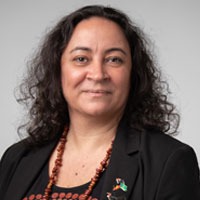
In this opinion piece, Commissioner Kiss is critical of the Australian, Queensland and Northern Territory Governments for failing to ensure Australia meets its international treaty obligations in relation to protecting the rights of our First Peoples.
- Author: Katie Kiss, Aboriginal and Torres Strait Islander Social Justice Commissioner
- Published in: The Mandarin
- Publish date: 12 November 2026
- More: Access the full article.
The United Nations Special Rapporteur on the rights of Indigenous Peoples Dr Albert Barume is currently visiting Australia to gauge how well our country is protecting the rights of our First Peoples.
He was invited to undertake this work by the Australian Government, a clear signal that Australia is willing to engage with established international human rights processes and to have our performance independently examined. This is what confident democracies do.
Which is why it is extremely concerning that the Queensland and the Northern Territory governments have refused to provide the Special Rapporteur with access to youth detention facilities and other places of detention.
But the concern is about far more than access. It goes to a fundamental question about accountability.
What does it mean for Australia to invite international scrutiny if individual jurisdictions can decide which institutions are accessible and which remain off limits? What does accountability mean if governments can opt out of scrutiny in precisely those areas where some of the most serious human rights concerns exist?
It was important that Indigenous Australians Minister Senator Malarndirri McCarthy last week called for all jurisdictions to cooperate with the Special Rapporteur. However, this issue of accountability is so important that we need the Prime Minister to be taking a leadership role. Not because the Commonwealth runs youth detention facilities – it does not. Nor because Canberra controls every area of state and territory policy – it does not. But because Australia's international human rights commitments are national commitments that apply to all levels of government.
Australia appears before international institutions as one entity. The Commonwealth cannot invite scrutiny in Australia's name while remaining silent when parts of the country refuse to cooperate with that scrutiny.
The Prime Minister should publicly reaffirm support for the Special Rapporteur's visit, call on all jurisdictions to engage constructively, transparently and in good faith, and agree to meet with Dr Barume. Anything less risks sending a troubling message: that Australia welcomes scrutiny only when it is comfortable and convenient.
This comes at a time when Australia should be strengthening, not weakening, our human rights credibility.
The UN’s most recent peer review of Australia’s human rights performance – the 4th Universal Periodic Review – highlighted ongoing concerns about the treatment of Aboriginal and Torres Strait Islander Peoples, youth justice, incarceration, child removal, discrimination and lack of implementation of the United Nations Declaration on the Rights of Indigenous Peoples. These are not new concerns. They have been raised repeatedly by international bodies, domestic inquiries, Aboriginal and Torres Strait Islander organisations and the Australian Human Rights Commission.
The appropriate response is not defensiveness. It is leadership. It is a willingness to demonstrate that Australia takes its commitments seriously and is prepared to engage openly with independent assessment of both progress and shortcomings in order to do better.
That principle matters even more as Australia seeks election to a non-permanent seat on the United Nations Security Council. Australian governments regularly advocate for a rules-based international order and call on other nations to respect international law and accountability mechanisms. Those principles carry greater weight when they are reflected at home.
The Special Rapporteur's visit provides an opportunity to demonstrate the values Australia seeks to project internationally: openness, transparency and confidence in democratic institutions. Instead, some jurisdictions have chosen a different path.
The refusal to allow access to places of detention is particularly concerning because it coincides with a period in which some governments are moving further away from established human rights standards and the evidence on what keeps communities safe.
Nowhere is this clearer than in youth justice.
Aboriginal and Torres Strait Islander children remain dramatically overrepresented in detention. This has been documented for decades through inquiries, research and official reviews. We know the drivers. We know the evidence. And we know what works.
Yet recent developments in Queensland and the Northern Territory have often moved in the opposite direction. We continue to see resistance to raising the age of criminal responsibility despite overwhelming evidence about the developmental impacts of early criminalisation. We continue to see concerns about strip-searching, spit hoods and increasingly punitive approaches that expand detention while weakening alternatives proven to be more effective.
At the same time, some governments have weakened safeguards designed to maintain Aboriginal and Torres Strait Islander children's connection to family, community and culture, including protections associated with the Aboriginal and Torres Strait Islander Child Placement Principle.
Perhaps most concerningly, departures from human rights standards are increasingly being justified by reference to community sentiment. This should concern all Australians because our rights are not being safeguarded against arbitrariness.
Human rights exist because majorities do not always protect minorities. They are not intended to apply only when politically convenient. If popularity becomes the primary justification for limiting rights, then rights cease to function as rights and become contingent political preferences.
The real question is not whether governments have the power to enact certain laws. It is whether those laws are evidence-based, proportionate, necessary and consistent with our fundamental human rights obligations.
In my Social Justice Report, A Fair and Just Future for First Peoples, I argued that Australia does not suffer from a lack of understanding about the challenges facing Aboriginal and Torres Strait Islander Peoples. Nor does it lack recommendations. What Australia lacks is accountability.
That is why the response to the Special Rapporteur's visit matters. The issue is not whether governments agree with every observation made by a United Nations expert. The issue is whether governments are prepared to subject themselves to scrutiny at all.
If Australia is serious about self-determination, Closing the Gap, the rights of children and international leadership, accountability cannot remain optional. Without it, our commitments lose credibility, trust in government is weakened and our international reputation suffers. And Aboriginal and Torres Strait Islander children continue to bear the cost.
About Katie Kiss, Aboriginal and Torres Strait Islander Social Justice Commissioner
Katie Kiss
Aboriginal and Torres Strait Islander Social Justice Commissioner
Media contact
Email: media@humanrights.gov.au or phone: 0457 281 897