Let’s change the story about workplace privilege
Writing for HR Leader, the Race Discrimination Commissioner provides tangible actions to address workplace racism.

Opinion piece summary
The Australian Human Rights Commission is calling on employers to act through its Change the system. Change the story. campaign, encouraging leaders to Listen, Learn and Lead by treating racism as a workplace safety issue and implementing meaningful systemic change.
- Author: Race Discrimination Commissioner
- Published in: HR Leader
- Publish date: 19 August 2026
Every day, millions of Australians head to work as nurses, teachers, hospitality staff, office workers, tradies and professionals in countless other roles. Workplaces are where people from diverse backgrounds come together, collaborate and contribute to our communities and economy. That is why workplaces should be places where everyone feels safe, respected and valued, and where all workers have the opportunity to thrive, regardless of their cultural background.
Yet for many of us, racism makes our workplaces unsafe and creates roadblocks to success at every stage of our working lives.
Every day I hear of opportunities denied because of a name or accent, qualifications overlooked because of where they were granted, promotions missed because of a ‘wrong cultural fit’, assumptions made about reliability and capability, and expertise denied and denigrated simply because it is different. And then there are the interactions in corridor chats, at lunch, and even in important decision-making discussions that require many of us to blend in and hide ourselves.
We know that racism at work is a reality for many. Just last month, the Australian Institute of Health and Safety released data showing two-thirds of workers have experienced or witnessed racism at work, yet nearly half say it is rarely treated as a workplace safety issue According to research from the Diversity Council of Australia, around 90% of Australian workers identify racism as a workplace problem and believe companies must take active measures to address it but only 27% believe their organisations are proactive in preventing it.
Over the last few years, we have seen significant increases in antisemitism, anti-Palestinian racism, anti-Arab racism and Islamophobia, causing profound harm to communities across the country. Communities are carrying the weight of global conflicts, deep trauma and hateful extremist rhetoric. First Peoples and those from migrant communities – especially those newly arrived – also continue to face discrimination and hate at work. Many describe feeling silenced, excluded, isolated, threatened and unsafe in the very place they spend most of their day – at work.
Workplace racism is built into processes. It can dictate whose ideas get heard, who thrives and who is chosen to lead. It lives in systems, and in silence. It won’t be fixed by asking the people who experience it to be more resilient, but it can be fixed by the people who have the power to change those systems.
The workplace leaders I meet don’t want racism in their organisations, but they often don’t have the confidence to address it effectively. Last week, the Australian Human Rights Commission launched a new education campaign called Change the system. Change the story. It asks employers to do 3 things: Listen. Learn. Lead. Listen to people's experiences, acknowledge and learn about the realities of racism in all its forms, and commit to implementing meaningful solutions.
The campaign provides the practical tools to support employers to take effective action, and the approach is supported by communities affected by racism, as well as industry groups, unions and social-service organisations. These groups may not agree on all things, but they agree that racism in the workplace needs to be addressed.
To every person who leads a workplace or a team: Don’t wait for a complaint to land on your desk. Assume racism may be a risk in your workplace, treat it as the safety issue it is and focus on preventing harm from occurring in the first place. Listen to people’s experiences and look honestly at your processes and your culture. To everyone else: Don’t be silent. Be active in learning about and preventing harm in the workplace.
Our workplaces tell a story about who belongs and who doesn’t; about those who get to succeed and those who don’t. The thousands of people whose experiences informed this campaign were clear that being heard, on its own, is not enough. What they’re waiting for now is for those with power to act. If we change our systems, we can change their stories.
Find out more about the Change the system. Change the story. campaign.
About Race Discrimination Commissioner
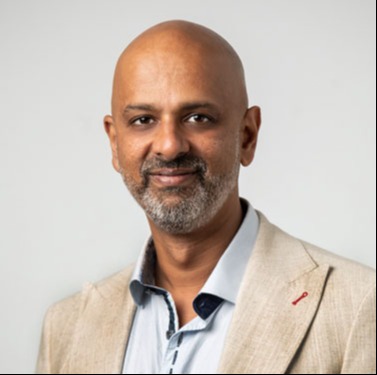
Giridharan Sivaraman
Race Discrimination Commissioner

Media contact
Email: media@humanrights.gov.au or phone: 0457 281 897