The Census needs to catch up to modern Australia
The Census helps define who counts in Australia. The questions have improved, but they still don't adequately capture the complexity of modern Australia.

Opinion piece summary
In an opinion piece for The Mandarin, Commissioner Sivaraman argues the Census must better reflect modern Australia, warning that current approaches to measuring identity leave important experiences and communities invisible in the data that shapes public policy.
- Author: Race Discrimination Commissioner
- Published in: The Mandarin
- Publish date: 10 August 2026
- More: Access the full article.
Every answer matters.
This is the slogan for Tuesday’s Census night, where millions of us will sit at the dining table or on the couch – pen or laptop in hand – to answer basic questions about who we, and our families, are.
It's true, the answers do matter. Census data helps governments determine everything from school and hospital funding to public transport routes. It can also shape our own understanding of Australia and how we can make it a better place for all, something to which we all aspire.
Touted by demographers as ‘the most progressive’ in history, this Census will ask us more about our identities than ever before – ancestry, sexual identity, sex recorded at birth.
This is a welcome start, but a start only. The Census is meant to be a window into the nation, yet the picture remains blurred.
Australia's diversity cannot be reduced to a handful of categories. Millions of us live at the intersection of multiple cultures, ancestries, languages and identities. Yet governments continue to rely on ideas and arbitrary questions that often fail to reflect how people’s lives are shaped and impacted by different aspects of their identity.
When that happens, like with the current Census, governments are unable to fully identify disadvantage, address discrimination and target or tailor support where it’s needed, especially when inequality is rooted in racism.
For many First Peoples, the question of identity is inseparable from sovereignty, language, culture and connection to Country. Since 1788, First Peoples have largely been excluded from defining how their data has been designed and collected by governments.
For people from migrant backgrounds, ancestry, birthplace or languages spoken only tell part of their story, or do not accurately capture their identity at all. Yet these remain the primary ways governments seek to count us. To define us.
That is why advocates, like the Federation of Ethnic Communities’ Council of Australia, have called for a direct question in the Census on ethnicity. They argue the way the Census currently collects information about race or ethnicity is out of touch with how people understand themselves.
Take me and my family. I was born in Chennai, my mother is Indian and my father is Sri Lankan Tamil. I migrated to Australia as a child, my wife is of Anglo Celtic background, and my children are mixed heritage. When I ask my son how he sees himself, he answers simply ‘Australian’. Whereas my daughter says, looking at me like it’s a stupid question, ‘biracial obviously’.
Neither is wrong. But the difference in their answers highlights how deeply personal identity is, and how it can be impacted by external factors. Yet, when we complete the Census, our identities will largely be filtered through ‘proxy’ categories that struggle to capture the reality of our lived experience.

If we want better services, better policy and a fairer society, we need questions that reflect our complexity. That means having a real conversation about identity and what it means to be Australian.
Australia does not currently collect direct data on race or ethnicity in the Census, apart from a question on Indigenous status. A person’s racial identity is instead collected through ‘proxy’ questions such as their country of birth, languages spoken, and ancestry. These proxies are simplistic and do not meaningfully capture the identities of people who experience racism in Australia. Such questions wouldn’t explain why my children identify differently, and what external factors lead to that. Proxy questions are also not aligned with a human rights-based approach to data which prioritises the right of racialised people to define their identity on their own terms.
While the new Census allows us to provide up to four ancestries, ancestry data does not allow identification of race or ethnicity beyond one or two generations. It doesn’t capture what parts of your identity were able to thrive or what was suppressed by the society you are in. Whether you let go of your mother tongue to fit in at school. Whether you hid some of your heritage to get ahead at work.
These gaps are not merely academic. They raise important questions about how Australia collects information about race, ethnicity and racism, questions the Australian Human Rights Commission has been examining and will report on later this year.
Let’s face it, discussions about collecting more information can make many of us feel uneasy. From concerns about over surveillance and data breaches to fears about the weaponisation of this data for racist purposes, this is a charged subject. That’s understandable because for much of Australia’s history, data about racial identity was not collected to help. It was often collected to separate and subjugate based on concepts of race. It was collected to remove Aboriginal children from their families as part of a concerted effort to erase Aboriginal identity. It was collected to ensure that people who were deemed ‘not white’ could not cross shores to enter these lands. There are many more examples.
Hence, we have an obligation to ensure that when data is collected it or is about ensuring our identities are better reflected, and, in turn, our specific needs are recognised and supported. If we are asking people to tell us deeply personal matters about themselves, then government must promise to honour that trust by committing to collecting information in the best way possible and to make people’s lives better.
The Census is ultimately about accurately documenting the population to inform policy. But it is also one of the few moments when Australia, collectively, pauses to ask who we are.
If we want better services, better policy and a fairer society, we need questions that reflect our complexity. That means having a real conversation about identity and what it means to be Australian.
Every answer matters. But so too does the capacity of the questions to capture the full story of modern Australia and ensure our data leads to fairer and equal outcomes for all of us.
About Race Discrimination Commissioner
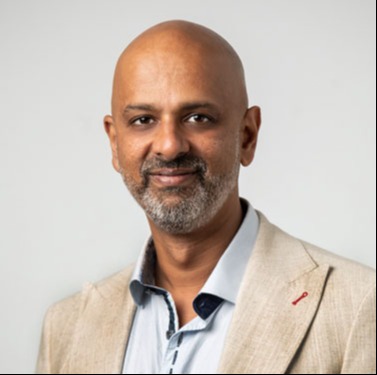
Giridharan Sivaraman
Race Discrimination Commissioner

Media contact
Email: media@humanrights.gov.au or phone: 0457 281 897