The UK’s social media ban: Lessons from Australia
Australia’s child social media ban may protect kids, but it risks privacy, rights, and effectiveness. Nevertheless, the UK plans to follow suit.
Opinion piece summary
The Human Rights Commissioner has penned an op ed on Australia's social media ban for under-16s and how Copilot said: Australia’s world-first social media ban for under-16s aims to reduce online harm, and the UK is considering a similar approach. While protecting children is important, blanket bans may limit young people’s rights, reduce access to supportive online communities, create privacy concerns through age verification, and prove ineffective. Early evidence suggests many children still access social media, highlighting the need for targeted reforms, stronger platform accountability, and digital education instead.
- Author: Lorraine Finlay, Human Rights Commissioner
- Published in: The Mandarin
- Publish date: 25 June 2026
- More: Access the full article.
Over the years, Australia has exported many good public policy ideas — from the secret ballot to the world’s first mandatory seat belt laws. We have often been willing to test practical solutions to complex policy challenges and, at our best, to get them right.
But the social media ban for children is an Australian ‘world first’ policy that might not be one of them.
Last week, the UK announced its intention to follow Australia’s lead by banning social media for children under-16, arguing that the move is necessary to “give kids their childhood back”.
The UK is looking to go even further than Australia by also restricting high-risk features like livestreaming and contact with strangers across a wider range of online services (including gaming sites), applying default safeguards for 16- and 17-year-olds, and considering additional limits such as overnight curfews and breaks in infinite scrolling.
The instinct behind this policy is entirely understandable. Few issues unite communities more than the desire to keep children safe. The harms associated with social media — from exposure to dangerous content to the design of addictive systems — are real. Governments are right to take them seriously.
But good intentions do not guarantee good policy outcomes.
A blanket social media ban engages fundamental questions of children’s rights. While such a ban can advance important rights — particularly the right to protection from harm, as well as the right to development and well-being — it may also restrict other fundamental rights that children hold.
Young people are not simply passive recipients of protection; they are themselves rights-holders. Access to information, freedom of expression, and the ability to participate in democratic and social life increasingly take place in digital spaces. These are rights that matter not only to adults but also to children.
The social media ban risks doing real harm by shutting children out of the very spaces where they spend time with others, and begin to shape how they see themselves and the world.
In Australia, young people and a range of advocacy groups have already voiced concerns that the ban limits their ability to engage in public life and cuts them off from communities. This can be particularly devastating for young people from marginalised or vulnerable groups, who often find friendship and understanding online. A policy that removes access altogether risks trading exposure to risk for exclusion from opportunity.
The impacts also extend well beyond children. These bans rely on intrusive age-verification systems that require users to prove their identity to participate online.
This marks a significant shift. While people may already share personal data with platforms, there is a meaningful difference between voluntary disclosure in a commercial setting and government-mandated identification. Age assurance systems may involve identity documents, biometric tools or behavioural analysis.
Even with safeguards, this broad normalisation of identity checks for everyday online activity raises serious privacy concerns. It fundamentally alters the character of the online environment, embedding a model of routine surveillance that countries like Australia and the UK have historically resisted.
Early evidence from Australia also raises questions about the ban’s effectiveness. Despite the ban, the most recent Compliance Update from the eSafety Commissioner reported that 70% of surveyed parents whose kids had previously had social media accounts said their kids still had active social media accounts. For those caught by the ban, reports suggest that children are migrating to less-regulated spaces (including messaging apps and alternative platforms) where safeguards are weaker, and risks may be heightened.
Enforcement itself remains uncertain, with no clear and predictable standard for compliance and the risk that the law actually encourages platforms to collect even more data than before to show that they are complying with the ‘reasonable steps’ requirement. At the same time, there are emerging concerns that a ban can create a false sense of security for parents, reducing engagement and dialogue precisely when it is most needed.
This points to a deeper problem: a social media ban masks the symptoms but does not address the causes. It does little to tackle the underlying drivers of harm — business models built on engagement at all costs, opaque algorithms and design features that prioritise addiction over wellbeing. Without tackling those structural issues, the risks do not disappear; they simply shift.
There is also a broader, global dimension that should not be ignored.
Around the world, we are seeing a troubling rise in restrictions on digital freedoms, from targeted censorship to widespread internet shutdowns. While a social media ban for children itself is not morally equivalent to a repressive government introducing laws to silence dissent, it does potentially provide fertile ground for regimes seeking to justify censorship in pursuit of ‘children’s safety’. This is particularly important as many protest movements and democratising forces begin with young people.
When countries like Australia and the UK position themselves as global leaders in restricting access to online spaces (even for well-intentioned reasons), we risk softening the ground for governments who would seek to use digital regulation to suppress criticism and limit participation.
None of this is to suggest that the status quo is acceptable. It is not. Children deserve to be safe online, and the scale of the challenge demands urgent and meaningful action.
But that action must be targeted, evidence-based and proportionate. It should focus on safer platform design, stronger accountability for tech companies, better education and support for families, and empowering young people themselves to navigate digital spaces safely.
Our children deserve better than rushed responses to complex problems. They deserve solutions that genuinely reduce harm without undermining their rights or reshaping the digital world in ways that we may come to regret.
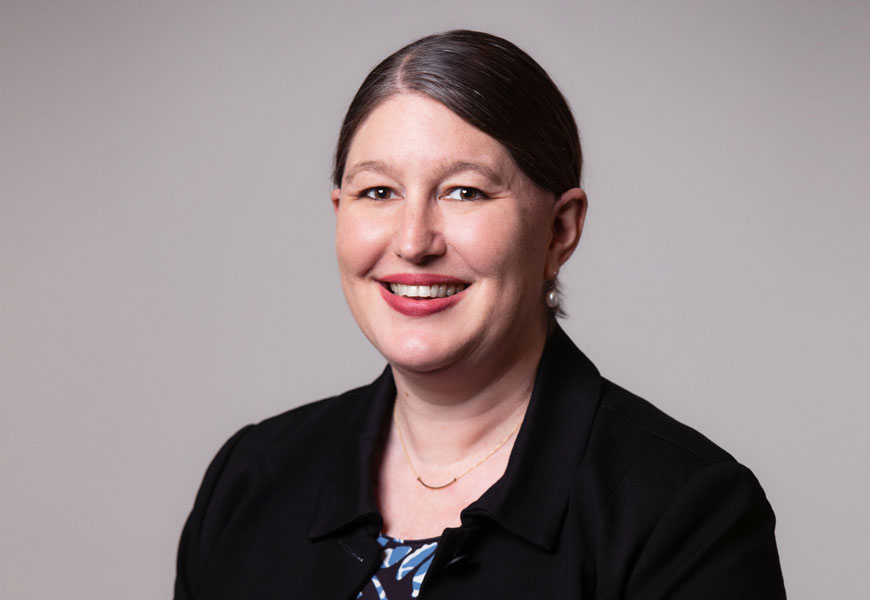
About Lorraine Finlay, Human Rights Commissioner
Lorraine Finlay
Human Rights Commissioner

Media contact
Email: media@humanrights.gov.au or phone: 0457 281 897