Survivors need agency, choice and voice in sexual violence justice. It’s time to act on reform
It’s been one year since the ALRC handed down a landmark report into sexual violence. We have the roadmap - now we need the leadership to provide real choices that put survivors in control.

Opinion piece summary
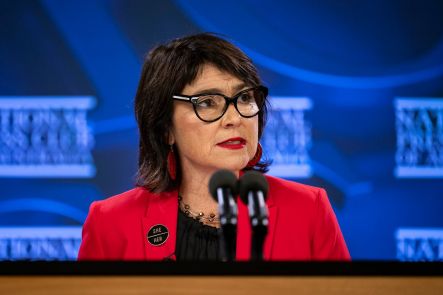
To mark International Women's Day, Sex Discrimination Commissioner Dr Anna Cody penned an op ed calling for action on the recommendations from the ALRC's report into justice for sexual violence victims.
- Author: Dr Anna Cody, Sex Discrimination Commissioner
- Published in: Women's Agenda
- Publish date: 07 April 2026
- More: Access the full article.
If justice is one-size-fits-all, it fits almost no one
Sexual violence is not rare. It isn’t confined to extreme circumstances. It happens in homes, workplaces, schools, universities and online spaces. The fact that it remains so widespread should alarm us all.
A year ago, the Australian Law Reform Commission handed down a landmark national review that listened closely to victim-survivors and delivered a clear message: justice must be shaped around those who experience harm, not around the historical practice of institutions. Survivors need agency, choice and a voice.
Delivering this requires structural change.
Twelve months on, too many survivors are still faced with a system designed around a single, narrow avenue to justice: report to police, pursue a criminal process, withstand cross-examination, and accept the outcome. It works for some, but for most, it is neither safe nor fair.
This is one reason around nine in ten women never report sexual violence to police. Across jurisdictions, most reports do not result in a criminal charge. When systems feel pointless or unsafe, opting out is not a personal failing – it’s a rational response to a system that has broken trust.
This International Women’s Day, with its theme of Balancing the Scales - the scales are still far from balanced. The national review gave us direction – now we must act on it.
Stop it before it starts
Gender inequality remains a key driver of violence against women. Rigid gender stereotypes continue to shape expectations, behaviour and entitlement in our society. Online misogyny has given new reach and intensity to old biases, normalising contempt and hostility that filter directly into schools and workplaces through algorithms and platform design.
Respectful relationships and consent education are too often treated as a ‘nice to have’. Cultural change is not achieved through a single lesson - it is built over time with investment and commitment. Unless these programs are embedded across schools, TAFEs and universities, delivered consistently and evaluated rigorously, we cannot meaningfully address power, coercion and the realities of digital life.
Everyone in the legal system – especially police – need training in how people experience and recall sexual violence. Many police still have limited understanding of trauma responses, including the common ‘freeze’ response, which can be misread as inconsistency or lack of credibility. Good models already exist; in the UK and Canada, independent experts review police decisions not to lay charges and feed that learning back into specialist sexual violence services and police practice.
We also need to confront the everyday signals that reinforce inequality. When sexist remarks are dismissed as jokes or women’s achievements are belittled, it signals whose dignity is seen as optional. We saw this when the U.S. men’s hockey team laughed as their President mocked the women’s team, despite both winning gold. Moments like that aren’t trivial - they normalise disrespect and help inequality take root.
Prevention matters - but it is not enough. Justice systems must also change.
Survivors asked for choice – and that is justice
One thing is clear - from the national review and from the people I speak with in my role - justice looks different for every victim‑survivor. When survivors have multiple, clearly explained options, they are more likely to seek help earlier.
A trauma-informed justice system recognises that reporting may be delayed and that the experience of non-consent can look different in every situation. It rejects myths about how a ‘credible’ victim should behave. It understands the additional barriers faced by First Nations women, women with disability, migrant women, older women and LGBTQIA+ people. It offers restorative justice as an option.
Criminal law plays a vital role, but it cannot be the only pathway to accountability. The recent Federal Court defamation proceedings between Brittany Higgins and Bruce Lehrmann have shown just how complex justice pathways can be. The court ended up making findings about events long after the criminal trial collapsed that highlighted how much survivors must navigate just to have their experiences recognised.
Workplace processes and properly safeguarded restorative justice pathways can also provide meaningful outcomes for some survivors: safe work environments, financial redress, commitments to cultural change, or the lifting of non-disclosure clauses that perpetuate silence are priorities. Choice does not weaken justice – it strengthens it.
It has now been a year since the review was handed down. Survivors have already told us what works, through the national review and many other inquiries. The message is clear: provide real options, invest in prevention, and embed education and training at every level of our education and legal systems.
We have the roadmap. What is needed now is education that works, a justice system that understands sexual violence, leaders committed to change and real choices that put survivors in control.
Because if justice only has one door, many will never walk through it.
About Dr Anna Cody, Sex Discrimination Commissioner
Dr Anna Cody
Sex Discrimination Commissioner

Media contact
Email: media@humanrights.gov.au or phone: 0457 281 897