Race Discrimination Commissioner Sivaraman National Press Club Address
'There's nothing casual about racism: Getting serious about racial equality'
Summary
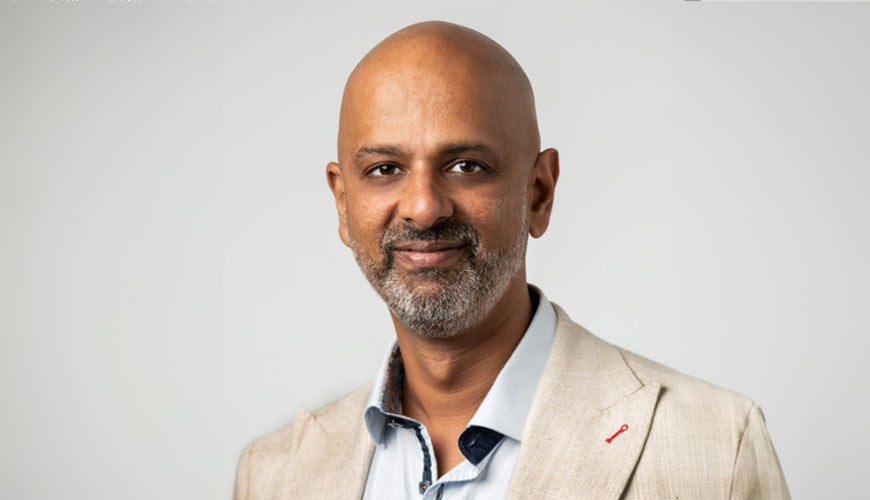
This address was delivered to the National Press Club of Australia by Race Discrimination Commissioner Giridharan Sivaraman on Wednesday 6 August 2025.
Video
There's nothing casual about racism: Getting serious about racial equality
Introduction
Good afternoon. It is a privilege to address you today. Thank you to the many colleagues, friends and community representatives who have journeyed here, whether from down the road or interstate - and to those of you tuning in.
I begin by acknowledging the Ngunnawal and Ngambri people, the traditional custodians of the land we meet on, and pay my respects to Elders past and present. I also extend those respects to any Aboriginal and Torres Strait islander people here today, including Katie Kiss, the Social Justice Commissioner. Thank you, sister, for the privilege to walk alongside you.
Acknowledgement of Country is a small but significant act. It is a moment to ground us, to bring us together. It strengthens our shared pursuit of equality, dignity, and respect.
I invite you to linger on that word: respect .
Think about what it means to you, and to those around you.
I'm sure when we envision the society we aspire to - for ourselves, our loved ones and future generations - much of it is founded on values we hold dear: equality, dignity, and yes, respect .
Yet, to be denied these values, these fundamental rights, lies at the heart of disadvantage so many of us endure. That includes racism.
Today, I will outline my vision for an Australia where racial identity does not limit anyone's ability to live the life they choose. Where we dismantle the invisible barriers that stifle opportunity and sow division.
I come to you today with a plan to do just that.
Disadvantage
If racism is the denial of respect, then fighting against racism in all its forms is an act of respect - a courageous act of love.
Love requires justice. It requires caring deeply about fair and just outcomes.
Justice is the foundation of so many Australian values, even if we don't always realise it. Think about mateship. Loyalty. Looking out for each other. We champion the underdog, stand up for those doing it tough. Justice underpins our idea of the fair go: that no matter who you are, everyone deserves to have a crack - that hard work gives you a real chance to succeed.
Many of you, whatever your background, have indeed worked hard for what you've achieved. Yet at the same time, in some ways, you know that a fair go isn't guaranteed.
Despite our progress, our achievements, and our good intentions, every one of you has either experienced or at least witnessed disadvantage in this country. You know the experience of doing your best, only to face numerous obstacles through no fault of your own.
These barriers were the result of inequality baked into systems and institutions all around us. Because of this, you already know how unfair systems work. And if you can recognise that, then you can understand structural racism.
Let me offer up some examples of unfair systems.
If you're a woman, you might know the sting of seeing male colleagues being promoted before you, despite you being just as – or more – capable.
If you have a disability, you've likely felt the isolation of inaccessible workplaces, facilities, events – even air travel.
If you're part of the LGBTIQA+ community, you may know the exhaustion of constantly deciding whether to hide who you are - or risk being unsafe.
If you're working class, you may have experienced how your accent, postcode, or parents' jobs, can affect how people treat you - and what opportunities you're offered.
If you're older, you may have been overlooked for jobs despite your experience, in a society that too often equates age with incapacity. And many of you have faced multiple barriers at once, because of all these different parts of who you are - your age, disability, gender or sexual identity.
In all of these situations, you've been unfairly disadvantaged due to things you have no control over. Just for being you.
These aren't isolated incidents. You've experienced how prejudice can be built into the very systems meant to support us, resulting in direct harms to your life.
Structural racism is no different.
It goes beyond racist slurs or harassment, though these are harmful enough.
Just as sexism isn't just about individual men treating women badly - racism isn't just about personal prejudice. It's the way our laws, policies, institutions, and entrenched norms consistently produce worse outcomes for people based on their race.
Lived experience example
Let me share a story to give you context. It's drawn from many real ones. Fatima Abdullah, a pseudonym, was a successful architect in Syria. She speaks some English, is a devout Muslim, and wears a hijab. She migrates to Brisbane – hopeful, nervous, determined to contribute.
From the outset, it's challenging.
Despite coming on a skilled migration visa, her qualifications are not recognised, and the process to validate them is costly and unclear. With no income support, she needs work fast.
She's not connected into professional networks. Job ads ask for ‘Australian experience', and recruiters are sympathetic but can't help.
Fatima takes a warehouse job that doesn't utilise her skills. The interview is particularly stressful - conversational, full of idioms she doesn't understand, despite her written English being strong. Still, she gets the job.
When Fatima starts, she's introduced as "from Syria", not as an architect. People are nice, but her lunch draws comments. There is no safe space to pray, so she uses the bathroom. When she writes her name in Arabic on a whiteboard while explaining her culture, HR warns her it made others uncomfortable.
Ramadan coincides with a busy period. She's asked to work longer hours, which consistently delays the breaking of her fast and exacerbates fatigue. She requests leave to celebrate the Islamic holiday Eid but is told she must take annual leave – which she hasn't accrued.
Fatima tries to make connections, but most socialising revolves around alcohol. She applies for promotions but is told she lacks the "cultural fit".
Finally, feeling isolated and unvalued, she quits. In her exit interview, no one asks if she experienced racism.
Fatima wasn't subjected to slurs. No one said her religion was wrong or criticised how she dressed.
But she was the victim of structural racism, at every step of her employment journey.
Now imagine Fatima had a husband.
Safa, a respected engineer, can only find work as cleaner. Their stresses triggers depression. He sees a doctor but isn't understood and told to come back for an interpreter. He doesn't feel safe talking about his mental health in such an unfamiliar setting. He feels like a burden and leaves without treatment.
Their daughter, Nour, struggles at school. She's teased for her accent, her faith. One teacher even encourages her to lose her hijab to “fit in”.
The family soldiers on, but their hope turns to fear. Fear of not being accepted, of not thriving, of not reaching their potential.
Again, this is all based on real experiences.
They're not isolated. They are part of a pattern - one that affects families, communities, generations.
So, what went wrong? It wasn't just one thing, but a system of things.
When racism is structural, it goes beyond personal bias. It is about systems that harm through a lack of racial literacy and cultural safety. We can see this from employment, to healthcare, to education.
These systems may appear neutral, but they are not.
Let me explain “racial literacy”.
If I get off the plane in Chennai, India, my city of birth, I'm simply Giri, or Giridharan to some relatives.
When I return back home to Brisbane, I become "diverse", “multicultural”, "ethnic", even "of non-English speaking background".
Understanding my, and more importantly many others' supposed difference to what's considered the norm is racial literacy. The next step in racial literacy is understanding how our systems deem what's acceptable. Or, as Jan Fran recently put it, how far you are from the warmth of the sun.
To overcome disadvantage, we must do more than acknowledge it. We must change the structures that sustain it.
For example, if you've fought for better workplace protections on the basis of disability, or gender, you already know it takes real policy change, not just ‘competency' training.
It's the same with racism.
We must enact meaningful systemic change or us all to truly thrive.
Fortunately, we already have the roadmap to make this happen.
National Anti-Racism Framework
In November last year, the Australian Human Rights Commission released the National Anti-Racism Framework after extensive consultations with communities across Australia.
The Framework is the first of its kind - a roadmap to eliminating racism in Australia. It contains 63 recommendations for a whole of society approach, with proposed reforms across our legal, justice, health, education, media and arts sectors, as well as workplaces and data collection.
The Framework recognises that racism goes beyond individual actions – it's embedded in the systems and institutions that shape our lives.
It also emphasises the need for:
- building racial literacy,
- embedding cultural safety,
- truth-telling about the past and ongoing harms of colonisation,
- and, most importantly, community-led solutions.
Current times
The Framework comes at a crucial moment. Since I began as Race Discrimination Commissioner last year, I've said it often - these are febrile times.
The war in Gaza has triggered a terrifying surge of antisemitism, anti-Arab racism, anti-Palestinian racism, and Islamophobic hate. Mentioning those different forms of racism doesn't mean equating them. Mentioning one doesn't invalidate another.
Each experience of racism is unique to the victim, but the fact remains more people are being harmed in these ways than before.
Some government approaches pit communities against each other rather than fostering shared solutions. Others suggest we don't have to consider events overseas.
But consultations we've held with Jewish, Palestinian, Arab and Muslim Australian communities, as part of the Seen and Heard project, say otherwise. Seen and Heard project, say otherwise.
Across all communities we consulted, one theme stood out – the experience and impact of dehumanisation. That is, that they have been made to feel less than human, lesser than others around them.
When the massacre of 1200 Jews and Israelis by Hamas on October 7 is not acknowledged, it dehumanises them - and, by extension, Jewish and Israeli Australians.
When the devastation caused by Israel in Gaza - the deaths of 60 000 civilians, mass starvation, the destruction of homes - is ignored, it dehumanises Palestinians, and by extension, the Palestinian, Arab, and Muslim Australians who identify with them. Failing to recognise suffering, wherever it occurs, strips people of their humanity. And that dehumanisation is felt deeply by communities here.
And to ignore other global conflicts also dehumanises people affected here.
Take Sudan, for example. Since conflict broke out in April 2023, over 12 million Sudanese have been forcibly displaced - the largest displacement crisis in the world. Yet it barely registers in our media, barely registers in our national consciousness.
Many communities I haven't even mentioned today know the feeling. The feeling that their lives, their suffering, matters less.
This is where the role of the media is so important.
Media organisations play a vital role in our democracy by shaping public understanding and shining a light on injustice. But they must also be willing to turn that light inward. To examine how race is seen, or not seen, within their own reporting, institutions, and cultures.
Racism is a word, an issue, that draws overwhelming reactions – visceral at times. Sometimes I wonder if some people think saying ‘racism' is like saying ‘Beetlejuice', that it will make the demon appear.
But it's already here, despite those who may deny its existence, or punish those who call it out.
To everyone watching I've got to tell you: as Race Discrimination Commissioner, I dream of the day my role becomes obsolete. A day when no one has to talk about racism because no one is harmed by it.
To get there, though, we must face some hard truths and acknowledge our problems - including past and present failures. Then, we must work together to implement solutions that give us all a fair go. Solutions that help us realise our own potential, and our shared potential to live in - and be - a stronger society.
This isn't just wishful thinking. The National Anti-Racism Framework can help make it real.
What you don't often hear, but is absolutely true, is that addressing racism makes economic sense. Research shows it costs the economy billions. Racism undermines productivity, workplace safety, and a business' reputation.
When you eliminate racism from our institutions, you improve their quality and fairness. All of us benefit from systems that are more transparent, accountable, responsive to our needs.
And remember, this benefits everyone, not just communities affected by racism. Consider the richness and vibrance that would colour our society if we all truly felt safe to be who we are.
This isn't about giving anything up. It's about all of us gaining more.
Positive duty
This year also presents a historic opportunity for change.
It marks 50 years since the Whitlam government passed the Racial Discrimination Act , or RDA - a pivotal milestone of its time that paved the way for all other anti-discrimination laws.
While the RDA has improved racial equality over the decades, structural racism still persists in our legal and justice systems. The world has changed drastically over the past 50 years, and our legal frameworks must keep pace.
This is why, alongside policy and structural reform, the National Anti-Racism Framework calls for the RDA to be reformed, to include a positive duty to eliminate racial discrimination.
A positive duty is a legal obligation on employers to take ‘reasonable and proportionate measures' to prevent discrimination - acting proactively, not just reactively.
A positive duty to eliminate sexual harassment in the workplace was introduced into the Sex Discrimination Act two years ago. Businesses have shown they can adapt to these changes.
Currently, the RDA places the burden on targets of racism - who are often traumatised, under resourced and overwhelmed - to lodge complaints. It requires harm to be suffered before action can be taken. This needs to change.
Uni study
To truly create safer environments, we need to shift from reactive measures and instead work to stop racism before it happens.
This is the overarching intent of the Racism@Uni project - the Australian Human Rights Commission's historic study into racism in the tertiary sector. It will examine the prevalence, nature, and impact of racism at universities for students and staff. By understanding people's experiences, we aim to identify how best to address racism in these environments.
Our Interim Report has already revealed disturbing trends of racism: the prevalence of anti-First Peoples racism, rising antisemitism, anti-Palestinian racism, and Islamophobia. It shows structural discrimination.
We have also seen, of course, the significant impacts of racism on wellbeing, participation, and performance.
We have reached a critical stage in the study. Having completed focus group engagement, we roll out the national online survey across universities next week - on 11 August.
Our findings will inform a final report with practical recommendations to universities and the government. Our aim is to create a safer, more equitable, and inclusive environment for all students and staff.
First Peoples' justice
Now, I've said it before, and I'll say it again: there can be no racial justice in Australia without justice for Aboriginal and Torres Strait Islander peoples. That's why the National Anti-Racism Framework, and all efforts to combat racism in Australia, must be First Nations-centred.
We cannot fix a problem without addressing its root cause. And every manifestation of racism in this country stems from the original violence against First Peoples.
The same racist motives that justified the theft of Aboriginal land also drove the mistreatment of Chinese migrants on the goldfields – which then laid the foundations for the White Australia Policy.
All of it stemmed from the same harmful ideas: that some people are inherently superior and belong here more than others. And while the racism experienced by First Peoples may differ from that faced by non-Indigenous people, the struggles are connected. Many of us know what it's like to feel ashamed of our culture, language, or dress - and pressured to give up parts of ourselves to avoid being treated as inferior.
But the same systems that pressure us into shedding these parts of ourselves, also spent centuries trying to erase First Peoples languages and cultures.
And for centuries, Aboriginal and Torres Strait Islanders have resisted that erasure. That resistance has been the conscience that tells us we still have a reckoning with our past. It's the crowbar that allows non-Indigenous people to prise open structures - so we can all be our whole selves without penalty.
Every time we're made to feel like we don't belong, we remember First Peoples are still fighting to be recognised in the constitution of their own ancestral land.
When our children are bullied at school for being different, Aboriginal and Torres Strait Islander children face being removed from family at persistently high rates and locked in watchhouses as young as ten.
And as we talk about the fair go, must face the truth: this country has never given Aboriginal and Torres Strait Islander people a fair go.
If we really believe in justice and respect, then advocating for First Peoples justice is the bare minimum of living up to our own values.
If the abhorrent racism they face continues without justice, how can the racism faced by anyone else be addressed, or even taken seriously?
Truth-telling
And First Peoples justice can only be built on a foundation of truth-telling.
We cannot achieve true progress without acknowledging the realities of colonisation – from massacres to land theft.
Understanding how these horrors shaped the systems we live under today.
How these systems continue to perpetuate racism and inequalities for First Peoples across health, justice, and more.
Sometimes, we've got to have difficult conversations. Hear uncomfortable truths. But doing so isn't a means to divide us. It is a powerful act of unity.
Truth-telling also reveals beauty in the 238 years of resistance, survival and hope that our First People have been striving for. It is a persistent fight for racial justice deeply connected to our broader struggle for racial equality.
Through truth-telling, we learn to be guided by First Peoples' strength, knowledge, and leadership in our own pursuit of equality.
Conclusion
And when it comes to equality – or lack thereof - you know what systemic discrimination feels like. You've lived it or loved someone who has. You know the frustration of being judged by characteristics you can't control.
You know the exhaustion of having to work twice as hard to get half the recognition.
That understanding drives powerful social change.
When employers could fire women for falling pregnant, we didn't just shrug and accept it. Women, Unions and allies advocated, and we changed the law.
When the law excluded same-sex couples from marrying, we fought for equality.
That sense of justice you felt when fighting for equality, for what's right, that's exactly what we must apply to structural racism.
We all have a role to play. Even the word racism may feel heavy or overwhelming. But each of us holds a small piece of this immense puzzle we must solve.
And if you are white, acknowledging structural racism in Australia doesn't mean feeling guilty about your own achievements or advantages, or that your own struggles don't matter.
It means recognising how power and privilege operate, including your own, and how we all navigate systems that treat people differently - based on race, faith, appearance, and background. And this treatment results in real and lasting impacts on our lives.
When we understand these connections, we can build the kind of change that improves systems of all of us.
The National Anti-Racism Framework has been in the public domain for 9 months now. It has broad support from a range of communities, and organisations including ACOSS, the ACTU, FECCA, The National Aboriginal and Torres Strait Islander Education Corporation, The Royal Australian College of General Practitioners, and over 100 other organisations, and government departments.
Yet we are still waiting for commitment from the federal and state governments.
We know the Framework is bold and broad in its scope. It has to be.
If you wanted a Framework to eliminate sex, age, or disability discrimination, you wouldn't expect fewer than 63 recommendations.
We thought about that.
That's why the primary recommendation is for the Australian Government to establish a National Anti-Racism Taskforce with senior government, community and Commission members.
The Taskforce would identify priority actions for First Peoples and other affected communities. One example could be recommendations aligned with the work of the Special Envoys to combat antisemitism and Islamophobia.
It is my hope that with government support, we can get the ball rolling as soon as possible, and turn this roadmap for change into a reality.
We already have the solutions to tackle racism in Australia, all we need now is genuine commitment and political will.
Every generation faces its defining moment. Some generations failed, others succeeded. But all were judged by how they responded when it mattered most.
This is our moment. This is our test.
We can keep talking about respect, while some communities don't feel valued or safe. Keep talking about a fair go, while knowing that some people are still disadvantaged through no fault of their own.
Or, we can be the generation that made Australian values real for everyone. We can be the ones who prove that equality, justice and respect aren't just words we throw around, but a lived reality that we've actively and intentionally worked for.
I described the fight against racism as a courageous act of love. Bell Hooks, African American writer and activist, said love is “an action, never simply a feeling.”
Love requires intent, care, accountability. That means it requires deliberate decisions in how we treat others.
So today, I call on all of us to begin seeing respect as an action.
In Prime Minister Albanese's Press Club Address soon after his election win, he declared his vision for Australia as a “microcosm for the world where all are respected and valued and our diversity is recognised as a strength.”
This doesn't have to be a mere aspiration.
Let's commit today to respect as an action, with courage and intent, and use it as our north star to guide decisions we make in our institutions, workplaces, and daily lives. If we do so, I believe the vision of the Prime Minister, and indeed so many of us, can move from aspiration to reality.
Thank you.