Can I be sure my child won’t experience racism at school?
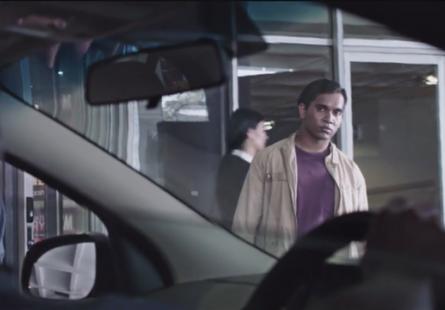
Watch a video guide on how parents can help address and prevent racism affecting their children at school, with practical strategies and support resources.
Summary
Research into how racism is a barrier to equitable education.
The research
Research shows that racism in schools negatively impacts attendance, with students reporting skipping school to avoid racism.1 We also know that racism impacts educational outcomes.2
Racism in schools
Racism in schools occurs on many levels. The 2017 Speak Out Against Racism study found 43% of students reported seeing incidents of racial discrimination directed towards other students by teachers.3 The study revealed that over 40% of Aboriginal and/or Torres Strait Islander students or students from culturally and linguistically diverse communities experienced racial discrimination from their peers. Many teachers also report feeling underprepared to respond to racism in the classroom.4
However, racism in schools extends beyond racism between people. What we teach and experience in classrooms has a direct impact on the way we perceive ourselves, understand our histories and place value of certain knowledges and cultures. In the 2020 Wiyi Yani U Thangani project, First Nations women and girls spoke of the need for truth-telling about Australian history and an acknowledgement of the continued impact of European colonisation.5 Respondents spoke of the need for mandatory Indigenous designed, owned and led cultural competency across education and the incorporation of Indigenous cultures and histories into the education system to support national truth-telling.6
Building racial literacy
In addition to cultural competency, building racial literacy (an understanding of how race and racism shape society) is vital to developing skills in anti-racism from a young age. Developing this literacy in school-aged children is an important step towards racial equity.
Resources
Resources such as the Australia High School Anti-Racism Kit, the AIATSIS Education Strategy 2021-2025 and the Know Your Country initiative are just three examples of initiatives designed to build cultural competency and racial literacy in schools. We need to acknowledge and support the important work being undertaken by students, teachers, communities and others within the education sector to tackle racism in schools.
By reflecting on the impact of racism, and taking a stand against it, we can build a fair and equal society – for all.
Sources
1Nicholas Biddle, Naomi Priest, ‘Indigenous student skipping school to avoid bullying and racism’, The Conversation (online, 11 April 2014) < https://theconversation.com/indigenous-students-skipping-school-to-avoid-bullying-and-racism-25433>.
2Nicolas Biddle, Naomi Priest and Australian National University, ‘Racism hits Indigenous students’ attendance and grades’, Australian National University (online, 29 September 2015) < https://www.anu.edu.au/news/all-news/racism-hits-indigenous-students-attendance-and-grades>.
3SOAR, Summary of findings from the 2017 Speak out Against Racism (SOAR) student and staff surveys, (Report,2017)<https://csrm.cass.anu.edu.au/sites/default/files/docs/2019/9/Summary_of_findings_2017_SOAR_student_and_staff_surveys.pdf>.
4Hannah Yared, ‘Busting myths and changing perspectives on racism in schools’, Monash University, (Web page, 30 November 2020) <https://www.monash.edu/education/teachspace/articles/busting-myths-and-changing-perspectives-on-racism-in-schools>.
5Australian Human Rights Commission, Wiyi Yani U Thangani (Women’s Voices): Securing Our Rights, Securing Our Future Report (Report, 2020) 68 <https://humanrights.gov.au/sites/default/files/document/publication/ahrc_wiyi_yani_u_thangani_report_2020.pdf>.
6Australian Human Rights Commission, Wiyi Yani U Thangani (Women’s Voices): Securing Our Rights, Securing Our Future Report (Report, 2020) 90 <https://humanrights.gov.au/sites/default/files/document/publication/ahrc_wiyi_yani_u_thangani_report_2020.pdf>.