Social security and poverty
Examine Australia's social security and poverty challenges, and how support gaps affect people's dignity, financial wellbeing and ability to reach their
Summary
- The Australian social security system is inadequate and overly punitive.
- Australia’s employment services system is inadequate and need reform. In 2025, the Economic Inclusion Advisory Committee ranked Australia near the bottom of OECD advanced economic nations in terms of short-term out of work payments.
- Poverty in Australia is increasing. In 2025, 14.2% of people in Australia were living below the poverty line.
Download the fact sheet
Social security and poverty
This fact sheet provides information on issues raised in the report card as well as findings from a range of reports and submissions made by the Commission over the past 12 months.
Social Security Systems
Australia’s social security system fails to uphold Economic, Social and Cultural Rights
Economic Justice | Other priority human rights issues
Social security payments are too low and entrench poverty. Social security programs need ongoing monitoring to ensure that they are not being applied in a punitive manner or that they disproportionately penalise people in marginalised situations.
The Australian social security system is inadequate and overly punitive.
Job seeker and out of work payments
In 2025, the Economic Inclusion Advisory Committee ranked Australia near the bottom of OECD advanced economic nations in terms of short-term out of work payments.
The main income support payment for unemployed Australians is the ‘JobSeeker Allowance’. Despite recent increases, JobSeeker payments are below the poverty line at only 43.5% of the Australian net full time minimum wage and not high enough for recipients to afford the basic essentials of everyday life. People receiving JobSeeker payments are 14 times more likely to go without at least one substantial meal per day.
JobSeeker payments are below the poverty line at only
| 43% | of the Australian net full time minimum wage |
Australia's employment services system
Australia’s employment services system is inadequate and need reform. People who are unemployed continue to be subjected to an employment services system that is more focused on compliance than supporting positive outcomes for people in the labour market.
The Department of Employment and Workplace Relations, which is responsible for employment services, currently fails to meet its targets for moving people into employment.
The Australian Council of Social Service Our Faces of Unemployment Report reveals there are 550,000 people are stuck on unemployment payments for over a year.
People who are disadvantaged in the labour market are overrepresented among people who are long-term unemployed, including:
- People with a disability (50%);
- People aged 55 years or older (33%);
- First Nations people (15%).
First Peoples
Punitive systems in Australia disproportionately affect First Peoples. There are programs like the cashless debit card for welfare recipients that restrict cash withdrawals purchases from specific stores. These schemes are justified by the government as tools that reduce social harms like gambling and alcohol, but they undermine autonomy and financial independence. First Peoples represent 82.2% of all participants in compulsory income management systems. In 2024, the Parliamentary Joint Committee on Human Rights called for the abolition of compulsory income management, recommending it be made voluntary.
Priority action
The Australian Government should ensure welfare payments provide an adequate standard of living. Welfare support programs be reformed so they are not punitive.
The Australian tax system perpetuates wealth inequality
Economic Justice | Urgent human rights issues
The Australian taxation system favours high wealth individuals and investors, with a narrow tax base that limits funding to address broader social and economic inequalities across the community. |
Australia’s human rights obligations under the International Covenant on Economic, Social and Cultural Rights (ICESCR) are guided by a principle that the government must justify that they are making every effort to address inequalities in the enjoyment of rights, to the maximum of available resources.
This is set out in Article 2(1) of ICESCR as follows:
Each State Party to the present Covenant undertakes to take steps, individually and through international assistance and co-operation, especially economic and technical, to the maximum of its available resources, with a view to achieving progressively the full realization of the rights recognized in the present Covenant by all appropriate means, including particularly the adoption of legislative measures.
This includes by ensuring that the taxation system of the country is equitable and provides sufficient capacity to address press social needs.
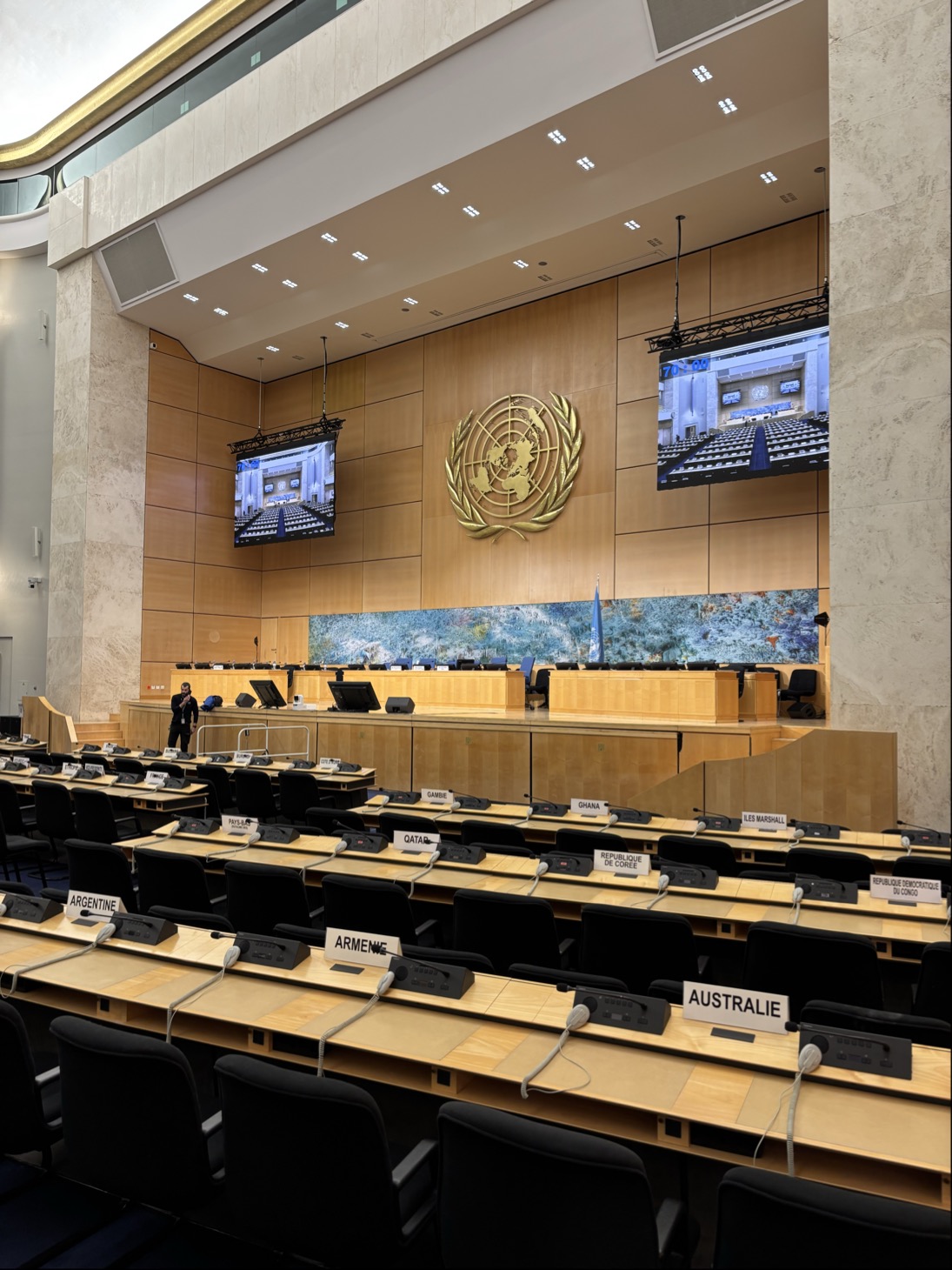
When Australia appeared before the UN Committee on Economic Social and Cultural Rights in February 2026, the following observations and recommendation were made by the Committee about how the government is meeting this obligation:
The Committee remains concerned about the continued existence of significant tax concessions that disproportionately benefit high-wealth individuals, including preferential treatment of capital gains and deductions related to investment properties, as well as concessional taxation of substantial retirement savings.
The Committee is concerned that such concessions may reinforce wealth inequalities and limit the State Party’s ability to mobilize the maximum available resources necessary to adequately fund social security, housing and other Covenant rights.
UN review urges Australia to address poverty, housing crises, and strengthen human rights
Australia must act on UN findings highlighting major gaps in rights, poverty and housing, the AHRC warns. Find out more in the concluding observations of Australia's 6th ICESCR review.
Poverty
Too many people in Australia live in poverty
Economic justice | Urgent human rights issues
Too many people live in poverty in Australia, without clear national approaches to measure or address it. There is a need for a national plan to eradicate poverty, with robust measurement of poverty and targets.
Poverty in Australia is increasing. In 2025, 14.2% of people in Australia were living below the poverty line. This is a 1.2% increase since 2021. The poverty gap (the difference between income of people in poverty and the 50% of median income poverty line) has also increased. Driven in large part by housing affordability and cost of living crises.
People living in poverty are less likely to fully enjoy other fundamental human rights, including rights to:
- health
- adequate housing
- food and water
- social security
- education
- and freedom of movement.
Poverty rate in Australia
| 14% | of people in Australia were living below the poverty line in 2025. |
| 1.2% | increase in the percentage of Australians living below the poverty line from 2021 to 2025 |
Specific groups are particularly at risk of experiencing poverty
A national plan to eradicate poverty
Australia’s lack of national human rights protections acutely affects people who experience poverty, marginalisation and discrimination. It is the most vulnerable people who fall through cracks in the existing frameworks.
Australia has committed to the UN’s Sustainable Development Goals, which includes a commitment to halve poverty by 2030.
Australia does not have a national poverty reduction plan and has yet to agree to a consistent national definition of ‘poverty’.
Many Australian laws relate to poverty and related matters, including social security benefits, and housing assistance. However, there are gaps in Australian laws relevant to poverty. Specific groups are overlooked and approaches to poverty reduction are often siloed rather than cross-cutting.
The national poverty reduction plan should:
- recognise the multi-dimensional nature and experiences of poverty
- establish a universal definition and agreed measures of poverty, with indicators and specific targets
- provide special attention to individuals and communities most affected by poverty, including
- First Nations people
- culturally and linguistically diverse communities
- women and LGBTIQ+ people o children o people with disability, and
- older people
- set indicators and targets for the transition away from welfare and management frameworks, toward social investment models
- adopt a strengths-based, capacity-building approach to support people into meaningful jobs and careers
- address the social determinants of health and wellbeing, which include employment, education, housing, nutrition, digital devices and data, social protection and justice
- specify measures to reduce childhood poverty, in recognition of the long term and intergenerational impacts of childhood adversity
- protect human rights and promote non-discrimination
Priority action
The Australian Government should introduce a national poverty reduction plan, adopting a human rights-based approach and co-design with affected communities.
Digital decision making
Democratic freedoms | Recent human rights advances
Concern remains that the use of AI in government decision making lacks appropriate legislative safeguards and undermines procedural fairness for Australians.
The human rights risk of digital decision making
Democratic freedoms | Other priority human rights issues
Concern remains that the use of AI in government decision making lacks appropriate legislative safeguards and undermines procedural fairness for Australians.
AI-informed decision making’ includes a decision-, or decision-making process, where AI is a material factor in the decision, and where the decision has a legal or similarly significant effect for an individual. AI is increasingly being used in decision making in areas as diverse as criminal justice, advertising, recruitment, healthcare, policing and social services. While the use of AI can protect and promote human rights, such as by identifying and addressing instances of bias or prejudice that can be present in human decision making, AI is also capable of reinforcing or exacerbating biases or prejudices.
Robodebt
The ‘Robodebt’ scheme, implemented in 2017, is an example of the human rights implication of automation in social services.
‘Robodebt’ automated debt recovery system that used an algorithm to identify any discrepancies between an individual’s declared income to the ATO, and the individual’s income reported to Centrelink. Where a discrepancy was identified, this was treated as evidence of undeclared or under-reported income, and a debt notice was automatically generated and sent to the individual.
Robodebt resulted in thousands of welfare recipients being sent inaccurate debt notices following the introduction of a new digital system. The debt notices caused anguish and stress for many vulnerable and disadvantaged recipients. Some people committed suicide. An inquiry into the scheme found it was devised without regard to social security law.
Priority action
The Australian Government should introduce a risk-based and preventative approach to AI regulation centered on human rights, including a specific AI Act to address the need for mandatory guardrails in high-risk settings.