Closing the Gap Action Plan and First Nations Cultural Safety Framework
The Commission’s commitment to Closing the Gap Priority Reform 3 and a practical roadmap to embed cultural safety into our everyday work.
Overview
The Australian Human Rights Commission’s First Peoples Cultural Safety Framework sets out a clear and practical approach to creating a workplace where First Peoples feel respected, valued, supported and safe. It forms part of the Commission's broader commitment to Closing the Gap by implementing a number of transformation elements within the organisation, in the context of our 2026-2030 Strategic Plan.
Closing the Gap Priority Reform 3 Implementation Plan 2026 -2030
Closing the Gap Priority Reforms are a whole-of-government commitment and accountability framework, not an optional initiative.
They represent nationally agreed structural reforms that all government agencies are responsible for implementing and embedding across policy, programs, service delivery, governance and decision-making.
Achieving the Priority Reforms requires sustained organisational change and a commitment to shared decision-making, cultural safety, community control and data sovereignty.
First Peoples Cultural Safety Framework and Implementation Plan 2026–2030
Cultural safety is central to the realisation of human rights. This Framework reflects the Commission’s commitment to embedding those principles in how we lead, make decisions and work.
Through this Framework, the Commission is strengthening its role in modelling culturally safe practice and aligning its internal culture with national commitments. This includes the National Agreement on Closing the Gap and the National Anti-Racism Framework.
Most importantly, it reflects our commitment to building an organisation that upholds human rights in practice, ensuring participation, respect, equity and dignity for all.
Download the plans
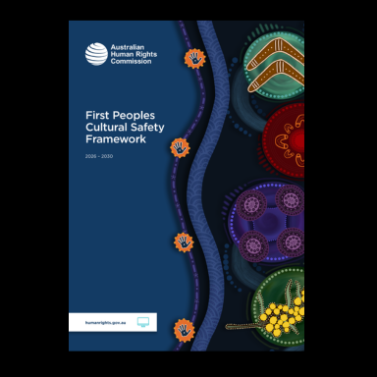
First Nations Cultural Safety Framework 2026-2030
A clear and practical approach to creating a workplace where First Peoples feel respected, valued, supported and safe.
Closing the Gap Priority Reform 3 Implementation Plan
A plan to implement a number of transformation elements within the Commission in the context of our 2026-2030 Strategic Plan.
The artwork
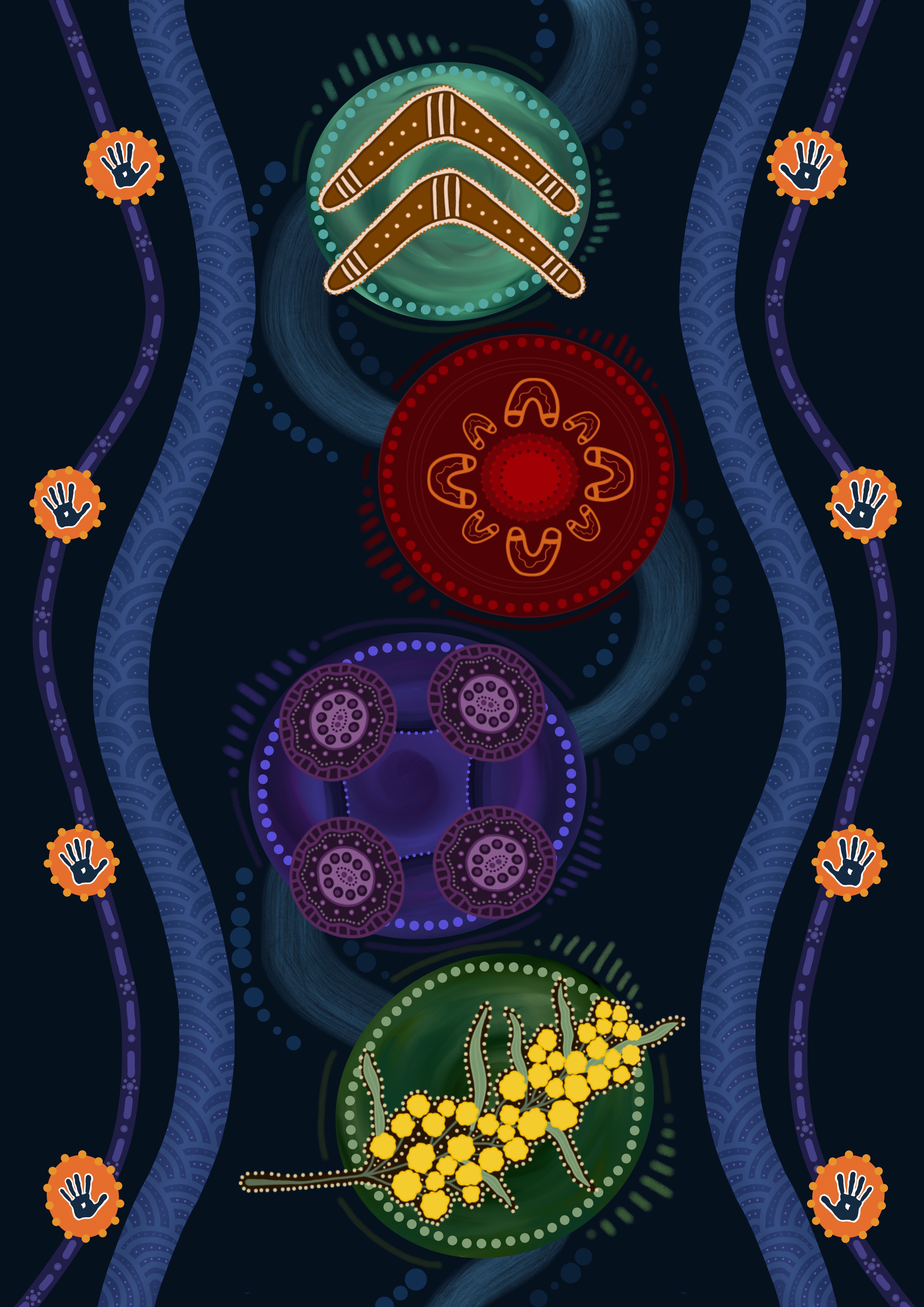
Cultural Safety is Everyone’s Responsibility, represents the shared commitment required to create culturally safe environments where First Peoples are respected, valued and supported. The artwork brings together the 4 pillars of the First Peoples Cultural Safety Framework, illustrating that cultural safety is not the responsibility of one person, team or initiative, but a collective responsibility embedded across leadership, workplaces, systems and everyday actions. Each symbol within the artwork reflects a key pillar of the Framework. Together, they demonstrate how strong leadership, safe and inclusive workplaces, equitable systems, and ongoing learning work in partnership to create meaningful and lasting change. The interconnected design highlights that progress in one area strengthens the others, reinforcing a whole-of-organisation approach to cultural safety.The vibrant colours throughout the artwork represent diversity, connection, growth and shared responsibility. The pathways connecting the symbols reflect the ongoing journey of learning, listening, truth-telling and continuous improvement required to foster culturally safe environments for First Peoples.
About the Artist
Nioka Marlowe is a proud Wiradjuri woman, deeply connected to her Country in Tumut, NSW, where she was born and raised. This strong connection to Country continues to shape her identity and artistic practice. As a multi-disciplinary artist and modern storyteller, Nioka shares rich narratives through a range of mediums. These include hand-painted and hand-drawn digital works across canvas, furniture and pottery. Her work is grounded in the influence of family, the landscapes of Country and the stories and cultural knowledge shared by her Elders, each adding depth and meaning to her practice. Nioka’s art is a powerful vehicle for education and connection. Her pieces invite people to engage with and celebrate the richness of Aboriginal culture, creating opportunities for learning, reflection and community cohesion. Through deep listening and a thoughtful approach, Nioka creates distinct works that enhance everyday spaces while fostering meaningful conversations and connections.