Explore 4 highlights of the Commission's work over the last 40 years in relation to addressing racism in Australia.
The Commission has played a central role in advancing anti-racism in Australia since our establishment four decades ago.
The foundation of our anti-racism work is the Racial Discrimination Act 1975 which gives us the legal framework to respond to complaints of racial discrimination, challenge unequal treatment, and advocate for stronger national protections.
Over the last 40 years, our efforts have included major national anti‑racism campaigns, landmark inquiries and studies that have documented the nature of racism in areas such as employment, health and education.
The Commission is proud to have been involved in helping deliver many legal and policy reforms over the last 4 decades which have addressed racism, and we acknowledge, honour and celebrate the vital work of many anti-racism advocates over this time.
Here are 4 key ways the Commission has helped address racism in Australia:
Addressing racist violence in Australia with a landmark inquiry
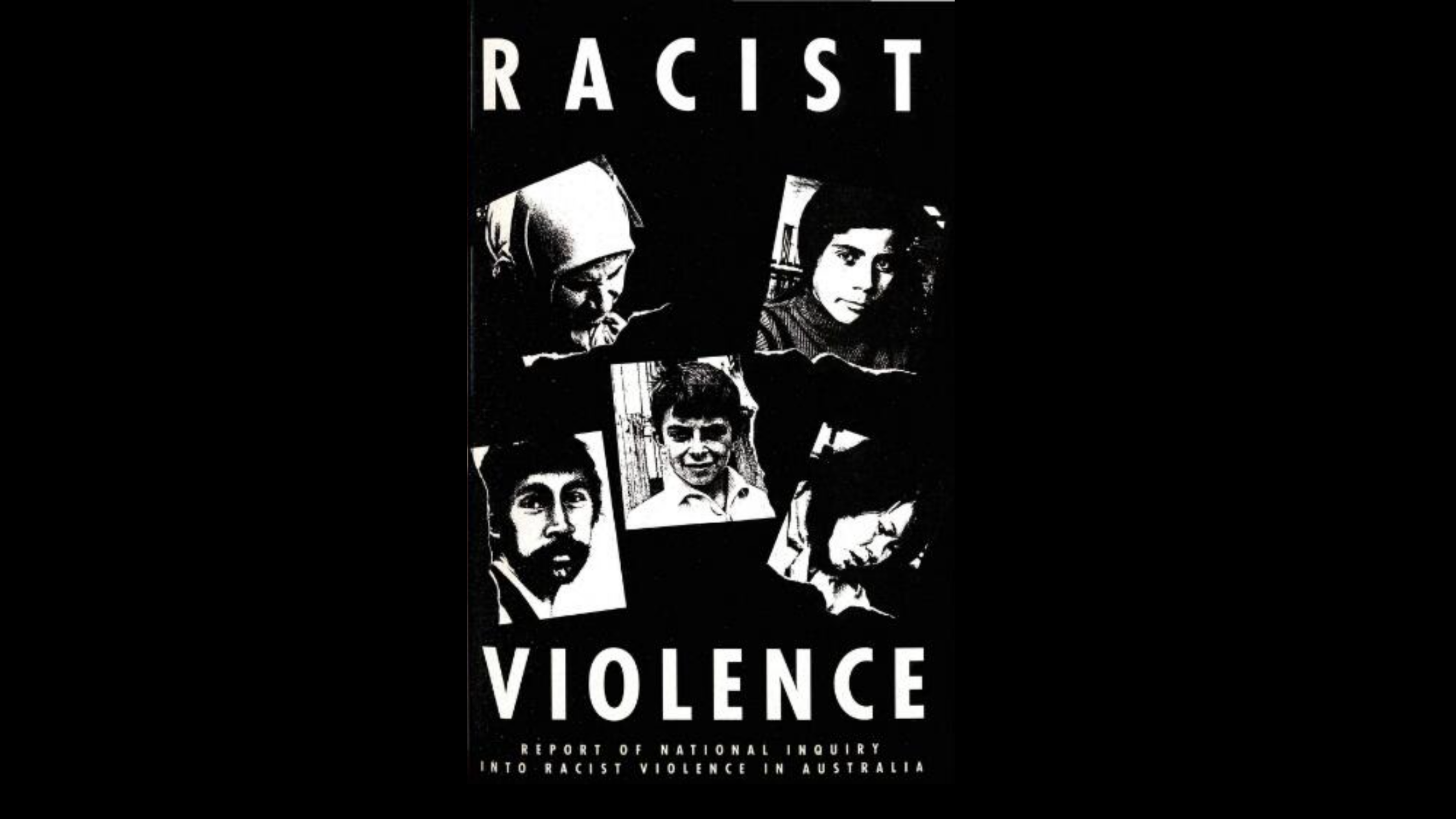
Our landmark 1991 Racist Violence: Report of the National Inquiry into Racist Violence in Australia stands as a defining moment in our nation's public awareness of racism, changing Australia’s legal and policy landscape, and establishing the principles that continue to guide anti‑racism and human rights work in Australia today.
Read the story and watch the video (see below). The video features NSW Treaty Commissioner Aden Ridgeway, Managing Director, Cultural Perspectives Pino Migliorino, Founder & Convener of the Asian Australian Alliance Erin Chew, and Former AHRC policy officer Ruth Callaghan.
Report cover (1991)
For 4 decades the Commission has played a central role in advancing anti‑racism across the country and exposing the structural nature of racism. It has advocated for stronger legal protections and more effective national frameworks, setting a standard for anti‑racism work.
The Commission’s work in anti-racism has included its statutory responsibilities under the Racial Discrimination Act 1975 (RDA), national anti-racism campaigns and major inquiries and studies that have documented systemic racism in employment, health and education.
It’s within this longstanding commitment to addressing racism that the Commission’s 1991 Racist Violence: Report of the National Inquiry into Racist Violence in Australia stands as a defining moment. It transformed public awareness and established principles that continue to guide anti‑racism and human rights work in Australia today.
The inquiry was chaired by the Race Discrimination Commissioner at the time Irene Moss with Ron Castan QC as Co‑Hearing Commissioner. It undertook hearings across the country, gathered extensive written submissions from people’s lived experience of racism to transform public awareness and policy action.
Almost 1,000 people came forward to give evidence, sharing personal accounts of racist violence, threats, harassment and systemic neglect. For many, it was the first time their experiences had been heard and documented by a national institution. The stories revealed the profound personal and collective harm caused by racism, as well as the fear, trauma and exclusion experienced by targeted communities.
Through this evidence the inquiry identified the systemic nature of racism in Australia. It found that racist attitudes and practices were embedded across many public and private institutions, including policing, justice systems and other areas of public life. Racist violence was not the result of isolated incidents or individual prejudice alone but reflected deeper structural problems that required a coordinated response.
The inquiry found racist violence against Indigenous Australians to be endemic, nationwide and severe. It documented violence perpetrated not only by individuals but also through institutional practices, concluding that this situation should be of serious concern to all Australians. The report warned that without immediate action, racist violence against Aboriginal and Torres Strait Islander peoples could increase in both intensity and extent. Violence and intimidation directed at people of non‑English speaking backgrounds was also identified as a matter of urgent national concern.
At the same time, the inquiry found that multiculturalism was working well in Australia. While racist violence, intimidation and harassment were real and damaging, the report noted that these experiences were not at the scale seen in many other countries. This finding reinforced the idea that Australia had the capacity and responsibility to address racism early through effective laws, policies and public leadership.
The release of the inquiry report was symbolically powerful. Community groups, including First Nations organisations, welcomed the findings and recognised the report as a long-overdue acknowledgment of lived realities. Its recommendations were widely seen as offering practical and constructive steps to uphold standards in public life.
As a result, the government amended the Racial Discrimination Act to include racial vilification provisions. The embedding of these provisions in federal law represents a formal commitment to balancing freedom of expression with the right to live free from racial hatred and harm. The inquiry also set a lasting standard for human rights‑based anti‑racism work, one that centres participation, accountability, equality, empowerment and legality. Together, these principles continue to guide efforts to confront racism and advance human rights in Australia.
Delivering a roadmap for eliminating racism in Australia
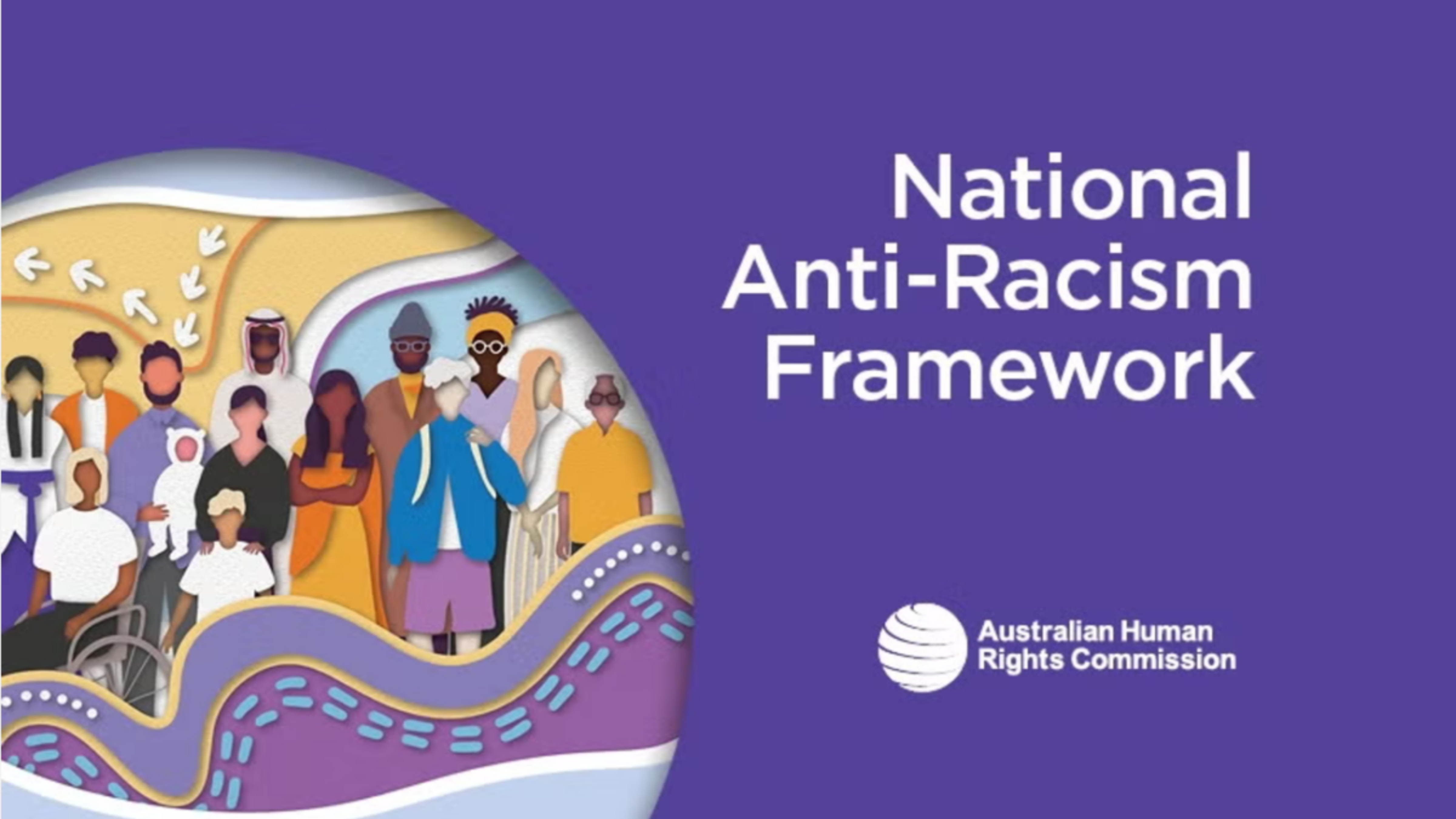
In 2024, the Commission launched the National Anti-Racism Framework, the result of a two-year nationwide consultation process with communities who experience racism, individuals and organisations. For the first time ever, the report set a clear roadmap for a national response on how to eliminate racism in Australia's legal, justice, health, education, media and arts sectors. Read the story (see below).
Report cover image, 2024
In November 2024, the National Anti-Racism Framework emerged at a pivotal moment in addressing racism in Australia. After two years of nationwide consultation and evidence‑gathering, the Commission found that a failure to acknowledge racism at the highest levels of leadership had allowed systemic barriers and discrimination to persist.
The Commission’s National Anti‑Racism Framework is the first of its kind in terms of a policy response to racism in Australia. It’s a roadmap for eliminating racism and a comprehensive blueprint for sustained institutional reform, moving beyond fragmented or short‑term initiatives. By clearly naming racism as a systemic issue, the Framework challenged the tendency to minimise or individualise experiences of harm.
In March 2021, the Commission called for a Framework to be developed and in October 2022 the Australian Government committed funds to the Commission’s anti-racism work. The Commission led consultations with communities that experience racism and received submissions from a large number of individuals and organisations across the country.
The significant work done by the Race Discrimination Commissioner in developing the National Anti-Racism Framework gave the Commission a more thorough understanding of how ingrained racism is in our systems and institutions. It established that urgent action was needed to address the systemic and structural racism that is deeply embedded throughout Australia.
The Framework sets out a clear path forward, with 63 recommendations aimed at driving both structural and cultural change involving reforms across Australia’s legal, justice, health, education, media and arts sectors, as well as workplaces and data collection.
It also calls on the Australian Government to develop two dedicated implementation plans: one focused on First Nations peoples and their distinct and enduring experiences of racism, and another addressing racism experienced by non‑Indigenous communities. This approach recognises that racism is not experienced uniformly and that tailored responses are essential to achieving equality.
The reaction to the Framework highlighted both its urgency and the work still to be done. While there was limited formal endorsement from governments, community response was and remains strong. On the Framework’s first anniversary in November 2025, more than 60 organisations issued a joint statement calling for official commitment to its implementation.
By strengthening accountability, promoting prevention and addressing systemic discrimination, the National Anti‑Racism Framework lays the groundwork for a more just, inclusive and rights‑respecting Australia.
Between 2012 and 2025, the Commission led the development of two anti-racism education campaigns. These campaigns have shaped public discourse, strengthened organisational policies in workplaces, schools and community settings, and provided practical tools for individuals to act against racial discrimination. Read the story (see below).
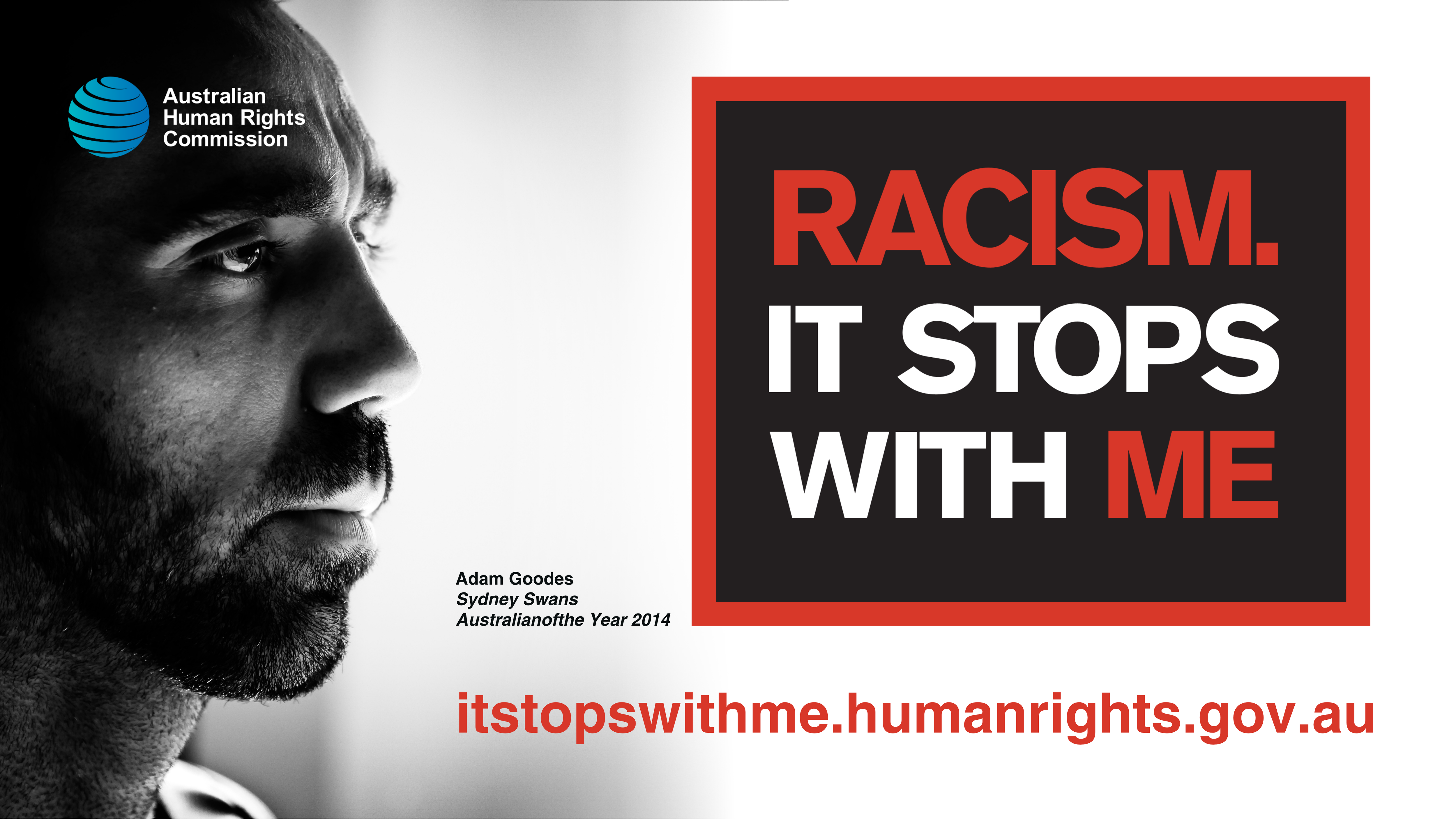
Racism It Stops With Me campaign image featuring Adam Goodes (2016)
The Commission has a long history of runningnational public education and behaviour change campaigns.Campaigns delivered by our Race Discrimination Commissioners over the last 40 years have raised awareness of racism, promoted anti-racism, and equipped individuals and organisations with practical tools to act against racial discrimination. Over time they have shaped public discourse, strengthened organisational policies in workplaces, schools and community settings, and produced resources such as the Workplace Cultural Diversity Tool aimed at supporting more inclusive workplace practices.
The campaign There’s nothing casual about racism (formerly known as Racism. It Stops With Me), was originally launched in 2012 and refreshed in 2025 to coincide with the development of the Commission’s National Anti‑Racism Framework. Many people will remember the previous iteration of the campaign under the banner of Racism. It Stop With Me. The campaign engaged over 200 organisations in business, sport, and community sectors to promote anti-racism actions, contributing to increased public discourse on, and understanding of, racism in Australia. Hundreds of high profile as well as everyday Australians lent their support and endorsement to the Racism. It Stops with me campaign including football stars Adam Goodes and Greg Inglis, and broadcaster Craig Foster. The campaign was recognised at the 2023NSW Premier's Multicultural Communications Awards for its successful efforts to increase awareness of how racism operates at both institutional and interpersonal levels, providing tools for Australians to address it.
The 2025 refresh of the campaign under the banner There’s nothing casual about racism shifted the focus of the campaign from being primarily on interpersonal racism to addressing systemic racism - racism embedded in institutional policies, structures and practices. The campaign now spotlights sectors such as education, justice and workplaces, urging Australians to recognise that racism is not only expressed through slurs or overt acts, but also through the systems that create unequal outcomes.
The campaign’s evolution reflects what has been learned since 2012: that meaningful anti‑racism work must challenge both everyday behaviours and systemic inequities and must centre the voices and expertise of First Peoples and other communities experiencing racism. There’s nothing casual about racism aims to highlight the ongoing harm and re-traumatisation experienced by First Peoples in particular, underscoring that advancing human rights requires confronting structural injustices, not just isolated incidents.
The campaign seeks to drive collective action at all levels from individuals to organisations and across society. Its ongoing goals are to amplify community expertise to build shared understandings of racism; create accessible information, tools and resources to help people challenge racism across different contexts; and motivate and support the public to act wherever racism occurs. The campaign supports the broader implementation of the National Anti‑Racism Framework and contributes to building a more equitable and inclusive Australia.
Standing up for laws addressing racist hate speech
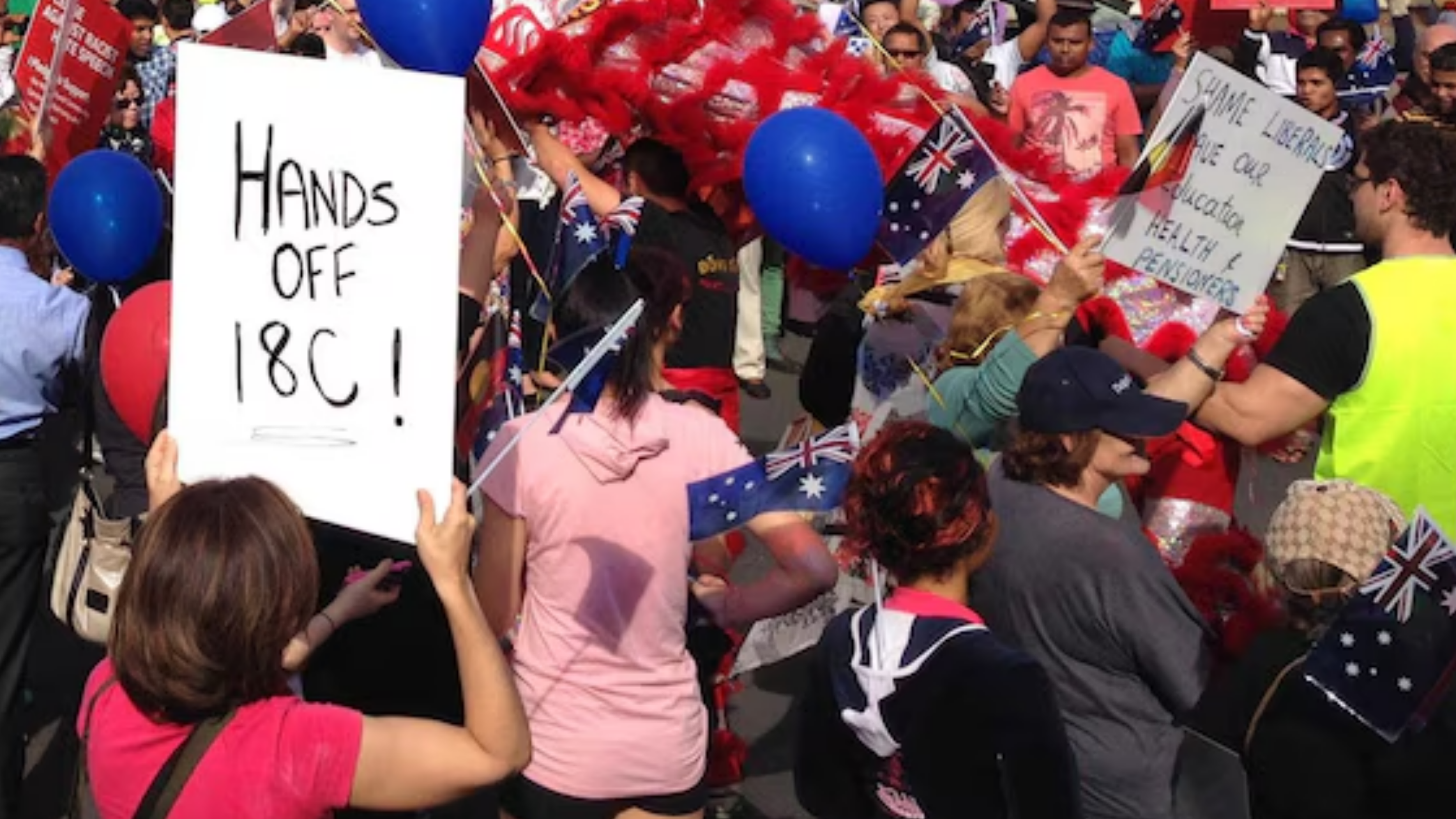
In the mid-1990s, we helped usher in the Section 18C amendment to the Racial Discrimination Act to protect people against racist hate speech. 20 years later, a political campaign was waged to repeal the 18C provisions on the basis that the legislation substantially impacted on the right to freedom of expression. Our Race Discrimination Commissioner at the time Dr Tim Soutphommasane vigorously defended 18C and was a key voice in the successful efforts to retain the laws. Read the story (see below).
Protesters at 2016 rally supporting 18C
The Commission’s 1991 Racist Violence: Report of the National Inquiry into Racist Violence in Australia provided the compelling national evidence that legal protection against racist harassment and vilification was required. The inquiry is identified as one of the core reasons the Keating Government introduced the Racial Hatred Act 1995 resulting in an amendment to the Racial Discrimination Act 1975 (Cth) (RDA) by inserting section 18C.
The amendment to the RDA was incredibly significant as it gave people affected by racist hate speech a legal avenue for complaint and redress, where none had previously existed. This provision filled an important gap in Australian law by recognising that racial vilification can cause ‘psychological and emotional harm’, even when it does not escalate to physical violence.
Sections 18C and 18D of the Racial Discrimination Act 1975 (Cth) aim to balance freedom from racial hatred with freedom of expression by prohibiting harmful conduct while safeguarding legitimate public debate.
The introduction of Section 18C made it unlawful to publicly ‘offend, insult, humiliate or intimidate’ another person because of race or ethnicity. Section 18D provides exemptions to ensure freedom of expression is preserved. Courts consider sections 18C and 18D together to maintain a careful balance between preventing racial vilification and supporting public discourse.
The introduction of section 18C enabled people to lodge complaints with the Commission, creating a low‑cost, accessible civil path for the first time. This legislative protection continues to give communities targeted by racial vilification an opportunity to seek redress, rather than relying on police or criminal courts.
The law became the subject of a major Parliamentary Joint Committee on Human Rights Inquiry into freedom of speech in 2016, which examined whether 18C should be amended or repealed. Significant political efforts were also made to amend or weaken 18C on the basis that the legislation substantially impacted on the right to freedom of expression. The Commission advocated strongly against these efforts with our Race Discrimination Commissioner at the time Dr Tim Soutphommasane taking a lead role in the campaign against the proposed changes.
There was also widespread public resistance to weaking the 18C provisions as well as national campaigns in support of retaining this key protection against racial vilification. Attempts to repeal section 18C failed, demonstrating the depth of community reliance on its protection, its social and political significance and the strong desire for federal protections against hate speech to remain in place.
Share this page
Cookie policy
This site uses cookies to analyse traffic, remember your preferences, and optimise your experience. We use some essential cookies to make this service work. We’d also like to use analytics cookies so we can understand how you use the service and make improvements. For more information see our Privacy Policy.
Need help?
Have a question about discrimination or sexual harassment? Want to know more about human rights? Contact us if you need help.