President's message | October 2026
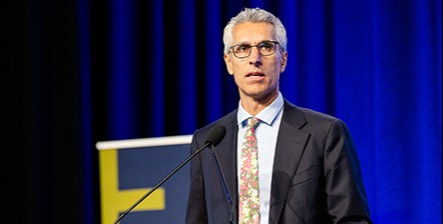
Belonging: Migration and Human Rights in Australia - edited extract of a speech delivered to Migration Institute of Australia conference 1 October.

- Author: President Hugh de Kretser
People who have migrated to Australia over the generations – who have chosen to build a life here and call this place home – have made enormous contributions. Migration has made Australia stronger, socially and economically. It has fuelled our success. It is a core part of who we are.
Because migration is fundamentally about people, it is also deeply connected to human rights. Human rights aren’t earned through citizenship, nationality or migration status. They belong to every one of us, no matter who we are, or where we are. Citizens, permanent residents, temporary visa holders, people seeking asylum, refugees, stateless persons – are all entitled to have their human rights protected. Human rights law provides an essential foundation for fair and responsible migration policies.
Australia is a migrant nation on the ancient lands of First Peoples. We are incredibly multicultural. Around a quarter of us were born overseas and half of us have a parent born overseas. Surveys repeatedly show very strong support for multiculturalism in Australia. Australians know that diversity makes us stronger. But surveys also show that a majority of Australians think migration numbers are too high.
It’s in this context that current public and political debates have been focussed on ways to limit migration. It is of course perfectly fine to debate the number of people who come here, the composition of the migration program, and the impact of migration – both positive and negative – on services and infrastructure. But at times these debates have dangerous undercurrents and sometimes explicit racism.
Migrants are being unfairly blamed for social and economic problems. Particular racial and religious communities are being singled out. And belonging is being said to be conditional on ethnicity.
Attacks on migrants and multiculturalism do harm. They fuel racism and hate and division in our community. They increase the risk of violence. They damage belonging and unity. Belonging, pride and identity matter. It’s why we need to defend multiculturalism.
It’s why we need to embrace a unifying concept of being Australian. One that encompasses the descendants of Chinese gold rush miners and the South Sea Islanders brought here in the 1860’s, as well as the Jews who fled Nazi Germany, the Eastern Europeans who came after the war and the South Asians who’ve arrived more recently. It’s why we need to treat the White Australia policy like the toxic waste that it is and bury it deep underground.
Multiculturalism is not something to be justified. It’s not a concession or favour to be granted by some Australians to others. It is not an experiment that remains permanently under review.
It is who we are as Australians. It is our fabric. Our strength. Our unity. And it belongs to all of us.
As Australia considers reducing migrant numbers and more aggressive polices to remove people without a valid visa, the risks around breaching the human rights of migrants increase. The importance of protecting the human rights of migrants becomes more acute.
Human rights standards support effective migration management. They provide a framework for ensuring that migration systems are fair, lawful and centred on human dignity. They remind us that behind every visa application, every policy debate and every administrative decision is a human being, entitled to be treated with dignity and respect. A migration system that upholds human rights is not only better for migrants. It is stronger, fairer and better for all of us.
This is an edited extract of a speech delivered to Migration Institute of Australia conference in Sydney on 1 October. The full speech can be read here.
Hugh de Kretser
President