Blooming Together Ramadan Iftar Dinner - Keynote Address
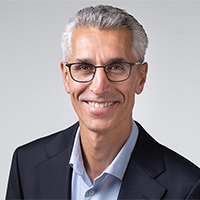
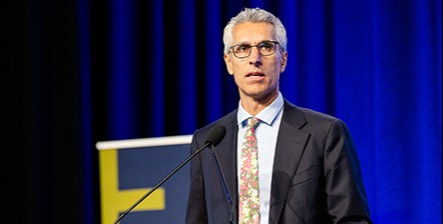
Hugh de Kretser's keynote speech at the second Blooming Together Ramadan Iftar Dinner, hosted by Affinity Intercultural Foundation.

Speech summary
- Author: President Hugh de Kretser
- Date: 25 February 2026
- Location: Wat Phrayortkeo Dhammayanaram Lao Buddhist Temple, Edensor Park
Good evening, and Ramadan Mubarak.
As we gather during Ramadan at this interfaith Iftar, we are reminded that Australia is at its best when people of different faiths and cultures sit together, share food, and recognise what we have in common – our common humanity.
To our faith leaders and all people across our communities, thank you for being here. Your collective presence is a powerful reminder of the need for unity in difficult times.
Ramadan is a time for reflection, caring for those less fortunate, and of spiritual renewal. The need for this feels acute, both in Australia and overseas. Conflict, violence and prejudice is deeply impacting the lives of so many.
Despite these challenges—and perhaps especially because of them — I am honoured to join you all for a reflection on human dignity, unity and solidarity at this ‘Blooming Together Ramadan Iftar Dinner’. Tonight, I want to talk to you about social cohesion, truth-telling, justice and of course, human rights.
The land we are on here is the land of the Cabrogal Clan of the Darug Nation. I acknowledge their elders and ancestors, and their continuing, deep and unbroken connection to this country. Any meaningful conversation about social cohesion in Australia must start here—with truth about our history and with respect for the First Peoples of this land.
What social cohesion is – and isn’t
Social cohesion is often described as the glue that binds us together in society. It is the belonging and worth we feel in our neighbourhoods and our nation; the trust we have in each other and in our institutions; and our shared willingness to take part in a common life. It is also the social inclusion and justice in our communities, our ability to engage in political participation, and our acceptance and rejection.
Understood this way, social cohesion is a good thing. Societies with higher cohesion tend to be healthier, more resilient to shocks and more prosperous.
It is equally important however to be clear about what social cohesion is not. It should never be a call for assimilation and erasing differences of language, culture, faith or otherwise.
A shared sense of Australian identity does not require the erasure of difference into a Western, English-language monoculture.
We should embrace difference within a unifying concept of what it means to be Australian.
People must be able to retain their cultural, linguistic and religious identity while proudly being Australian.
Similarly calls for social cohesion should not be code for silence about injustice.
Our commitment to social cohesion must never come at the expense of talking about and achieving justice. Justice and human rights promote social cohesion.
Tonight, when I use the term, I mean the positive version: cohesion that embraces difference, that builds trust and that strengthens belonging by protecting dignity.
What is happening to social cohesion in Australia?
We are living through a period that has frayed our social fabric. Our public debates have grown angrier; that misinformation and disinformation is rising; social media is fuelling division; trust in institutions is strained; anti-migrant sentiment is rising and racism—particularly against First Nations peoples, and in the wake of violence overseas, against Jewish, Muslim, Arab and Palestinian Australians—has harmed people’s sense of safety and belonging.
Two recent horrifying events have caused deep pain in this country. In December last year, two men opened fire on a crowd in Bondi celebrating a Jewish religious festival killing 15 people including a 10-year-old girl. In January this year, one man threw a homemade bomb into a crowd of Aboriginal people and allies protesting Australia Day in Boorloo (Perth). Thankfully the bomb did not detonate.
And we also remember that in 2019, an Australian man attacked worshippers at mosques in Christchurch killing 51 people.
These experiences have profound impacts on communities that will continue to be felt for years to come.
And yet, there is good news we should hold onto. Support for multiculturalism remains strong – Australians know that diversity makes us better; trust in many public institutions in Australia compares well to our international counterparts. Across our cities and towns, there are countless acts of kindness that never make the headlines. We see this in rooms like this one; where fasting and feasting, contemplation and compassion, meet.
The power of truth telling
My own path to this conversation has been shaped by work alongside First Nations communities, including as part of formal truth-telling processes with the Yoorrook Justice Commission.
As a non-Aboriginal person, I was continually out of my comfort zone in this work—learning about culture, law, politics, sorrow and strength. Yoorrook engaged with thousands of Aboriginal people across the state – in yarning circles, roundtables, formal hearings, meetings, submissions and more.
We heard of the profound harms that followed colonisation here: the theft of land, the violence and disease, the missions and reserves, the attempted erasure of identity through the suppression of language and culture and child removal policies. This is history that lives on today. For many First Peoples, the past is present.
At Yoorrook, we worried constantly about becoming just another report on a shelf; that people would share trauma and then be ignored. But I saw, over and over, how respectful, humble listening can heal—and change us.
The experience taught me something simple and profound: the process of truth-telling—listening with humility to stories of trauma and strength—can itself be healing and transformative. It can build bridges across lines of difference and open a shared journey of understanding. Understanding alone does not fix injustice—but it is a precondition for justice, and it deepens social connection.
Being seen and heard
I left Yoorrook to start my job as President of the Australian Human Rights Commission around 18 months ago in July 2024. These were the months following the October 7 attack on Israel, and Israel’s escalation of violence in Gaza. The conflict overseas has had a profound impact on communities in Australia.
Recognising this, through the Australian Human Rights Commission’s ‘Seen and Heard’ project, we met with communities most affected by racism linked to global conflicts—Muslim, Jewish, Israeli, Palestinian and Arab Australians. We listened in more than a hundred meetings and consultations across the country.
The message was clear: people from different communities experienced harm in different ways.
But many common threads ran through their stories—feeling unsafe, feeling pressure to hide religious and cultural identity, withdrawing from public life, and feeling let down by institutions meant to protect them.
The feedback we received on the consultations was overwhelmingly positive. When people had a safe space to speak; when harms were acknowledged; when their experiences were respected; it restored a measure of dignity and belonging. Being seen and heard is not a small thing—it is the foundation of social trust.
The method itself is a message: we build cohesion not by ignoring injustice, but by listening across difference, recognising our common humanity and by promoting justice and human rights.
Conclusion: a compass for unity and solidarity
Across the diverse faiths represented tonight, we find agreement on a few essential principles: truth matters, dignity belongs to all, and human rights strengthens communities.
These are not abstract ideals; they are the foundations of stable, respectful and resilient societies.
Sharing this meal reminds us that social cohesion is built through everyday choices — choosing fairness, choosing to listen, choosing to tell the truth.
So let us choose a generous idea of Australia: one where shared values make room for many identities; where cohesion means dignity, not erasure; where truth-telling builds trust; and where protecting everyone’s human rights benefits us all as a society.
Thank you for your time, your engagement, and your commitment to this shared work.

Hugh de Kretser
President