How Business Can Promote Social Cohesion
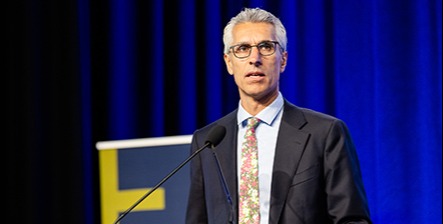
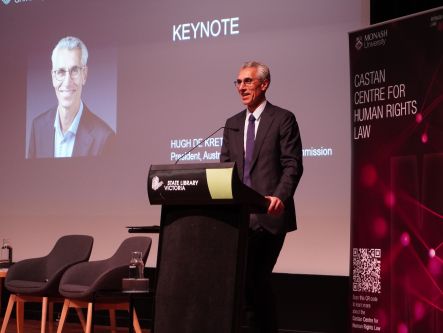
Speech delivered at the 2026 Australian Dialogue on Business and Human Rights, hosted by the Global Compact Network Australia on 28 October 2026.

Speech summary
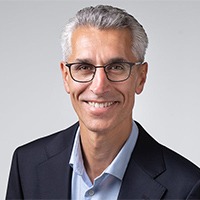
- Author: President Hugh de Kretser
- Date: 28 October 2026
- Location: Melbourne
It’s great to be with you today. Thank you to Corrs Chambers Westgarth for hosting today.
I started my legal career nearby at Mallesons, advising big businesses on workplace law.
It was the era of the Enron and HIH scandals, when questions about business conduct were front and centre.
As a junior lawyer, I encountered two ethical dilemmas in quick succession. In one, a client suggested we simply “forget” a conversation about documents relevant to litigation.
In another, a company seeking advice about an employee’s fraud had much bigger questions to answer about its own role in the conduct.
I watched closely to see how the partners would respond. In both cases, they responded impeccably.
It was an early lesson for me in the importance of business doing the right thing.
When I was at Mallesons all those years ago, we also set up the firm’s Human Rights Law Group. One of the first pieces of advice the group gave advice on was on the UN Global Compact.
So it’s good to be speaking more than 20 years on with people who share a vision of business doing the right thing for people, society and the planet.
As you’ve discussed in your program today, it’s a dangerous time for human rights with increased threats from climate change, rapid technological advances, global conflict and increased polarisation and division.
For business, the UN Guiding Principles, the Global Compact Principles and the OECD Guidelines on Responsible Business Conduct provide a critical framework for how business should act.
Today I want to focus on the role of business in Australia in helping to promote equality and social cohesion. And how we can create fair and respectful workplaces that bring different people together and create a sense of belonging.
Social cohesion and workplaces
Social cohesion can be a contested term.
So it’s important to say what we mean when we use it.
It is often described as the glue that binds us together in society.
It is the belonging we feel; the trust we have in each other and in our institutions; our equality and inclusion, material wellbeing and our political participation.
Understood this way, social cohesion is a good thing.
Societies with higher cohesion tend to be healthier, more resilient to shocks and more prosperous.
But we also need to be clear about what social cohesion isn’t.
It must not be used to call for assimilation and erasing differences of culture, language and faith.
Similarly it must not come at the expense of talking about and achieving justice.
Justice and human rights strengthen social cohesion.
It’s undeniable that Australia’s social fabric has been fraying.
Racism is rising.
Economic and intergenerational inequality are generating anxiety and resentment.
Our public debates are more caustic and polarised.
Social media is monetising division and outrage. Truth is being eroded.
And at the extreme, we have seen appalling hate crimes including last December’s horrific antisemitic Bondi terror attack.
The Scanlon Monash Social Cohesion Index confirms the broader picture. While social cohesion has stabilised over the past three years, it remains at historically low levels.
It is a grim picture but we have strong foundations to respond.
On a world scale, socially and economically, Australia is faring better than many similar countries.
Despite rising anti-migrant sentiment, support for multiculturalism remains strong at over 80%.
The vast majority of Australians recognise that diversity makes our nation better.
Similarly trust in many public institutions remains reasonably high and compares favourably with OECD averages.
The Edelman Trust barometer this year showed overall trust in business, government, media, NGOs in Australia rose compared with the previous year, bucking a trend of declining trust in similar nations.
And importantly for today’s discussion, it showed that employers are one of our most trusted institutions for the people who work in them.
79% of the employees surveyed in Australia say they trust their employer ‘to do what is right’.
That matters.
At a time when social cohesion is under strain, workplaces are one area where we have significant capacity to respond.
Nearly 15 million Australians are in employment. Many of us spend a large part of our lives at work. What happens there shapes not only our livelihoods, but our health, dignity, relationships and sense of belonging.
Equality and non-discrimination
Equality and non discrimination are critical components of fair work.
How employers conduct themselves can lessen or exacerbate inequality and by extension social cohesion.
For example, there has been positive progress for Aboriginal and Torres Strait Islander people obtaining work. The Closing the Gap jobs target is one of the few targets that is on track. Business initiatives like Career Trackers have played an important role in this.
I want to talk about one relatively recent development in the workplace equality area – the introduction of the positive duty in the Sex Discrimination Act.
We know that sexual harassment and sex discrimination are widespread in Australian workplaces.
Our surveys tell us that 1 in 3 workers have experienced workplace sexual harassment in the last 5 years.
Women experience higher rates of sexual harassment. First Nations people, migrants and refugees, people with disability and LGBQTIA+ people all experience higher rates of sexual harassment.
For decades, discrimination law has largely relied on individual people making complaints after harm occurs. But many people don't complain.
It can be stressful and time-consuming, there can be fear of reprisals, and people often need legal assistance which can be costly or out of reach.
That's why the positive duty introduced into the Sex Discrimination Act in 2022 is so important.
The positive duty requires Australian workplaces to eliminate, as far as possible, sex discrimination, sexual harassment, sexist conduct and related victimisation.
Importantly, it recognises that the actions taken will look different for different organisations and businesses depending on factors like their size, resources, nature.
The positive duty shifts the focus from responding after the damage is done to preventing discrimination and harassment in the first place.
The Australian Human Rights Commission was given regulatory powers to investigate and enforce compliance with the positive duty.
Through our work, we are seeing businesses take practical steps: stronger leadership, better training and policies, consultation with workers, accessible complaint processes and better reporting.
These are vital ingredients that produce safe, fair and respectful workplaces for everyone.
We need senior leaders setting clear expectations, role modelling respectful behaviour and properly managing risks.
We need businesses educating their workers on safe and inclusive behaviour.
We need fair and accessible complaint processes that people can use without fear of reprisals.
Like Australia’s successful workplace health and safety laws, the positive duty is bringing about positive cultural change.
So far, we have supported more than 100 organisations through tailored advice and commenced seven formal inquiries on businesses in the retail, hospitality, transport, finance and media sectors.
Many more organisations have accessed our online guides, training and small business resources.
The principle is simple: don't wait for people to be harmed. Build workplaces that prevent harm.
Unfortunately, the positive duty currently only exists in 1 of the 4 federal anti-discrimination laws. This should change. There should be a positive duty to prevent disability, race or age discrimination.
The Disability Royal Commission recommended a positive duty in our disability laws and the Australian Government is currently looking at implementing this.
But while legal obligations are important to bring about compliance, we know that most businesses want to get these issues right.
Improving equality and diversity at work isn't a choice between doing what's right and doing what's good for business.
Strengthening Diversity
Evidence shows that more diverse and equal workplaces strengthen employee engagement, innovation, customer relationships and access to talent.
Businesses should lead on diversity and equality initiatives because it’s the right thing to do and because it makes them more profitable.
At the Commission, for the past 6 years we’ve run a project to create fairer, more accessible pathways for people with disability to obtain and retain meaningful work and participate on an equal basis.
We’ve worked with employers including Woolworths, Kmart, the ABC, EY, PwC and local councils and brought them together with people with disability to identify and remove barriers to meaningful employment.
We know that workforce participation rates for people with disability are far too low.
Improving equality at work for people with disability benefits employees, employers and society.
Greater diversity in workplaces helps to promote social cohesion.
We know human beings are hardwired by our evolution to be social creatures.
We form social groups - in-groups, that we identify with and feel belonging to, and out-groups that are perceived as different.
People tend to show favouritism within their in-group whereas they are more likely to treat the out-groups with suspicion and prejudice.
Our social hardwiring creates risks but also opportunities to shift in group and out group boundaries.
When we build proximity with others who we might not readily identify, we can break down social barriers, reduce prejudice and build trust and social cohesion.
This is what diverse workplaces do. They bring people together who might not otherwise meet.
When we work alongside people with different backgrounds, cultures, faiths and life experiences, we build familiarity and trust.
Difference becomes less abstract. Social barriers start to fall.
Workplaces are places where social cohesion can be built.
Seen and Heard
I think for many people in Australia, when they think about declining social cohesion, they think about the impact here of Hamas’ 7 October 2023 attack on Israel and Israel’s response.
I want to end by talking about that.
In many ways, the polarisation in Australia that followed 7 October 2023 has revealed how ill-equipped we are to navigate difficult issues and recognise our common humanity.
It has also highlighted how globally connected we are and how events overseas can reverberate on people and communities here.
At the Australian Human Rights Commission we ran an important project to document the experiences of Jewish, Palestinian, Muslim, Arab and Israeli communities in Australia since 7 October 2023.
We met with and listened to affected communities and their organisations across Australia and documented their experiences in our report.
We called the project Seen and Heard.
The harm experienced by these communities has been profound.
Each community’s experience has been unique, shaped by distinct histories and dimensions.
Acknowledging the harms experienced by each community does not equate them.
Nor does recognising one community’s experience of harm diminish the significance of another.
And while there are many unique aspects to each community’s experience, there have also been many common aspects.
Communities have felt unsafe. They have felt pressure to shed aspects of their cultural and religious identity to avoid racism and harm.
They have felt pressure to retreat from public life.
Their sense of belonging in our country has been eroded.
They have felt let down by institutions meant to support them and to be safe for them.
What does this mean for business?
Participants in our consultations from across the affected communities repeatedly told us about negative experiences at work:
Racism ranging from microaggressions to outward hostility
Pressure not to speak about issues
Pressure not to wear cultural or faith symbols at work
Discrimination for sharing views on issues outside of work
Poor complaints processes
Reprisals for making complaints
And a lack of appropriate responses for staff grieving or worried about loved ones being harmed or in danger overseas.
Many businesses and other organisations have been affected, with particular impacts in sectors such as universities, the creative industries and media and for purpose organisations.
These can be complex issues to manage but too often businesses are responding poorly at both ends of the spectrum – either with inaction or overreaction.
Our Seen and Heard report and the associated Change the System Change the Story campaign shared resources and tips to help businesses get it right – including from partner organisations like the Diversity Council of Australia and the Victorian Equal Opportunity and Human Rights Commission.
Part of this is very simple and very human – check in with affected staff, acknowledge their distress, ask about their wellbeing and how the organisation could help.
Make sure affected staff are seen and heard.
Or from an organisational perspective, listen and learn.
Part of it is about building a more inclusive culture. This ranges from leave policies, to dress codes, to training, to consultation with staff, to complaint systems, leadership, governance and more.
When it comes to navigating these deeply felt and controversial issues, some things can be difficult but there are simple steps that businesses can take to ensure safer, more inclusive and respectful workplaces.
This in turn will contribute to strengthened social cohesion.
Conclusion
To conclude, business can both help and hinder human rights.
It can deepen division, or it can help bridge it.
At a time when our social fabric is under strain, workplaces can be places where we practise the equality, respect and inclusion we want to see in the wider community.
You are here because you understand this.
You understand the power of business to do good: to improve people's lives, strengthen our society and protect our planet.
Thank you for your leadership.
Hugh de Kretser
President