Realising our human right to health in Australia
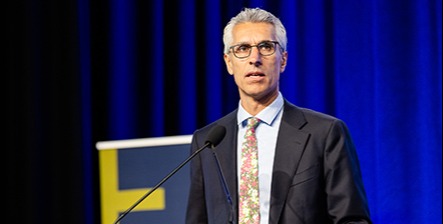
Speech delivered to VHA 2026 conference on 20 October 2026.

Speech summary
- Author: President Hugh de Kretser
- Date: 20 October 2026
- Location: Melbourne
Thank you to the Victorian Healthcare Association for the invitation to be with you this evening.
Tonight I’m going to be talking about the human right to health – and the benefits of looking at health challenges through a human rights lens.
We’re meeting on the lands of Wurundjeri people. I acknowledge their elders and ancestors and their Bunurong Boon Wurrung neighbours.
I acknowledge First Peoples’ ancient and unbroken connection to the country we are on.
I also note the critical importance of health care issues to First Peoples, who due to historic and ongoing injustice continue to experience poorer health on average compared with other Australians.
I come from a family of scientists and health professionals – my dad is a doctor and medical researcher specialising in male infertility, my brother is a GP, my mum is an occupational therapist and my other two brothers are chemical engineers.
Medical conversations were common in our family growing up.
I thought it was normal for there to be medical samples in the freezer, books about the testes on the shelves and to have a pet sheep loaned from Monash University’s research labs.
I think in another life, I’d be working in public health and I enjoyed my time on a public health advisory board at the University of Melbourne.
So let me start by saying thank you for the work you do.
Your work is critical to the health and wellbeing of millions of Australians.
Every day, your organisations, from community health centres to aged care to ambulances to hospitals, provide people with services to help them live healthy and fulfilling lives.
You are doing human rights work.
And the challenges you face, the growing demand for your services, the pressure on emergency services, the surgery waitlists, budget shortfalls and the barriers to ensuring equitable access to services - are all human rights challenges.
Tonight, I’ll talk about how applying human rights can help to respond to these challenges.
What are human rights?
Let’s start by talking about what human rights are.
Human rights are standards that governments around the world have agreed to meet so that everyone can live a safe, free and dignified life.
Human rights belong to all of us, no matter who we are or where we come from.
They are about being treated fairly and treating others fairly.
Human rights reflect values like equality, freedom, respect, dignity, kindness, thinking of others and looking out for each other. Australian values.
The modern human rights movement came out of the horrors of World War 2.
After the atrocity of the war and the Holocaust, the world came together and said, “Never Again”.
Out of the mass slaughter and unimaginable human suffering they produced a document that is one of humanity’s greatest achievements.
The Universal Declaration of Human Rights.
Australia played an important role in its drafting and adoption.
Its first article proclaims that all human beings are born free and equal in dignity and rights.
These simple words speak to every one of us and say: you have value, you matter and you deserve dignity – because you are human.
The words are grounded in our common humanity.
They unite us in our difference.
No us and them.
We all bleed the same. We all love. We all suffer. We all experience hope, sadness, wonder and joy.
The Declaration rejected the idea that some humans are worth less than others – the poisonous idea that underpinned slavery, colonisation, eugenics and genocide.
The Declaration then lists 30 articles or rules to protect our rights including the right to life, to vote, to safety, expression, education, work, social security, housing and health.
These rights set a new global standard that governments must respect in dealing with us because of the mere and vital fact that we are human.
The Universal Declaration was followed by binding international human rights treaties which successive Australian Governments voluntarily committed to uphold.
Human rights in Australia
In Australia, many of us enjoy our human rights without thinking about them.
The fact that many of us don’t often think about our rights reflects Australia’s success.
But it also creates risks of complacency and inaction.
Thinking that human rights are things that matter to other people in other places – often overseas.
The reality is that for many people in Australia, human rights are not guaranteed.
They are part of a daily struggle for dignity, respect, freedom and equality.
For many people doing it tough in Australia, human rights matter deeply.
The right to health under International Human Rights Law
The right to health was recognised in the Universal Declaration and then set out more fully in Article 12 of the International Covenant on Economic, Social and Cultural Rights, which followed it.
The Whitlam and then Fraser Governments respectively signed and ratified this treaty which became binding on Australia at the end of 1975.
It states that everyone has the right to enjoy ‘the highest attainable standard of physical and mental health.’
What does this mean?
It doesn’t mean everyone has the right to be healthy.
No government can prevent every illness.
Instead, the right to health is about ensuring that everyone has a fair opportunity to be healthy.
It’s about making sure people have the freedom to make decisions about their health and body.
It's about making sure healthcare is available, affordable, appropriate, accessible to everyone without discrimination and of good quality.
It's about recognising that health is shaped not only by hospitals and clinics, but also by the conditions that we live in – our housing, food and water, working conditions, education and the environment – the social determinants of health.
It is about ensuring people are treated with dignity and respect.
Importantly, the right to health is not just a statement of values. It creates legal responsibilities.
Under international human rights law, governments must respect, protect and fulfil the right to health.
Recognising that governments have finite resources, international human rights law requires most aspects of the right to health to be progressively realised.
This means that nations (and the jurisdictions in them like states and territories) must take immediate steps using their maximum available resources to fulfil the right to health, for example by funding public health services.
Nations must also adhere to the principle of non-regression, meaning they must not unjustifiably reduce or weaken the protection of the right to health.
There is a strong presumption that retrogressive measures taken in relation to the right to health are not permissible.
Australia’s achievements – a world leading health sector
So how is Australia doing in protecting and fulfilling our right to health?
Clearly, we have a lot to celebrate.
We have one of the world's strongest healthcare systems.
Medicare has transformed access to healthcare generation after generation.
Australians benefit from highly skilled health professionals, world-class hospitals and strong public health institutions.
Life expectancy remains among the highest in the world.
Public health initiatives have saved countless lives.
Medical research continues to produce world-leading breakthroughs.
We should be proud of these achievements.
They demonstrate that sustained public investment and a commitment to universal access deliver positive outcomes for people.
Much of what we value most about Australia's health system reflects the principles underpinning the right to health.
But while we are doing well compared to much of the world, there are persistent health care challenges – particularly when it comes to health equity.
Many people do not enjoy the health they should in Australia because of unfair and avoidable social, economic and environmental conditions.
If you live in rural and regional areas.
If you have lower income.
If you have insecure housing.
If you live with disability.
If you experience racism.
If you are an Aboriginal or Torres Strait Islander person.
Then you are more likely to have worse health outcomes.
The divide between the cities and bush is particularly acute.
A 2025 review of Queensland’s Human Rights Act noted that the median age of death in Brisbane is 82 years; yet in parts of Far North Queensland it is 51 years, a difference of 31 years in the same state.
And yet despite the evidence showing people in rural and regional areas often have poorer health outcomes, government investment in health care favours the cities.
A recent report by the National Rural Health Alliance shed light on the $9.2 billion dollar funding gap between Australia’s metropolitan and rural health system.
Cities now have more than 20 times as many specialist doctors per person than rural towns. In the country, people heavily rely on nurses to deliver critical care.
Similarly, a 2025 report by the Grattan Institute found that people in poorest communities, despite on average being sicker, receive about a quarter fewer services than those in the wealthiest areas.
One of the ways Australia is held accountable to its commitment to uphold the rights like the right to health in International Covenant on Economic, Social and Cultural Rights is through periodic reviews by an expert UN Committee.
Australia’s most recent review under this treaty was in February this year. The review was informed by reports from civil society and from the Australian Human Rights Commission.
The Committee welcomed Australia’s universal healthcare system, including Medicare. However, it raised concerns about persistent inequalities in access to healthcare between the public and private sectors and across regions, including long waiting times and shortages of health professionals in remote and rural areas.
It noted in particular concerns around the fact that the Closing the Gap targets relating to life expectancy for First Peoples are not on track and that progress towards a sustained reduction in suicide rates is worsening, with the poorest outcomes recorded in remote and very remote areas, particularly affecting Aboriginal and Torres Strait Islander peoples.
It noted particular concerns around access to mental health services.
How human rights can make a difference
So how can human rights make a difference to health challenges and help you in your work?
One of the problems with international human rights law is the lack of enforceability.
You see, under our system of laws, when Australia signs up to a treaty under international law, that treaty does not automatically become part of Australian law.
People in Australia cannot directly enforce the rights Australia has agreed to comply with.
It's left to Australian governments and parliaments to pass laws protecting our human rights.
And unfortunately, they haven't done a good enough job of this.
Our human rights safety net has holes in it.
There are many examples of how this creates problems for people across the country – you can just look at Royal Commissions into Robodebt, disability and aged care.
It doesn’t have to be this way.
In South Africa, the injustice of apartheid led to the nation adopting strong world-leading human rights protections in its constitution post-apartheid, including the right to health.
The right doesn’t magically create extra resources for the government or guarantee that people don’t get sick.
But it does hold South African governments accountable for unreasonable and unfair health policy decisions.
In the late 1990’s South African President Thabo Mbeki turned his back on the scientific consensus that AIDS was a virus that could be fought with drugs, just as South Africa was experiencing an AIDS epidemic.
Harvard researchers estimate that his stance cost over 300,000 lives.
Importantly, though, the protection of the right to health in the South African constitution gave people a way to challenge his policies.
They brought a case that argued that restrictions on the availability of medication to prevent mother to child transmission of AIDS was a breach of the right to health.
The Constitutional Court agreed with them. Its decision compelled the government to roll out nationwide prevention of mother-to-child transmission in public health facilities. The case and associated campaigns and advocacy saved hundreds of thousands of lives.
In Australia, the right to health is not protected in our national constitution or national laws.
But there have been some steps in the right direction.
There is robust legal protection of the right to equality and non-discrimination in Australia.
Federal, state and territory legislation in Australia prohibits organisations from discriminating when delivering services on grounds including race, sex, age and disability. The legislation applies to health services.
Last year, the Australian Human Rights Commission published reports on racism and ageism in health care and its impacts. Both reports underscore the importance of health organisations addressing prejudice and bias in their service design and delivery.
At the national level, when proposed legislation is introduced to Parliament, the relevant Minister has to state how the legislation is compatible with human rights including the right to health. A parliamentary committee then assesses the draft law.
So when the Abbott Government proposed to introduce a $7 fee for GP visits and co-payments for medicines, the Parliament’s Human Rights Committee criticised it as an unjustified retrogressive measure that would weaken protection of the right to health.
Victoria, Queensland and the ACT have gone further.
Their parliaments have passed Human Rights Acts or Charters that legally protect a range of human rights and require government departments and agencies to comply with them.
Queensland’s Human Rights Act which came into force in 2020, doesn’t protect the full right to health but does protect a right to access health services.
It provides that:
- every person has the right to access health services without discrimination, and
- a person must not be refused emergency medical treatment that is immediately necessary to save the person’s life or to prevent serious impairment to the person
The right has not yet been fully tested in higher courts, but it is influencing decision-making.
For example, during the COVID-19 pandemic, a man in hotel quarantine made a human rights complaint about the impact of isolation on his mental health. In responding to the complaint, the Queensland health provider considered his human rights and arranged improved mental health support through telehealth.
Human rights were also examined in a coronial inquest into the deaths of three young Aboriginal women in Doomadgee from rheumatic heart disease.
Rheumatic heart disease is of course an entirely preventable disease that is almost exclusively a disease of poverty and social disadvantage.
In investigating the deaths, the coroner found that the local hospital failed to provide sufficient information to the women and their families, failed to appropriately involve the families in the health care and failed to deliver culturally safe services. These failures limited the women’s right to life and to access health services, their right to equality and their cultural rights.
The Human Rights Act was also considered in a High Court case decided last week. The case concerned Queensland's prisoner laws. The Court ruled that prison authorities acted unlawfully when they prevented a woman in prison from freezing her eggs at her own expense to preserve her fertility.
Victoria’s Human Rights Charter does not currently protect the right to health or other economic and social rights like the rights to housing and education.
But it does protect rights that are relevant to health care including the right to life, to equality and non-discrimination and privacy.
And it protects other rights that need to be taken into account when making decisions around things like public health emergencies – like freedom of expression, freedom of movement, freedom of peaceful assembly and freedom of association.
The Charter requires public authorities like government departments, public services and public agencies to act compatibly and properly consider human rights.
I understand that many of your agencies will be public authorities required to comply with the Charter.
The Charter is making a difference by, in simple terms, requiring governments think about the impact of their decisions and services on people.
Most of this impact is well away from any courtroom or parliament.
Working properly, the Charter transforms the way government operates day to day by requiring public services to think about people before they act.
There are many examples of its impact, big and small.
A woman in a residential care facility wasn’t being afforded privacy when being showered by carers. A staff member raised the issue with carers invoking her Charter rights. The service made changes to protect her privacy and dignity.
A man with a disability living in a shared supported accommodation unit objected to his mail being opened by the workers at the unit. The man was capable of opening his own mail. The man’s advocate invoked his right to privacy under the Charter and the policy was changed to allow the man to privately access his own mail.
In a case known as Patrick's case, the Charter helped a man with a long-term mental illness, who was an inpatient in a hospital, to overturn an order appointing someone to administer his finances. The court said the order would unjustifiably restrict his rights given he was not mismanaging his money and there was no crisis in terms of his health or his accommodation.
The Charter helped to ensure that Victoria’s safe access zone laws around abortion clinics were balanced and proportionate and successfully withstood legal challenges.
And it provided important accountability and transparency around Victoria’s COVID 19 response. There are many examples but to give just four:
- It helped to stop a proposal to allow officers, authorised under public health legislation, to detain people based on the officer’s belief about what the person might do.
- It helped to ensure COVID testing services were more accessible for people with disability.
- It helped to change the way the government responded to lockdowns of public housing towers
- And it helped individuals navigate often inflexible rules around border closures.
These examples demonstrate something important.
They highlight how human rights standards help to guide decision makers to make better laws, policies, decisions and services.
How they help to ensure services are human focussed.
And how they promote accountability.
Embedding human rights in organisational culture, governance, service design and decision-making frameworks helps governments and public agencies to navigate health challenges.
A human rights approach shines a light on the gaps that many Australians experience every day: the person in a rural community who can’t access a specialist, the family putting off dental care because they cannot afford it, the Aboriginal woman who does not feel culturally safe in mainstream services, and the person with disability struggling to navigate a system that was not designed with them in mind.
Conclusion
The right to health at its core is a simple idea: everyone deserves a fair opportunity to live a healthy and dignified life.
It challenges us to keep asking: who is missing out, and what can we do about it?
Australia has built one of the world's great healthcare systems.
But our success should be measured not only by how well the system serves most people, but by how well it serves those facing the greatest barriers.
And as we navigate the challenges ahead, from an ageing population and workforce pressures to climate change and artificial intelligence, human rights provides a simple but powerful compass to guide us.
To keep people at the centre, pay attention to those at risk of being left behind, and work towards a future where everyone has a fair opportunity to live a healthy life.
Hugh de Kretser
President