Engagement with the United Nations
The Commission regularly and robustly engages in a range of UN human rights mechanisms, such as treaty body reporting and the creation of new conventions.
Summary
The Commission works with a variety of United Nations human rights mechanisms to support the development of international human rights standards. The Commission regularly takes part in the Universal Periodic Review process, makes independent submissions, assists UN experts and agencies, and helps draft new human rights conventions.
Treaty monitoring and reporting
As Australia’s internationally accredited National Human Rights Institution (NHRI), the Commission has special participation rights in a range of United Nations (UN) bodies. The Commission also has a responsibility to cooperate with the UN and any organisation in the UN system under the Paris Principles.
The Commission monitors when Australia's human rights performance is reviewed by UN human rights bodies. Where possible, the Commission takes part in these reviews and provides independent reports on Australia's human rights progress and shortcomings. This includes reporting on whether Australia is meeting its international human rights obligations and identifying areas for improvement.
Who Australia must report to
Australia has agreed to 7 core international human rights treaties. A committee of independent experts is responsible for monitoring the implementation of these treaties.
The Australian Government must regularly report on treaty implementation progress to the:
- Human Rights Committee
- Committee on Economic, Social and Cultural Rights
- Committee against Torture and other Cruel, Inhuman and Degrading Treatment or Punishment
- Committee on the Elimination of All forms of Discrimination against Women
- Committee on the Elimination of Racial Discrimination
- Committee on the Rights of Persons with Disabilities
- Committee on the Rights of the Child.
How Australia reports
UN treaty body committees work in slightly different ways, but their processes are similar:
- the committee makes a list of issues
- Australia appears before the committee
- the committee makes 'concluding observations' (meaning final recommendations).
The Commission's role in UN human rights treaty body reporting
The Commission is invited to provide input during each step of the reporting process. Our recent submissions to UN treaty bodies can be found on the Commission’s submission page.
Read our recent submissions to UN treaty bodies:
Submissions to the UNThe Universal Periodic Review
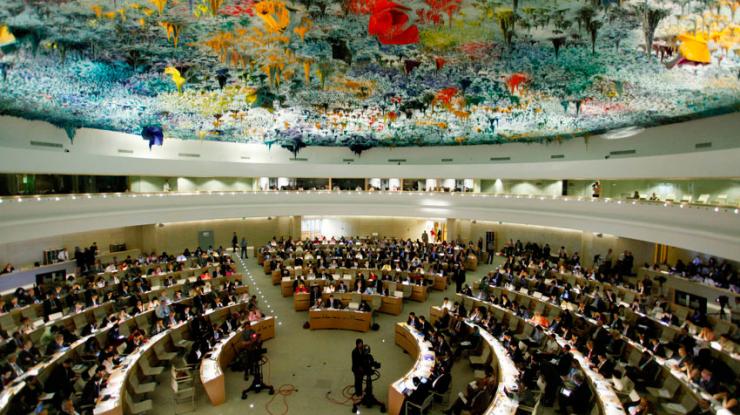
The Universal Periodic Review (UPR) is a process led by the UN Human Rights Council (Council). The Council is a body of 47 Member States focused on promoting human rights globally. The Council periodically reviews the human rights records of all UN Member States. Each Member State is reviewed every 4.5 years.
Australia's UPR appearance occurred in:
- 2011
- 2015
- 2021
- 2026.
Detailed information on the UPR process, and the Commission's submission to the fourth UPR cycle, is available on the Commission's UPR webpage.
Our submission to Australia's Fourth Periodic Review
Before Australia's appearance at the Council, the Commission provided an independent assessment of Australia’s human rights situation. The submission makes recommendations about ongoing challenges and assesses the implementation status of the 344 recommendations made during Australia’s third UPR process. The Commission welcomes positive developments since Australia’s last appearance in 2021, while recognising the ongoing substantial weaknesses in Australia’s human rights protections and new challenges.
Shaping international human rights norms
Human rights are fundamental to effective development, stable governance and constructive international cooperation. They shape how societies grow, institutions function and states interact. In this spirit, the Commission regularly contributes to international human rights norms and practice through UN engagement.
Engagement with UN bodies
The Commission contributes to the Council through oral statements under substantive agenda items, participation in debates, panels and annual discussions, and submission of documents.
The Commission has participation rights with various UN bodies, including the:
- Commission on the Status of Women
- Permanent Forum on Indigenous Issues
- Conference of States Parties to the Convention on the Rights of Persons with Disabilities
- Open-ended Working Group on Ageing (concluded in 2024)
- 2030 Agenda for Sustainable Development.
Engagement with UN Special Rapporteurs
Special Rapporteurs are independent, voluntary human rights experts appointed by the Council. Special Rapporteurs have a specific country or thematic mandate. They can visit countries to identify and address issues relevant to their mandate.
Australia has a standing invitation to all Special Rapporteurs who have thematic mandates. The Commission provides information to relevant Special Rapporteurs and provides support for any country visits to Australia.