Connecting human rights education across borders
From Vietnam to Ethiopia: the Australian Human Rights Commission is helping to connect human rights education across borders
Summary
By sharing experiences across borders, the Australian Human Rights Commission is helping the Ethiopian Human Rights Commission bring human rights to life in classrooms, schools, and communities. Following a December 2025 workshop in Ethiopia, delegates visited Vietnam to see firsthand how human rights can be integrated into curricula, teacher training, and participatory learning. This exchange highlights the power of international collaboration to turn knowledge of rights into meaningful everyday practice for educators, institutions, and young people.
Human rights education is a core part of building inclusive, democratic societies, and its impact is strengthened through international collaboration. Engagement this month between the Australian Human Rights Commission (the Commission), the Ethiopian Human Rights Commission (EHRC), and long-standing partners in Vietnam highlights how experience gained in one context can support reform in another.
For many years, the Commission has partnered with the Ho Chi Minh National Academy of Politics (HCMA) on human rights education in Vietnam through the Vietnam Human Rights Technical Cooperation Program, funded by the Department of Foreign Affairs and Trade. This collaboration has focused on integrating human rights into national education systems in practical, culturally relevant ways—supporting curriculum development, educator training, and participatory teaching approaches.
As Ethiopia embarked on an important initiative to embed human rights education across its national curriculum, the EHRC looked internationally for examples of effective practice. Learning about the Commission’s work in human rights education and the outcomes of the Commission’s long-standing partnership with HCMA, the EHRC sought to draw on these experiences and explore how similar approaches might inform Ethiopia’s own reform efforts.
This work began in Ethiopia. In 2025, the Commission facilitated support from Professor Felisa Tibbitts of Human Rights Education Associates to assist in reviewing Ethiopia’s curriculum. In December 2025, the Commission and Professor Tibbitts participated in a human rights education workshop hosted by the EHRC. Senior Director of Partnerships, Projects and Education Suzi Chinnery delivered remarks highlighting the importance of lifelong, systems-based human rights education and the shared challenges facing education systems globally.
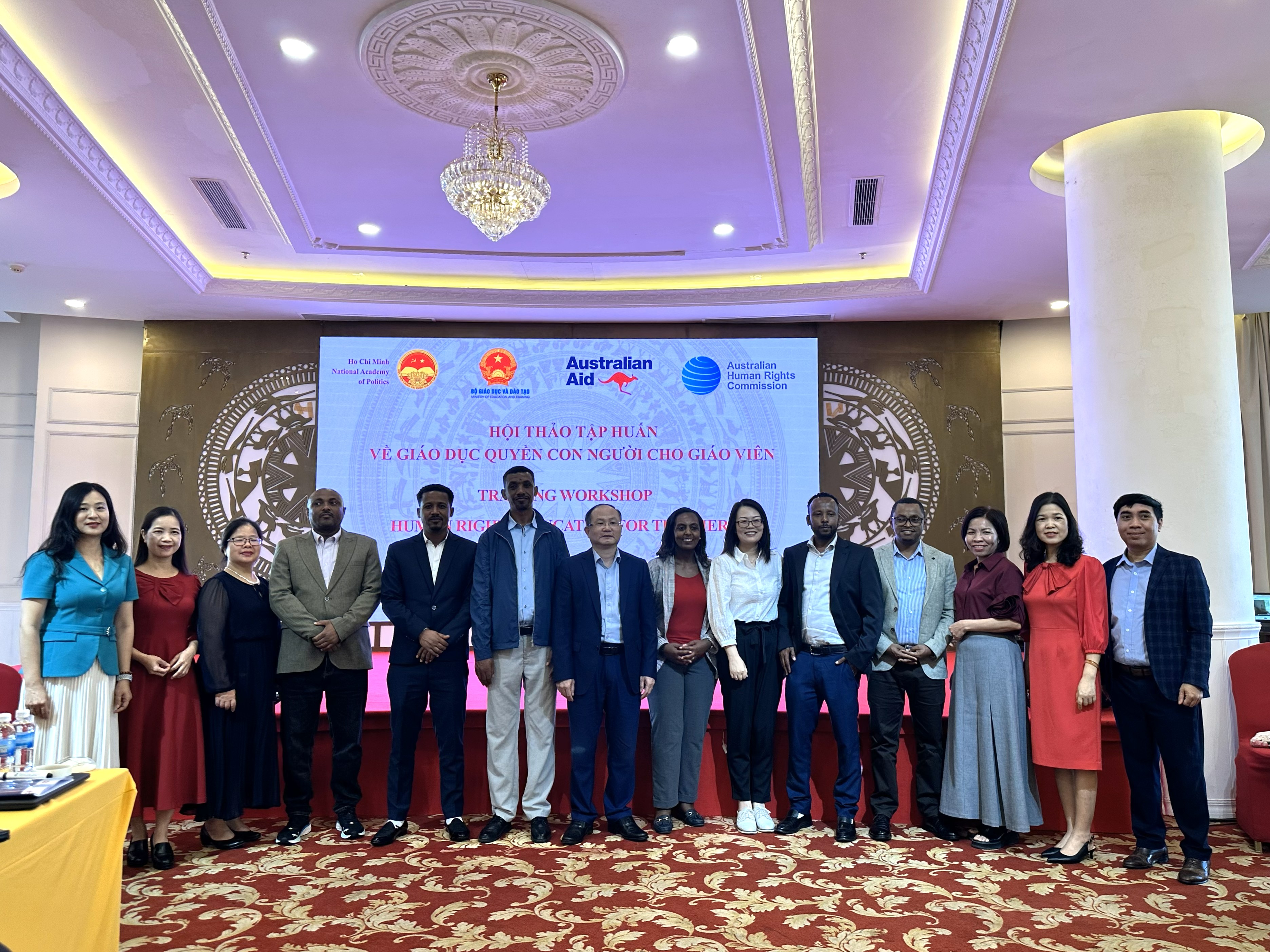
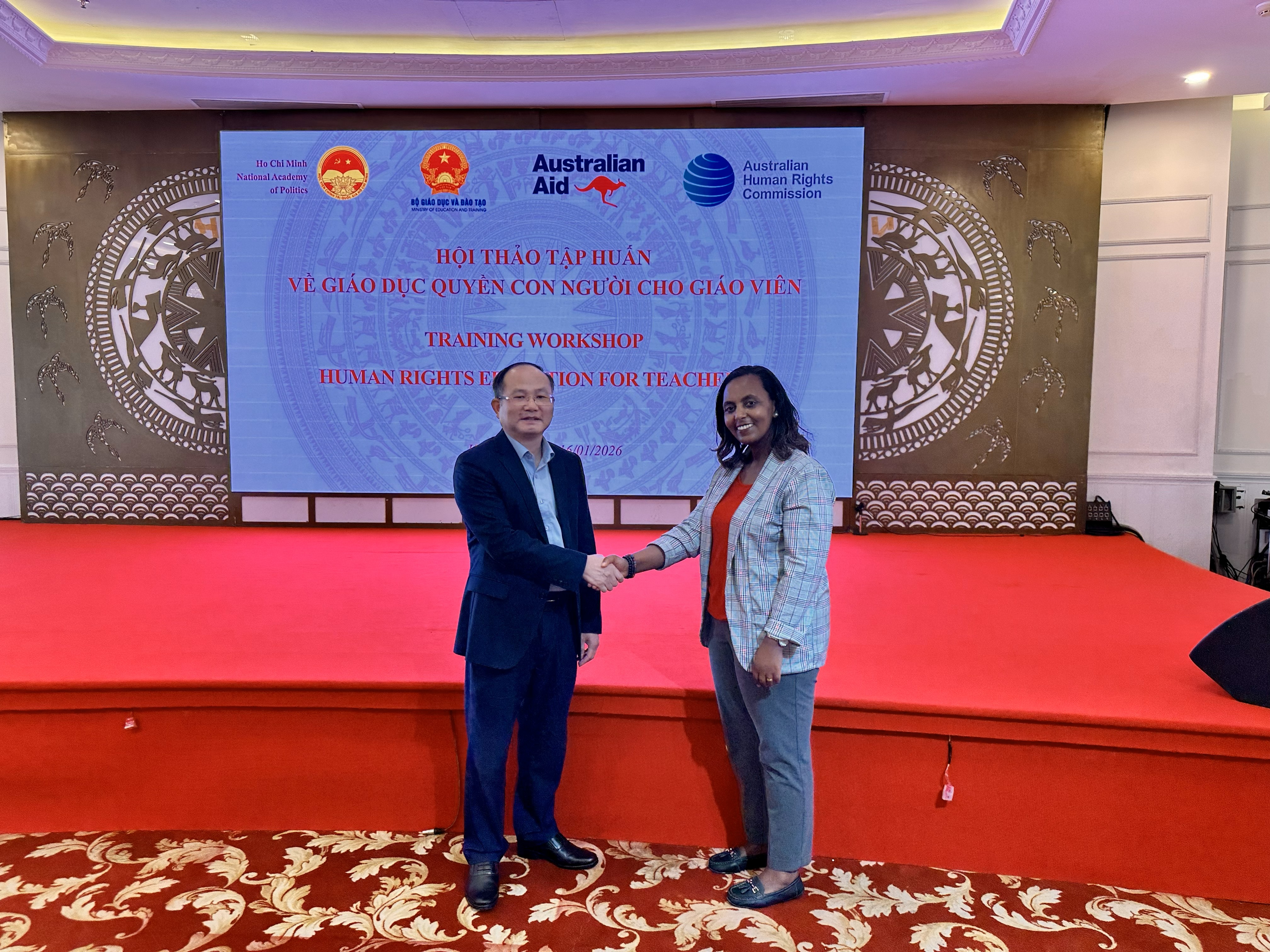
Building on this foundation, a delegation from the EHRC and Ethiopia’s Ministry of Education then participated as observers in a human rights education workshop in Vietnam, delivered in partnership with HCMA. The visit enabled delegates to see firsthand how Vietnam has approached integrating human rights across preschool, primary, and secondary education by embedding rights within existing subjects.
Human rights education, as framed by the United Nations, is education about, through, and for human rights: building knowledge of rights and protections, fostering inclusive and respectful learning environments, and empowering learners to participate actively in upholding human rights.
Delegates noted strong parallels between Vietnam’s experience and Ethiopia’s own reform priorities, particularly the emphasis on teacher training, participatory learning, and aligning curricula with international human rights standards while remaining responsive to local context. Reflecting on the visit, Dr Mekdes Tadele Woldeyohannes, Director of Human Rights Education at the Ethiopian Human Rights Commission, emphasised that:
The exchange reinforced the need for comprehensive human rights education for teachers, focusing on teaching about, for, and through human rights. This approach emphasizes participation, the legal recognition of human rights, equality, inclusiveness, and empowerment
This expanding network of international collaboration demonstrates the power and ripple effect of international collaboration: insights gained in one context can inform and accelerate progress in another. By connecting experiences across regions, the Commission is enabling educators, institutions, and young people to bring human rights to life in classrooms, communities, and beyond.