Explore 5 highlights of the Commission's work over the last 40 years in relation to our complaints and conciliation services.
People who complain can sometimes get a bad rap. Actor and comedian Lily Tomlin famously quipped that humans developed language because of our deep need to complain. But the truth is that complaints are the catalyst for change because without them nothing gets better.
Since we were established in 1986, the Australian Human Rights Commission has provided people and organisations across Australia with a free, impartial and accessible service to e help resolve complaints of discrimination and human rights breaches. Our expert team of investigators and conciliators inquire into complaints and work with the parties to the complaint to help them reach a resolution, potentially avoiding an expensive and time-consuming court case. Over the last 40 years, we’ve received more than 65,000 complaints and resolved more than 23,000 complaints , benefiting more than 47,000 people and organisations.
Many of these cases result in important personal outcomes such as financial compensation or an apology. Some also lead to important systemic changes to policies and practices that have made life better for countless people and communities across Australia, demonstrating the principle that small acts of advocacy can become a seed for large‑scale reform. So, here’s to the complainers. Sorry, changemakers.
Here are 5 examples of how complaints to the Commission have advanced and protected the human rights of millions of people across Australia:
Making Australia’s banknotes more accessible
Prior to 2014, there was no way for people with a vision impairment to tell the difference between Australia's banknotes. But that all changed because of the courage and tenacity of a young teenager called Connor McLeod.
Read the story and watch the video (see below). The video features Connor and the Commission's Investigation and Conciliation Service Senior Executive Rachel Holt.
Connor McLeod in 2014
In 2014, teenage student Connor McLeod, who is blind, complained to us that the failure by the Reserve Bank of Australia to include tactile features on Australian banknotes was unlawful disability discrimination.
Connor highlighted that without tactile markings, people with vision impairments had no way of knowing the value of the different notes. This limited their independence and dignity, requiring them to rely on others for a daily task that sighted people take for granted.
We conciliated the complaint. This involved bringing the parties together to seek an agreed resolution. In response to Connor’s complaint, the RBA agreed to put tactile features on the long edge of all Australian banknotes: 1 bump on the $5 note, 2 on the $10 note, 3 on the $20 note, 4 on the $50 note, and 5 on the $100 note.
This outcome improved dignity, autonomy and safety for thousands of Australians. It’s now a celebrated case study of how listening to peoples lived experience can lead to better design for everyone.
Improving Australia’s approach to immigration detention
Following the introduction of mandatory detention in 1992, the Commission started receiving a raft of complaints from detainees about their treatment in Australia's immigration detention centres. Our investigators complied a landmark report which exposed a range of systemic issues which were subsequently addressed by policy reforms across and range of areas. Read the story (see below).
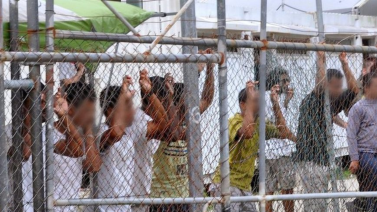
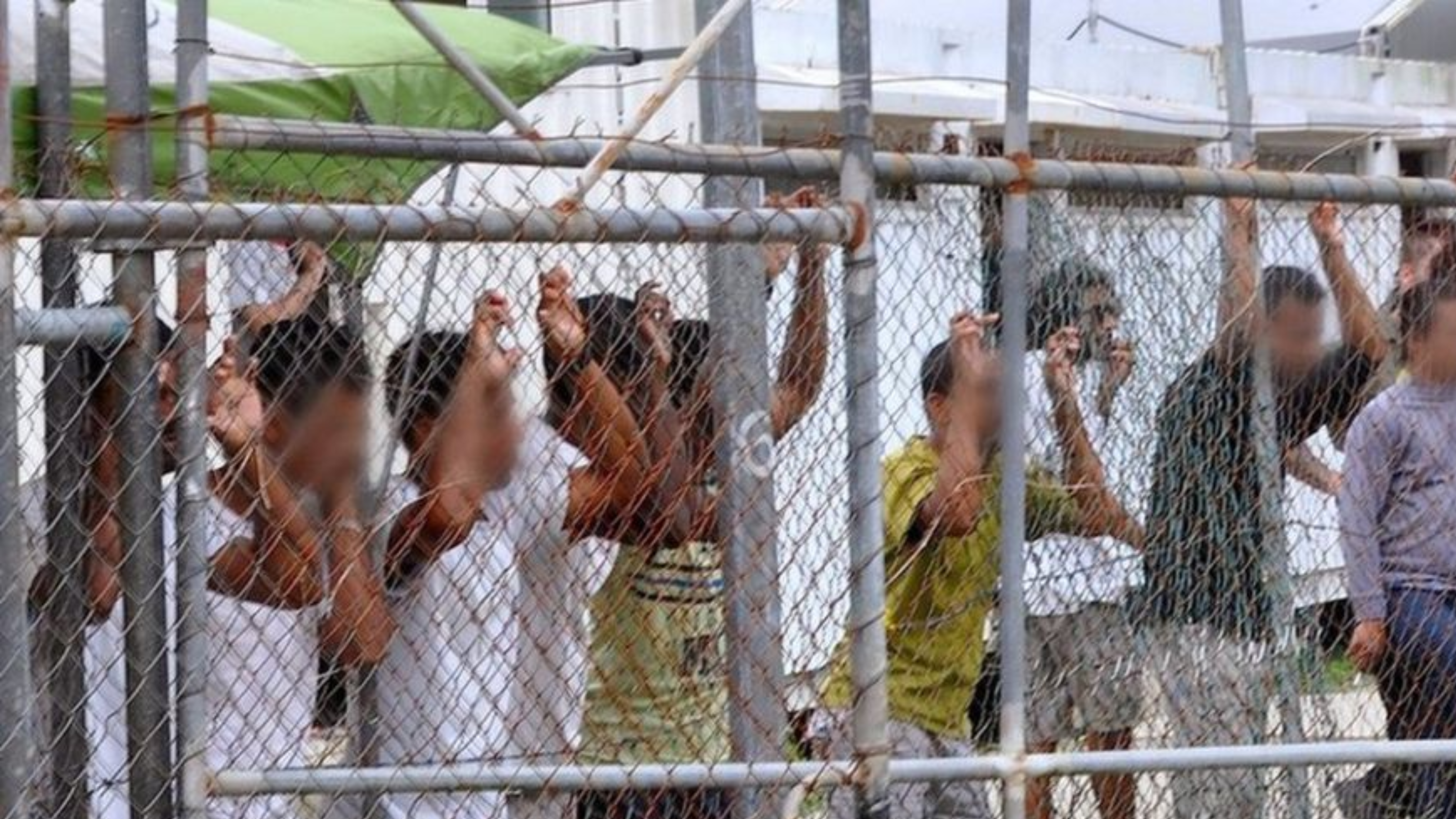
Immigration detainees, 1992
Mandatory immigration detention was introduced in Australia in 1992. Since then, many complaints have made been made to us by people in detention about the length of their detention, the conditions in which they’re held and the treatment they experience. Many have described deteriorating mental health, lack of access to medical care, uncertainty about their future and conditions that made daily life unsafe or degrading.
Between 1990 and 1997, we received close to 60 complaints about immigration detention. Around half were made by people who arrived in Australia by boat. The issues raised in these complaints were examined by investigators and policy officers here at the Commission who travelled to various detention facilities, inspected and documented the conditions of detention and spoke with detainees about their experiences in detention.
These complaints highlighted that the problems were not isolated but reflected broader systemic issues within Australia’s immigration detention system.
Their findings were the foundation of our groundbreaking report, Those who've come across the seas: Detention of unauthorised arrivals which played a key role in focusing attention on the experiences of immigration detainees and reshaping how detention practices were scrutinised and understood, contributing to later policy reforms and inquiries.
Findings from this report reinforced the need for stronger safeguards, including limits on detention duration and greater use of community‑based alternatives.
Navigating NSW's rail network was a problem for many vision-impaired people before 2013 as station announcements weren't made on all trains. That changed when our former Disability Discrimination and Human Rights Commissioner Graeme Innes decided enough was enough. Read the story (see below).
Former Disability and Human Rights Commissioner Graeme Innes (second from right) travelling on a Sydney train in 2011
When travelling on trains, we’re all familiar with the audio announcements of the name of the upcoming station. But prior to 2013, this was not always the case in New South Wales as audible ‘next stop’ announcements were not consistently provided on all trains.
This created a barrier to navigation for people with vision impairments, which included Graeme Innes, our Disability Discrimination Commissioner from 2005 - 2014. For almost two years, he urged NSW’s RailCorp to meet its obligations under Australia’s Disability Discrimination Act and ensure vision-impaired passengers were supported with station announcements during their journeys.
When RailCorp did not address his concerns, Graeme lodged a complaint of unlawful disability discrimination with the Commission. In fact, he lodged 36 complaints, one for every train journey he took between March and September 2011 when station announcements weren’t made. Graeme told the media at the time, ‘all I’m asking is that they tell me where I am’.
When the complaint did not resolve at conciliation, Graeme took his complaint to court. The court ruled that RailCorp had indeed breached the Disability Discrimination Act. It determined that ensuring all passengers knew their location at any point on a journey was an essential part of RailCorp’s transport services.
The judgement resulted in significant improvements to the frequency and audibility of on-train ‘next stop’ announcements as well as a broader commitment by RailCorp to accessibility across its entire network.
This complaint helped make train rides in NSW more inclusive and put rail services across Australia on the rights track, demonstrating how the pathway to justice provided by our complaints process, coupled with the work undertaken by our investigators and conciliators, play an important part in advancing and protecting human rights in Australia
Making Australia’s census questions more inclusive
Up until 2026, Australia's census did not contain any questions which would provide meaningful data about Australia's LGBTIQA+ population. Following a complaint and conciliation process between LGBTIQA+ advocates and the Australian Bureau of Statistics, we were able to help put a bit more sense in the census. Read the story (see below).
Every 5 years, the Australian Bureau of Statistics undertakes a national census so governments, business and community organisations have the demographic information they need to shape their services and allocate funding.
However, over the 115 years the census has been conducted, no meaningful questions have ever been asked about Australia’s LGBTIQA+ community, even though there is a need to provide specific services which meet the health, safety and wellbeing of people with diverse sexualities, genders and sex characteristics.
Despite requests from the LGBTIQA+ community over many years to be properly counted, the ABS and the Australian Government declined to include questions about sexual orientation, gender identity and variations of sex characteristics in the census.
Following the 2021 Census, Newcastle resident April Long and LGBTIQA+ advocacy organisation Equality Australia complained to the Commission about this issue. They said the ABS and the Australian Government were breaching the Sex Discrimination Act by failing to ask questions about sexual orientation, gender diversity and variations in sex characteristics in the census. Our team of investigators and conciliators then got involved and the ABS entered a conciliation process with Ms Long and Equality Australia.
The result was a step forward for LGBTIQA+ inclusion, with the ABS agreeing to establish an expert advisory committee – including representatives from LGBTQIA+ groups – for advice on topics and questions for the 2026 census, including advice for education materials, and how data in the 2026 census is processed, analysed and distributed. The ABS also issued a public statement of regret, acknowledging the hurt and anguish some members of the LGBTIQA+ community felt in response to some census questions. It committed to take steps to minimise the risk of further harm. As we gear up for the 2026 census this year, the ABS has confirmed there’ll be new questions on sexual orientation and gender identity.
Our work on this matter helped make our national census more inclusive for the 900,000+ Australians who identify as LGBTIQA+, demonstrating how the pathway to justice provided by our complaints process, coupled with the work undertaken by our investigators and conciliators, play an important part in advancing and protecting human rights in Australia.
Helping First Peoples achieve justice
When a First Peoples resident of Palm Island died in police custody in 2004, a riot ensued on the island. Locals deemed the police response as disproportionate and heavy-handed, and that excessive force was used because of their race. A complaint to the Commission ignited a process that eventually led to a landmark court case and justice for island residents. Read the story (see below).
WARNING: This story refers to a First Peoples person who has died. It also details historical events that may be distressing to some First Peoples.
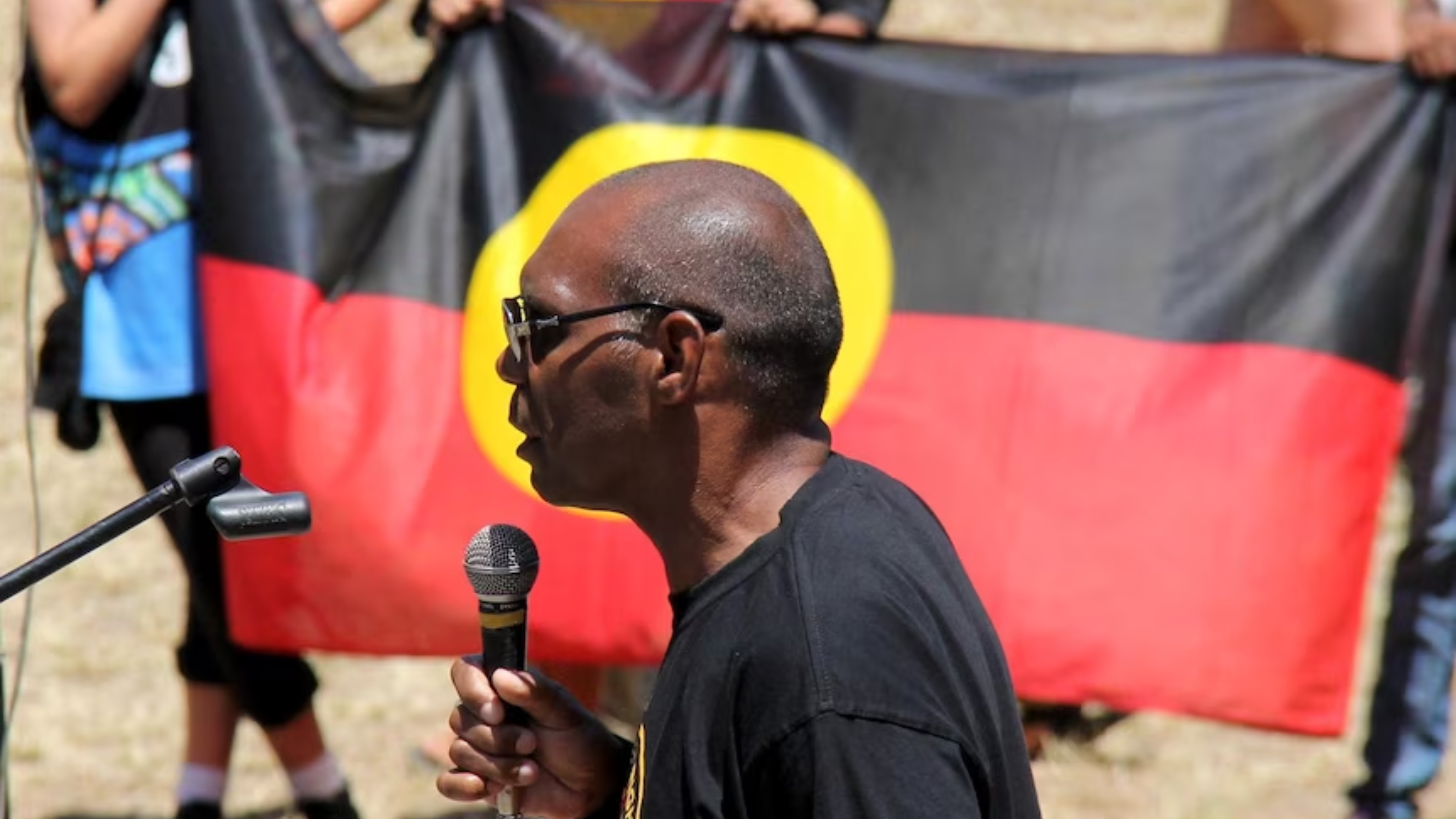
Lex Wotton, addresses the crowd during a protest against Aboriginal deaths in custody at the Roma Street Forum in Brisbane during the G20 Leaders' Summit, November 14, 2014. (ABC News)
Australia’s First Peoples have endured profound discrimination and prejudice since colonisation. Supporting First Peoples to achieve justice has been a key focus of the Commission since we were established in 1986.
An important part of the Commission’s work over that time has been inquiring into and conciliating complaints from First Peoples about racial discrimination and breaches of their human rights under the Racial Discrimination Act. One of the most significant of these complaints related to the death in police custody in November 2004 of 36-year-old Palm Island resident Mulrunji.
A riot on the island followed the death. Residents, angry at the death, burned down the island’s police station, police barracks and courthouse. In response, police sent in riot squads, undertook forced house entries and searches and arrested residents. Police actions included masked specialist officers entering the houses of 18 families on the island, with assault rifles raised, confronting unarmed men, women and children in and around those houses. Concerns were raised by residents that the response was disproportionate and heavy-handed.
In 2010, one of the residents, Lex Wotton, along with members of his family made a complaint on behalf of themselves and other island residents to the Commission against the State of Queensland alleging police breached the Racial Discrimination Act by using excessive force against Palm Island residents because of their race.
When the complaint could not be resolved by our investigators or conciliators, Mr Wotton and the class action members took their complaint to the Federal Court which ruled, in a landmark decision, that police had indeed breached the Racial Discrimination Act. This led to an apology from the Queensland Government, a $30 million settlement for the Palm Island community as well as important reforms to the way police respond to incidents involving First Peoples. This case demonstrates how the pathway to justice provided by our complaints process, when coupled with the work undertaken by our investigators and conciliators, play an important part in advancing and protecting human rights in Australia.
Since this groundbreaking case, there has been an increase in representative complaints made to the Commission by First Peoples seeking access to justice. Many of these complaints raise important systemic issues about the administration of laws, policies and practices of all Australian jurisdictions. The issues raised include the use of force by police, conditions in youth justice centres, removal of First People’s children from their families, income support payments, cultural fishing rights and the provision of housing and medical services.
Share this page
Cookie policy
This site uses cookies to analyse traffic, remember your preferences, and optimise your experience. We use some essential cookies to make this service work. We’d also like to use analytics cookies so we can understand how you use the service and make improvements. For more information see our Privacy Policy.
Need help?
Have a question about discrimination or sexual harassment? Want to know more about human rights? Contact us if you need help.