President's Message | Health and Human Rights (November 2026)

- Author: President Hugh de Kretser
Australia has much to celebrate when it comes to health. We have one of the best healthcare systems in the world. Our life expectancy is among the highest in the world. Public health initiatives from sunscreen to smoking have saved countless lives. Medical research continues to produce world-leading breakthroughs.
But many people do not enjoy the health they should in Australia because of unfair and avoidable social, economic and environmental conditions. If you have lower income, a disability, or are Aboriginal or Torres Strait Islander, then you are more likely to have worse health outcomes. Racism and ageism in our health services is harming people’s health as outlined by reports we released last year.
The health divide between the cities and bush is particularly acute. The median age of death in Brisbane is 82 years; yet in parts of Far North Queensland it is 51 years, a difference of 31 years in the same state. And yet despite people in rural and regional areas having poorer health outcomes, government health investment favours the cities. A recent report by the National Rural Health Alliance highlighted the $9.2 billion dollar funding gap between Australia’s metropolitan and rural health system.
The right to health is recognised in international human rights law, including the International Covenant on Economic, Social and Cultural Rights, which Australia ratified in 1975. It recognises everyone’s right to the “highest attainable standard of physical and mental health”.
This right to health doesn’t mean that everyone will be healthy. No government can prevent every illness. It means everyone should have a fair opportunity to be healthy, with healthcare that is available, affordable, accessible and of good quality. It recognises that our health is shaped by the conditions we live in; our housing, food and water, work, education and the environment. It also requires governments to use their maximum available resources to fulfil the right to health.
People in Australia cannot directly enforce international human rights law. It's left to Australian governments and parliaments to pass laws protecting our human rights. Unfortunately, they haven't done a good enough job of this; we have no national Human Rights Act in Australia.
It doesn’t have to be this way. In South Africa, the injustice of apartheid led to the nation adopting world-leading human rights protections in its post-apartheid constitution, including the right to health. The right doesn’t magically create extra resources for South African governments but it does hold them accountable for unreasonable and unfair health policy decisions. During the AIDS epidemic for example, people successfully challenged irrational government restrictions on medication to prevent mother-to-baby HIV transmission. The Constitutional Court ruled that the restrictions breached the right to health, helping to compel a nationwide rollout of treatment in public health facilities which saved hundreds of thousands of lives.
Australia does not protect the right to health in our national laws. But our discrimination laws provide important protections in healthcare, and Victoria, Queensland and the ACT have Human Rights Acts or Charters that require governments to comply with certain human rights in decision-making.
Queensland’s Human Rights Act doesn’t protect the full right to health but does protect a right to access health services. It hasn’t yet been fully tested in court but it is influencing decision-making. For example, during the COVID-19 pandemic, it helped a man in hotel quarantine to access improved mental health services. It was also influential in a coronial inquest into the tragic and preventable deaths of 3 young Aboriginal women from rheumatic heart disease.
Victoria’s Human Rights Charter doesn’t currently protect the right to health but it protects rights relevant to health care including the rights to life, equality and privacy. It also protects other rights like freedom of movement that need to be taken into account when making public health decisions.
There are many examples showing the Charter’s impact in health settings from being afforded privacy when showering in residential care to protecting the rights of people with mental illness to manage their own money and property.
The Charter also provided important accountability and transparency around Victoria’s COVID 19 response, from helping to stop excessive powers being given to health officers to changing the way government responded to lockdowns of public housing towers, to helping people navigate often inflexible rules around border closures.
Human rights help to guide decision makers to make better laws, policies, decisions and services. A human rights approach shines a light on the health gaps that many Australians experience every day: the person in a rural community who can’t access a specialist, the family putting off dental care because they can’t afford it, the Aboriginal woman who is not respected and understood in mainstream services, and the person with disability struggling to navigate a system that was not designed with them in mind.
The right to health at its core is a simple idea: everyone deserves a fair opportunity to live a healthy and dignified life. It challenges us to keep asking: who is missing out, and what can we do about it?
As we navigate the health challenges ahead, from an ageing population to climate change and artificial intelligence, human rights provide a powerful compass to guide us. To keep people at the centre, pay attention to those at risk of being left behind, and work towards a future where everyone has a fair opportunity to live a healthy life.
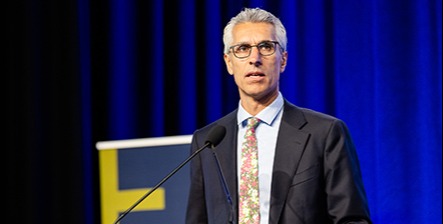
This is an edited extract of a speech delivered to the Victorian Healthcare Association in Melbourne. The full speech can be read here.
Hugh de Kretser
President