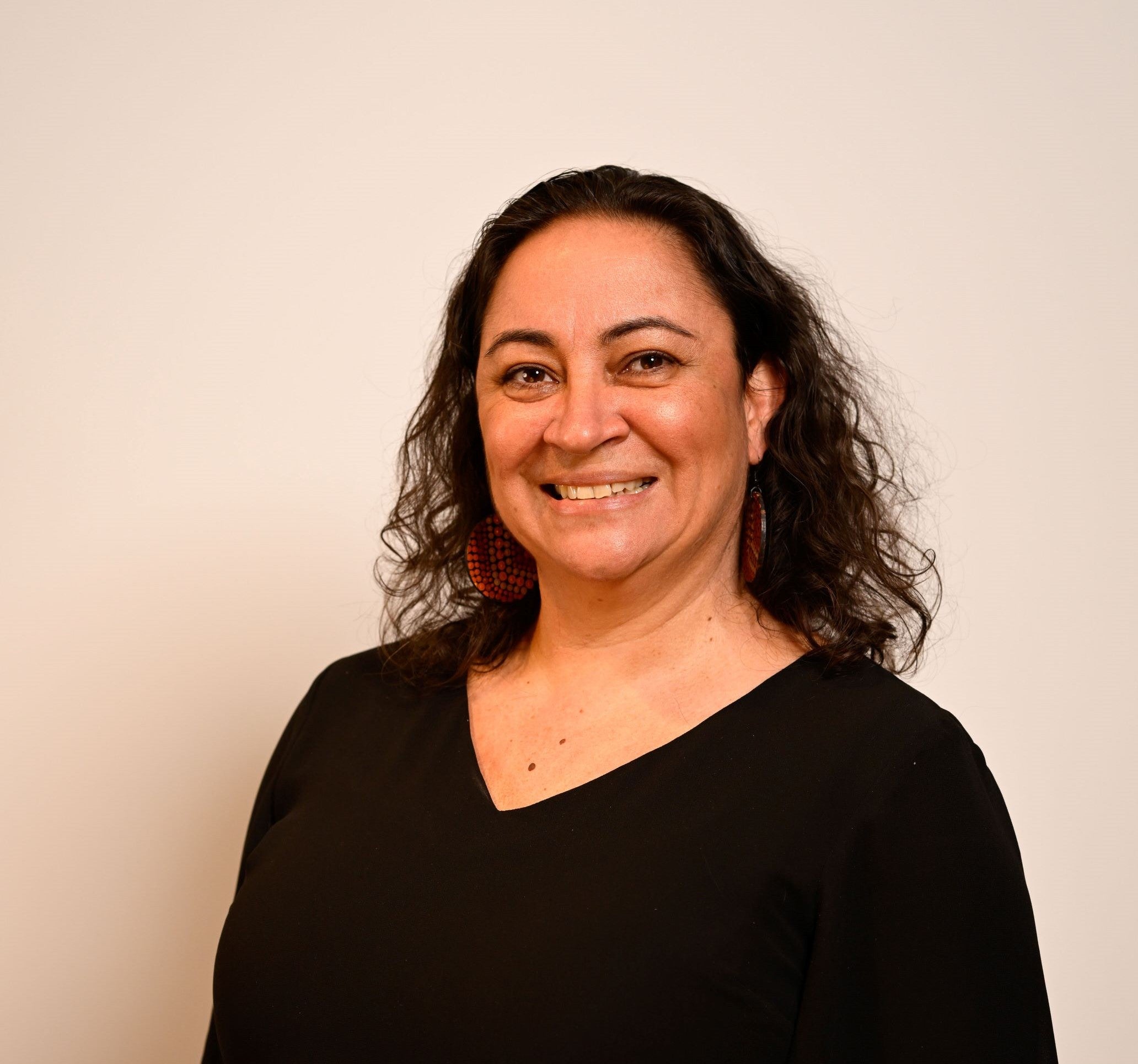
Informing The Agenda Consultations
Have your say in consultations with the Aboriginal and Torres Strait Islander Social Justice Commissioners.
Summary
Have your say in consultations with the Aboriginal and Torres Strait Islander Social Justice Commissioners.
Date and time
1 January 2025
12:00 am-12:00 am (AEDT)
Summary
Informing the Agenda Aboriginal and Torres Strait Islander Social Justice Commissioners Term 2024-2029
Katie Kiss commenced in the role as the Aboriginal and Torres Strait Islander Social Justice Commissioner on 3 April 2024. To ensure the voices of First Nations people across Australia help form the agenda for the term, the Commissioner is conducting a national listening tour to hear from First Nations people about:
Informing the Agenda Aboriginal and Torres Strait Islander Social Justice Commissioners Term 2024-2029
Katie Kiss commenced in the role as the Aboriginal and Torres Strait Islander Social Justice Commissioner on 3 April 2024. To ensure the voices of First Nations people across Australia help form the agenda for the term, the Commissioner is conducting a national listening tour to hear from First Nations people about:
- how we move forward after the Voice Referendum
- how to progress and utilise mechanisms to realise our rights
- what issues are most urgently in need of attention
- what expectations First Nations people have of the Social Justice Commissioner role.
Past events
| Location | Venue | Date |
|---|---|---|
| Launceston | Aboriginal Elders Council - 163 St John St, Launceston | 12 May 2025 |
| Hobart | piyura kitina - 838 East Derwent Highway, Risdon | 15 May 2025 |
| Cooktown | Cooktown Community Centre - 11 Charles St, Cooktown | 26 May 2025 |
| Thursday Island | Buai Mudh Community Centre - 156 Douglas St, Thursday Island | 28 May 2025 |
| Badu Island | Ugarie Community Hall - Nona St, Badu Island | 29 May 2025 |
| Darwin | Northern Territory Indigenous Business Network - 76 Esplanade, Darwin City | 11 April 2025 |
| Nhulunbuy | 138 Tuffin Rd, Yirrkala | 10 April 2025 |
| Alice Springs | The Business & Innovation Centre - 475 Stuart Hwy, Kilgariff | 8 April 2025 |
| Tennant Creek | Civic Hall - 41 Peko Rd, Tennant Creek | 7 April 2025 |
| Perth | Desert Hub - 575 Newcastle St, West Perth | 28 March 2025 |
| Geraldton | Geraldton Multi-Purpose Centre - 250 Marine Terrace, Geraldton | 27 March 2025 |
| Port Hedland | Youth Involvement Council - 35 Lawson St, South Hedland | 26 March 2025 |
| Goolarri Media - 3 Blackman St, Broome | 24 March 2025 | |
| Online | via Microsoft Teams (registration required) | 13 March 2025 |
| Online | via Microsoft Teams (registration required) | 13 March 2025 |
| Shepparton | Rumbalara Activity Centre, 95 Ford Street | 6 February 2025 |
| Mildura | Community Hall, Mildura | 5 February 2025 |
| Warrnambool | Archie Graham Community Centre | 4 February 2025 |
| Melbourne | Sir Douglas Nicholls Sporting Complex - Aboriginal Advancement League, Thornbury, Australia | 3 February 2025 |
| Coffs Harbour | Coffs Harbour Local Aboriginal Land Council | 21 January 2025 |
| Moree | Moree Dhiiyaan Aboriginal Centre | 20 January 2025 |
| Dubbo | Western Plains Cultural Centre | 17 January 2025 |
| Bourke | Back o' Bourke Information and Exhibition Centre | 16 January 2025 |
| Nyngan | Bogan Shire Youth & Community Centre | 15 January 2025 |
| Parkes | Parkes Shire Community Centre | 14 January 2025 |
| Wagga Wagga | Duke of Kent Community Centre | 13 January 2025 |
| Mt Druitt, NSW | Kimberwalli - 1 Mimica Ave, Whalan, NSW 2770 | 11 December 2024 |
| Redfern, NSW | Redfern Community Centre 29-53 Hugo Street, Redfern NSW 2016 | 10 December 2024 |
| Kiama, NSW | Joyce Wheatley Community Centre Hindmarsh Park, Kiama, NSW, 2533 | 9 December 2024 |
| Woorabinda, QLD | Kangaroo Stadium, Woorabinda QLD | 29 November 2024 |
| Rockhampton, QLD | CQU - Rockhampton North Campus, Building 10 G.19 | 28 November 2024 |
| Mount Isa, QLD | PCYC - 67 Isa Street, Parkside, QLD | 27 November 2024 |
| Brisbane, QLD | Woolloongabba Substation 45 Logan Road, Woolloongabba, QLD | 7 November 2024 |
| Cherbourg, QLD | The Ration Shed Museum - 19 Barambah Ave, Cherbourg, QLD | 6 November 2024 |
| Roma, QLD | Cultural Centre Auditorium 57 Bungil Street, Roma, QLD | 4 November 2024 |
| Cairns, QLD | Nintiringanyi Cultural Training Centre 16-18 McCormack St, Cairns City, QLD | 30 October 2024 |
| Yarrabah, QLD | Community Council Hall 56 Sawmill Rd, Yarrabah, QLD | 29 October 2024 |
| Adelaide, SA | Tauondi Aboriginal College 1 Lipson Street, Port Adelaide, SA | 17 October 2024 |
| Port Augusta, SA | Port Augusta Central Oval 10 Augusta Terrace, Port Augusta, SA | 16 October 2024 |
| Ceduna, SA | Far West Aboriginal Sporting Complex Bergmann Dr, Ceduna, SA | 14 October 2024 |
| Canberra, ACT | Mabo Room, AIATSIS Office | 11 October 2024 |
**More consults at other locations and dates to be announced at a later time**
The Commissioner's six high level priorities that she is seeking First Nations input on are:
1. Increase Access to Justice for First Nations communities
The concept of ‘justice' in its traditional sense is supposed to be positive. It is foundational to all areas of life and social responses to facilitating survival, dignity and wellbeing for all.
However, Aboriginal and Torres Strait Islander people's experience mostly features carceral systems (child safety, youth or criminal justice), which have been the opposite. Access to justice provides the moral and ethical compass for reforms in all areas (social, cultural, environmental, economic, and political), and is critical to improved quality of life for Aboriginal and Torres Strait Islander peoples.
Given the national focus on Youth Justice, changing the narrative as well as the policy and service delivery approach in this space will be critical to changing the unacceptable rise in numbers of children in out-of-home care and youth detention nationally, and associated intersectional challenges.
2. Promote the implementation of the United Nations Declaration on the Rights of Indigenous Peoples (the Declaration)
Fifteen years since Australia adopted the Declaration, this universal human rights instrument that ensures the survival, dignity and wellbeing of Indigenous peoples, is yet to be integrated into social policy or legislative frameworks, nor is it formally considered in the design, development, delivery or evaluation of initiatives relevant to Aboriginal and Torres Strait Islander peoples.
The Declaration provides a universally accepted blueprint for recognising, realising and reviewing the rights of Indigenous peoples.
3. Advocate and guide implementation of the three pillars of the Uluru Statement from the Heart—Voice, Treaty, Truth
The three pillars of the Uluru Statement from the Heart - Voice, Treaty, Truth - are no less relevant today than they were before the Referendum. All three are fundamental to advancing the rights and recognition of First Nations.
4. Support the realisation of First Nations health equality
Sixteen years since the signing of the Close the Gap Statement of Intent and the National Indigenous Reform Agreement (NIRA) outlining a joint commitment to work in partnership to achieve health equality for Aboriginal and Torres Strait Islander peoples, the statistics are not seeing the progress that was envisaged.
In response to a 10-year review of the NIRA, a reformed National Partnership agreement on Closing the Gap 2019-2029 was signed in March 2019. Progress analysis conducted in 2024 provides that only five of the 17 revised targets are on track; and that there has been limited progress against the four agreed Priority Reforms. In fact, in some of the targeted areas, we are seeing the gap widen.
Targeted, sustained, bipartisan commitment and investment is required to achieve this reform agreement. Getting government right, is critical to creating the conditions for positive change, and supporting First Nations in their efforts to improve their life outcomes.
5. To provide advocacy and guidance to progress Land Justice Reform
This includes providing guidance on native title system reform and the reform of connected regimes such as cultural heritage and environmental management, climate change, leveraging the social, cultural, and economic benefits and opportunities from our lands, and engaging with newly established or establishing treaty arrangements.
6. To build the capacity of the First Nations Human Rights Network
This will involve working with young people, and our senior experienced people to build a connected and future-focused leadership capability. This includes learning from our Elders and increasing our advocates' knowledge of human rights so that we can effectively use the international human rights framework to progress and realise our rights here at home.
For more information
- Review the About the Project Page (Participant Information Sheet)
- Read our Privacy Collection Notice
(6.25 MB)
If you have any questions, concerns or would like to contact us about this project, please email informingtheagenda@humanrights.gov.au.
Background
On 3 April 2024, Ms Katie Kiss, a proud Kaanju and Birri/Widi woman, commenced a five-year term as the Aboriginal and Torres Strait Islander Social Justice Commissioner (the Social Justice Commissioner), at the Australian Human Rights Commission (the Commission).
Created in 1992 in response to the Royal Commission into Aboriginal Deaths in Custody (RCIADIC), and the National Inquiry into Racist Violence, the Office of the Social Justice Commissioner, is one of eight independent Statutory Office Holders at the Commission established by the Australian Human Rights Commission Act 1986 (the Act). Others include:
- Commission President
- Human Rights Commissioner
- Race Discrimination Commissioner
- Sex Discrimination Commissioner
- Age Discrimination Commissioner
- Disability Discrimination Commissioner
- National Children's Commissioner.
The functions of the Social Justice Commissioner, outlined at s46C of the Act, are:
- to promote the discussion and awareness of human rights in relation to Aboriginal persons and Torres Strait Islanders
- to undertake research and educational programs, and other programs, for the purpose of promoting respect for the human rights of Aboriginal persons and Torres Strait Islanders and promoting the enjoyment and exercise of human rights by Aboriginal persons and Torres Strait Islanders
- to examine enactments, and proposed enactments, for the purpose of ascertaining whether they recognise and protect the human rights of Aboriginal persons and Torres Strait Islanders, and to report to the Minister the results of any such examination.
In addition, the Social Justice Commissioner also has a responsibility under the Native Title Act 1993, (s209) to report to the Commonwealth Minister (the federal Attorney-General) about the operation of the Native Title Act and its effect on the exercise and enjoyment of human rights of Aboriginal persons and Torres Strait Islanders.
Message from the Commissioner
Katie Kiss | Aboriginal and Torres Strait Islander Social Justice Commissioner
As I embark on my five-year term, I am seeking the views of First Nations people and communities, and the broader community to inform my term agenda.
Over the last half a century we have been part of key moments in time, the 1967 Referendum, the Royal Commission into Aboriginal Deaths in Custody, the Bringing them Home National Inquiry into the Separation of Aboriginal and Torres Strait Islander Children from Their Families, the Koowarta Land Rights and Mabo High Court decisions, the Apology to the Stolen Generations, and most recently the dialogue to progress Voice, Treaty and Truth.
While efforts to enshrine a First Nations Voice to Parliament in the Australian Constitute were unsuccessful, the process itself exposed the unfinished business between First nations peoples and the Australian community. The Voice Referendum debate reinforced the experience of First Nations Peoples, that the hurtful and harmful impacts of colonisation are intergenerational, ongoing and entrenched in the social fabric of the Australian nation.
It also highlighted the need for a reframed, respectful and reconciled relationship that is grounded in truth, justice and healing, for First Nations People and the Australian nation. A relationship that build's a “village” capable of transcending the political and social division and disunity stoked in the lead-up to the referendum, and that creates the conditions necessary for all Australians to enjoy the opportunities our country has to offer. This includes galvanising the more than 6 million Australian's who support First Nations rights to self-determination and to participate in decisions that affect us.
To inform the agenda for my term, I want to hear from our people about:
- the issues they feel are most urgently in need of attention
- what our communities need to access and utilise rights mechanisms
- the Social Justice Commissioners' role, and how this role can best work with your communities.
I also want to hear what community-led programs and initiatives are working so that we can keep building on these things, and how enabling environments help us secure these efforts into the future.
As a starting point, six high-level goals have been identified to frame the work of the Social Justice Commissioner. These are:
1. To promote the implementation of the United Nations Declaration on the Rights of Indigenous Peoples
A key focus for this goal will be to raise awareness and build capacity of First Nations people to use the Declaration to advocate for their rights and hold governments and service providers accountable to their responsibilities.
The Joint Standing Committee on Aboriginal and Torres Strait Islander Affairs made six recommendations in its report on the Inquiry into the Application of the United Nations Declaration on the Rights of Indigenous Peoples in Australia. Among them is to design and implement a national plan to progress the Declaration. As outlined above, the Social Justice Commissioner intends to engage governments with a view to progressing this as soon as possible.
2. To provide advocacy and guidance on the implementation of the three pillars of the Uluru Statement from the Heart—Voice, Treaty, Truth
The three pillars of the Uluru Statement from the Heart - Voice, Treaty, Truth - are no less relevant today than they were before the Voice to Parliament Referendum. All are necessary to advance the rights and recognition of First Nations.
In the lead up to the Voice to Parliament Referendum political and media narratives promoting mis and disinformation created division and disunity amongst Aboriginal and Torres Strait Islander Peoples, and further strained the relationship between First Nations Peoples and the broader population.
We need all governments to be promoting a reframed relationship that is grounded in Truth, Justice, and Healing, if we are to progress improved outcomes for First Nations Peoples. This is even more important since the Voice to Parliament Referendum outcome, which has seen marked rise in the experience of racism by First Nations people.
This will also require the political will of governments and elected representatives to engage in a national approach to truth-telling and agreement making that results in the tangible, practical outcomes that we are all aspiring to.
3. To increase Access to Justice for First Nations communities
The concept of ‘justice' in its traditional sense is supposed to be positive. However, Aboriginal and Torres Strait Islander people's experience mostly features criminal justice or youth justice systems – which have been the opposite.
We need to move beyond building up ever greater piles of inquiries, reports, and recommendations into a space of greater accountability and evidence-based policy and action.
This includes addressing the unfinished business of implementing the recommendations of the Royal Commission into Aboriginal Deaths in Custody, the Bringing them Home Report, Productivity Commission Reports, and 30 years of Social Justice and Native Title Reports.
Given the national focus on Youth Justice, changing the narrative and approach in this space will be a key focus for the Social Justice Commissioners' term, and critical to changing the unacceptable rise in numbers of children in detention nationally.
The Social Justice Commissioner hopes to work closely with her colleague, the National Children's Commissioner, as well as the soon to be appointed National Aboriginal and Torres Strait Islander Children's Commissioner and those in the States and Territories. The Commissioner/s aim is to move the debate from one where Aboriginal and Torres Strait Islander Peoples are the problem, to one that highlights their capacity to lead the response, treat Aboriginal and Torres Strait Islander Peoples with dignity, and nurture and develop their children rather than punishing them for circumstances out of their control.
4. To support the realisation of First Nations health equality
The Social Justice Commissioner is particularly interested in progressing Priority Reform 3 under the National Agreement on Closing the Gap, that is focused on transforming government.
Ongoing national crises in cost of living, housing, domestic and family violence, mental health, child safety and youth justice, have amplified the need for system reform that ensures the rights of all communities.
Systemic racism and structural disadvantage exacerbate these system failures for Aboriginal and Torres Strait Islander Peoples, so transforming government, and consequently ‘the system' is critical to closing the gap and achieving better outcomes for First Nations Peoples.
If we are to see progress against the targets and the rights outlined in the Declaration on the Rights of Indigenous Peoples, governments need to create systems that promote self-determination, respond to the priorities identified by First Nations people, and work with First Nations community-controlled organisations.
5. To provide advocacy and guidance to progress Land Justice Reform
This includes providing guidance on native title system reform and the reform of connected regimes such as cultural heritage, environmental management, climate change, leveraging the social, cultural, and economic benefits and opportunities from our lands, and engaging with newly established or establishing treaty arrangements.
6. To build the capacity of the First Nations Human Rights Network
This will involve working with young people, and First Nations senior experienced people to build a connected and future-focused leadership capability. This includes learning from Elders, and increasing advocates' knowledge of human rights so that Aboriginal and Torres Strait Islander people can effectively use the international human rights framework to progress and realise Indigenous rights here at home.
We look forward to hearing your views on these initial priorities, and working with you and your communities to progress the work of the Social Justice Commissioner over the coming five years.
Support Services
If at any stage during this project you become distressed or require additional support from someone not involved in the project, please see the following support services:
Organisation
Area
Telephone
1800RESPECT National sexual assault, domestic and family violence counselling service.
1800 737 732
Beyondblue Depression and Anxiety support services.
1300 224 636
Lifeline Crisis support and suicide prevention.
13 11 14
Headspace Supports young people 12- 25 years old.
1800 650 890
Kids Helpline Counselling service 5 – 25 year old.
1800 55 180
13 Yarn Aboriginal and Torres Strait Islander Crisis Supporter.
1800 435 799
Brother to Brother Crisis line for Aboriginal men.
1800 435 799
QLife Chat Line for LGBTIQ+ People and Supports.
1800 184 527
After Suicide Support Aboriginal Support Advocates Line.
1800 805 801